Solo Exhibitions
The Other Side
The Invisible Dog Art Center
Brooklyn, New York
September 12 - November 21, 2020
“Over nine years, we worked with more than 500 incarcerated participants across eight New York City correctional facilities,each workshop a reminder that creativity thrives even in the most constrained environments.”
Installation Photos Simon Courchel for The Invisible Dog Art Center
Our work with the New York City Department of Corrections began in 2012 and continues today. Over more than a decade, we’ve led workshops inside correctional facilities, creating space for connection, storytelling, and artmaking. But we’ve never before had the opportunity to present the totality of that work in one space. The Other Side was that opportunity.
Our vision for the exhibition extended beyond traditional gallery formats. It brought together artworks made in collaboration with incarcerated participants, personal works we created during this time that responded to those experiences, and large-scale installations that reflected the emotional impact of working inside carceral institutions.
The result was a visual and emotional timeline—one that traced ten years of creative resilience and human connection behind the walls of incarceration.
We partnered with our longtime friend and collaborator, The Invisible Dog Art Center, to bring this vision into the public realm.
Their space and ethos were the perfect match for an exhibition that asked visitors to consider what it means to create, and connect, on the other side of the wall.
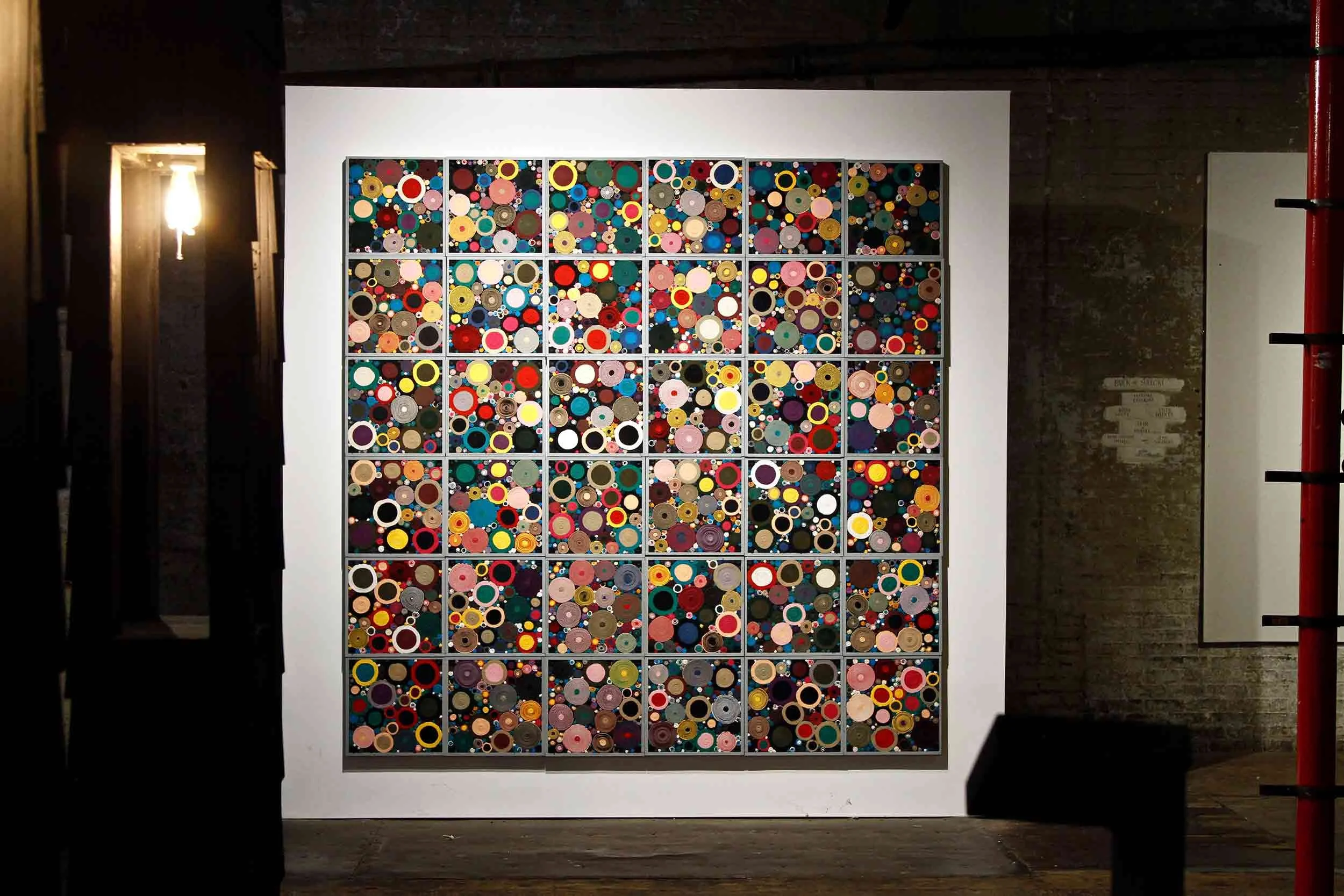
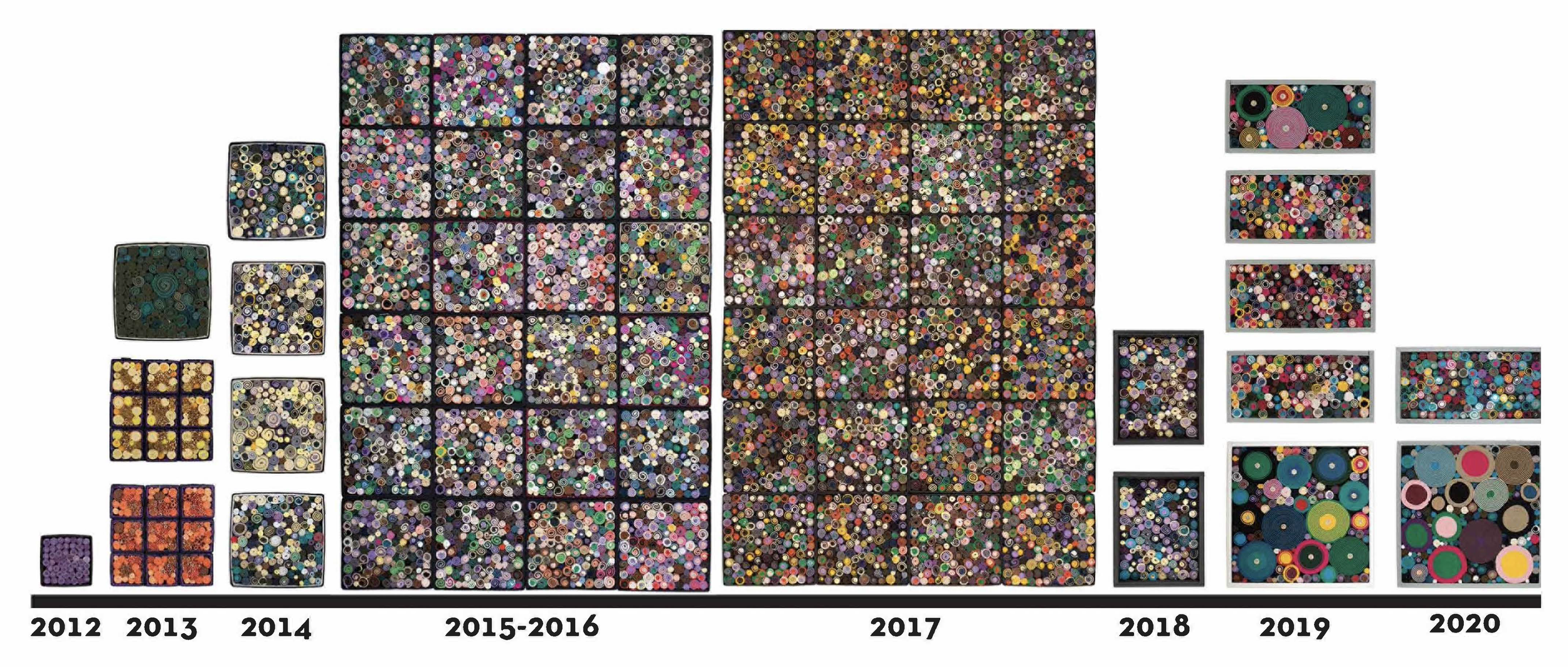
Timeline of Collaborations: Steven and William began their work inside the NYC Department of Corrections in 2012, work that continues today. This timeline represents the collaborative artworks made with incarcerated people throughout the years. This exhibition represents the first time this work was brought together into one space.
2012
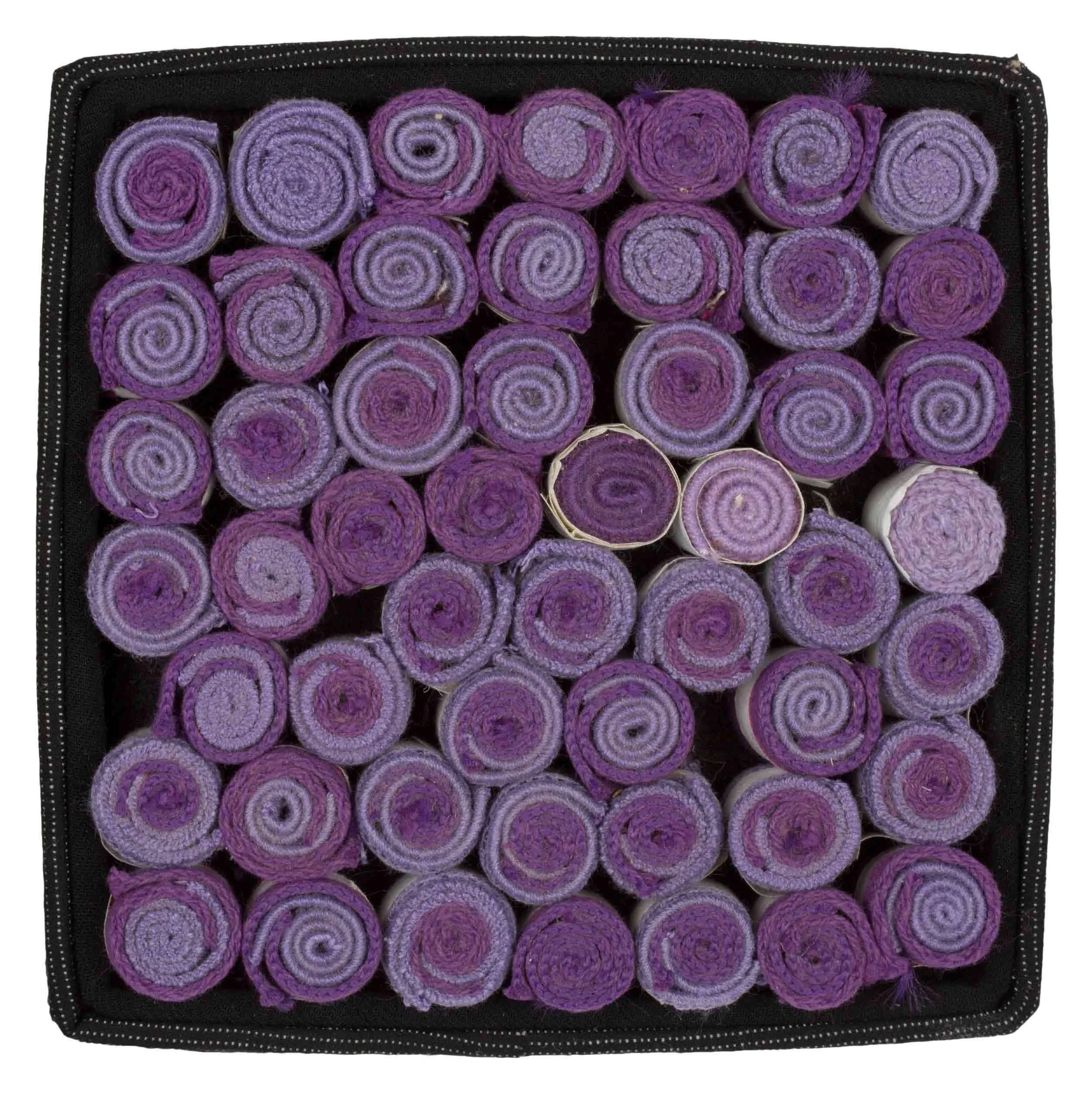
RIKERS: PURPLE
Made in collaboration with inmates at Rikers Island’s Robert N. Davoren Complex
Archival board, fiber, tape
LWD 5 ½ x 5 ½ x 2 ½ inches
The rules on what we could bring to the jail were strict. We had to swap out any gang colors, get rid of metal pins, cut fabric trimmings short and get written approval for materials. We jumped on the bus to cross the bridge to Rikers Island Correctional Facility, where we would collaborate with 16 to 18 year-olds at RNDC, a jail for adolescent boys. The driver was late and the passengers irate, yelling “GO, GO!” eager to get there on time for visiting hours. After intense security protocols, we finally got to the boys. The space was dark, somber and sad. We sat around tables bolted to the ground, talking and making scrolls together. It was easy for them to succeed and see how their contribution could create a work of art.
We asked the boys about their future plans. One wanted to go to college. Another definitely didn’t. A third with a felony conviction thought he wouldn’t be allowed to. We gave them as much warmth and attention as we possibly could. Later, an art therapist from the jail wrote, “I keep meaning to email you to let you … “know that the boys in 4 Lower South really enjoyed their time with the artists. One … has asked me repeatedly when they will return and remarked on the natural way in which [Steven and William] interacted with them, and how they seemed so engaging and comfortable. This means so much to locked up kids who feel stigmatized almost all the time.”
2013
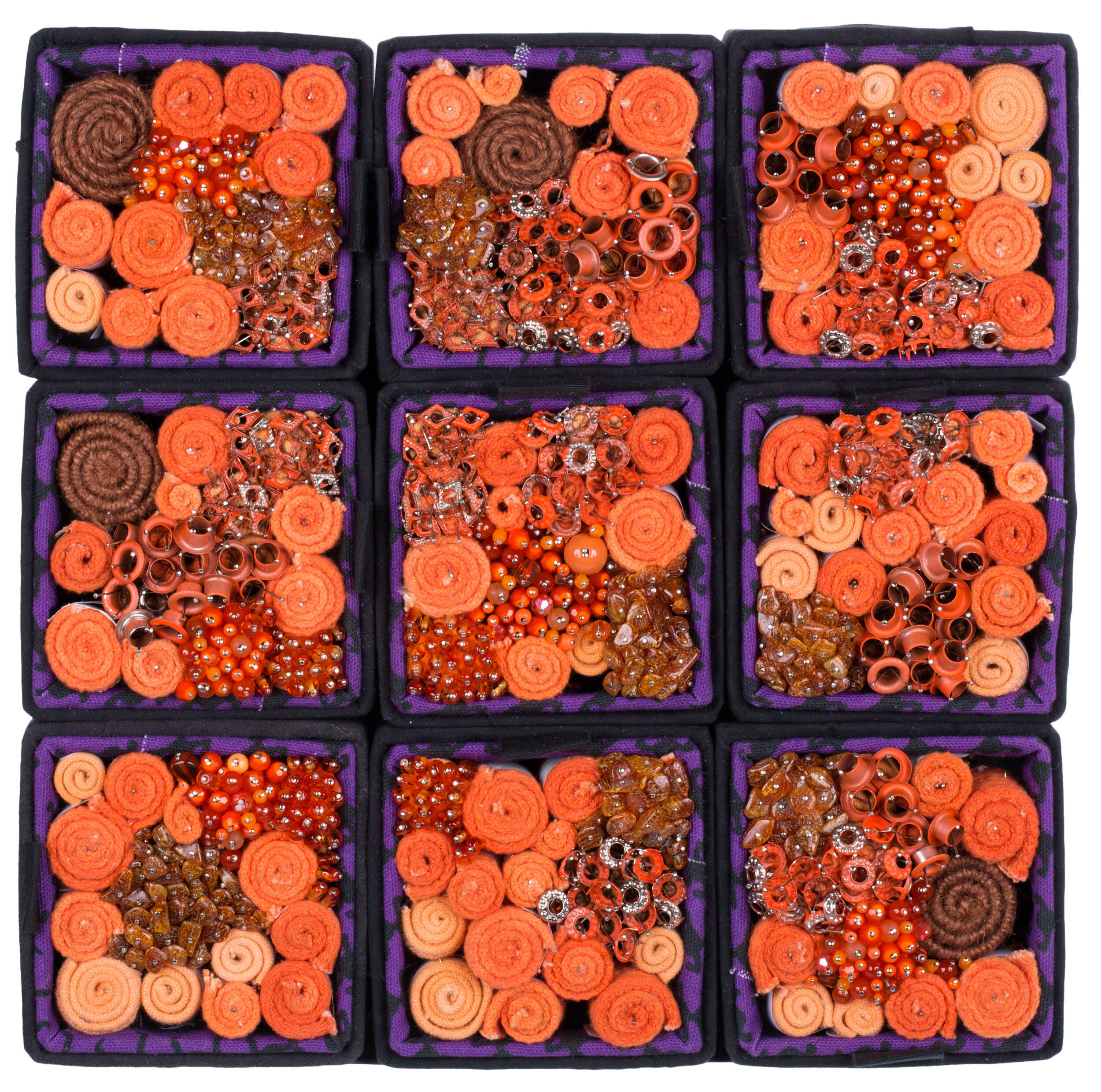


RIKERS: COLLEGE
Made in collaboration with inmates at Rikers Island’s Robert N. Davoren Complex
Archival board, fiber, rubber bands
LWD 11 x 11 x 3 ½ inches
BANANA MUSTANG
Made in collaboration with inmates at Rikers Island’s Rose M. Singer Center
Archival board, fiber, beads, metal
LWD 11 x 11 x 3 ½ inches
RIKERS: FREEDOM
Made in collaboration with inmates at Rikers Island’s Rose M. Singer Center
Archival board, fiber, beads, metal
LWD 10 ¼ x 10 ¼ x 2 ⅝ inches
Corrections Officers called out “Man on Deck!” as we entered the Rikers Island jail that houses women, nicknamed “Rosies.” About 25 women joined us to make art. They loved scrolling. After half an hour, they had filled a box with scrolls and gathered around the table to title the piece, the energy in the room became electric. They started brainstorming aloud. The scrolls were the same colors as their uniforms, and that’s where they began, ideas coming faster and faster...”Green. Sentenced. Prison. Incarcerated. Freedom. Freedom!”
When we returned to work with them again, an older woman, maybe in her 80’s, said, “You came back,” and her eyes filled with tears. Later, at lunch, the program head Carmen told us that many of these women had never had a man in their lives who lived up to his word.
One woman cried out, “Put your hands together on the work!” And these incarcerated women, of all different colors and backgrounds, joined hands on top of the scrolls, chanting “FREEDOM! FREEDOM! FREEDOM!” Everyone burst into applause.
2014
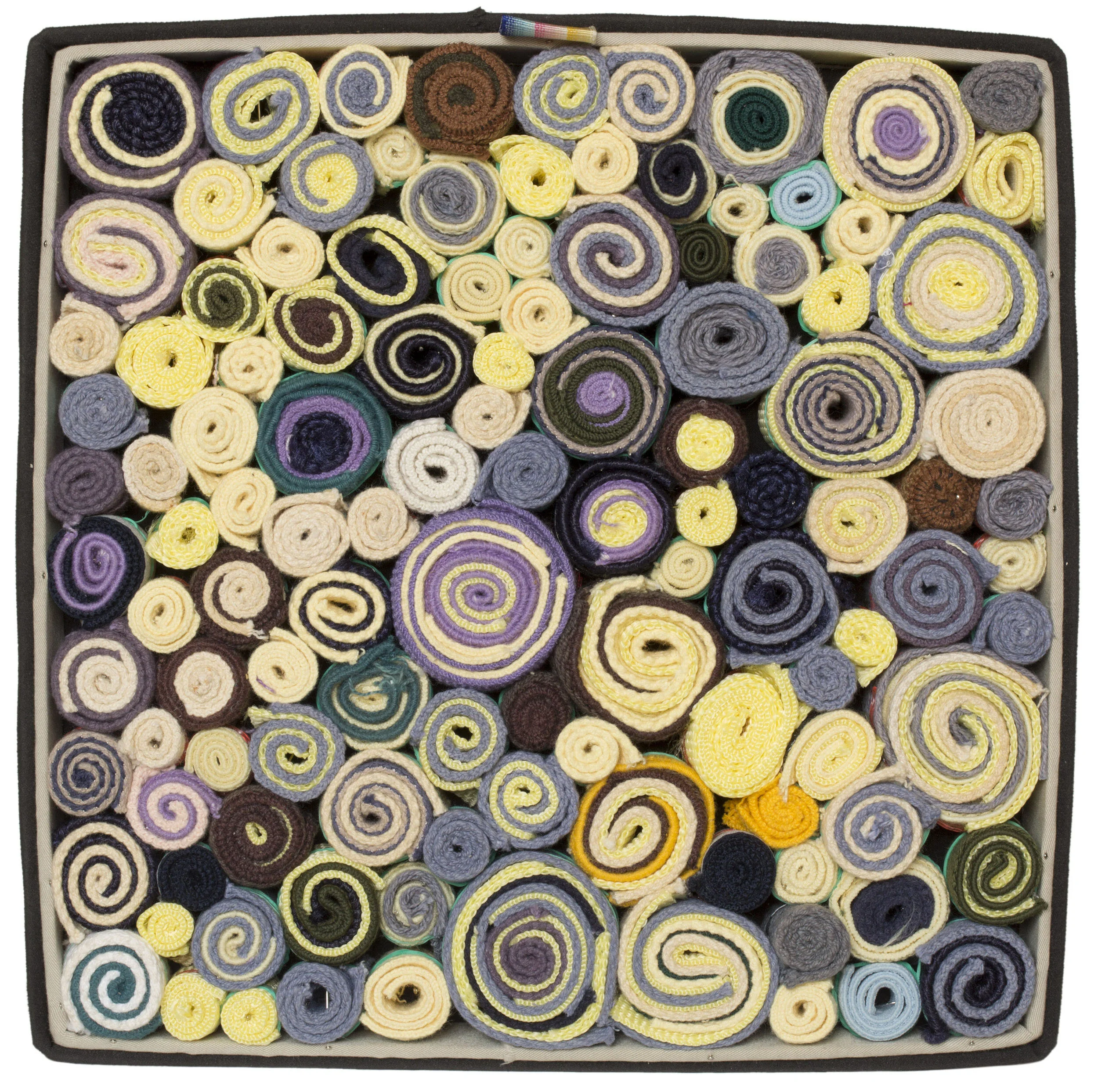
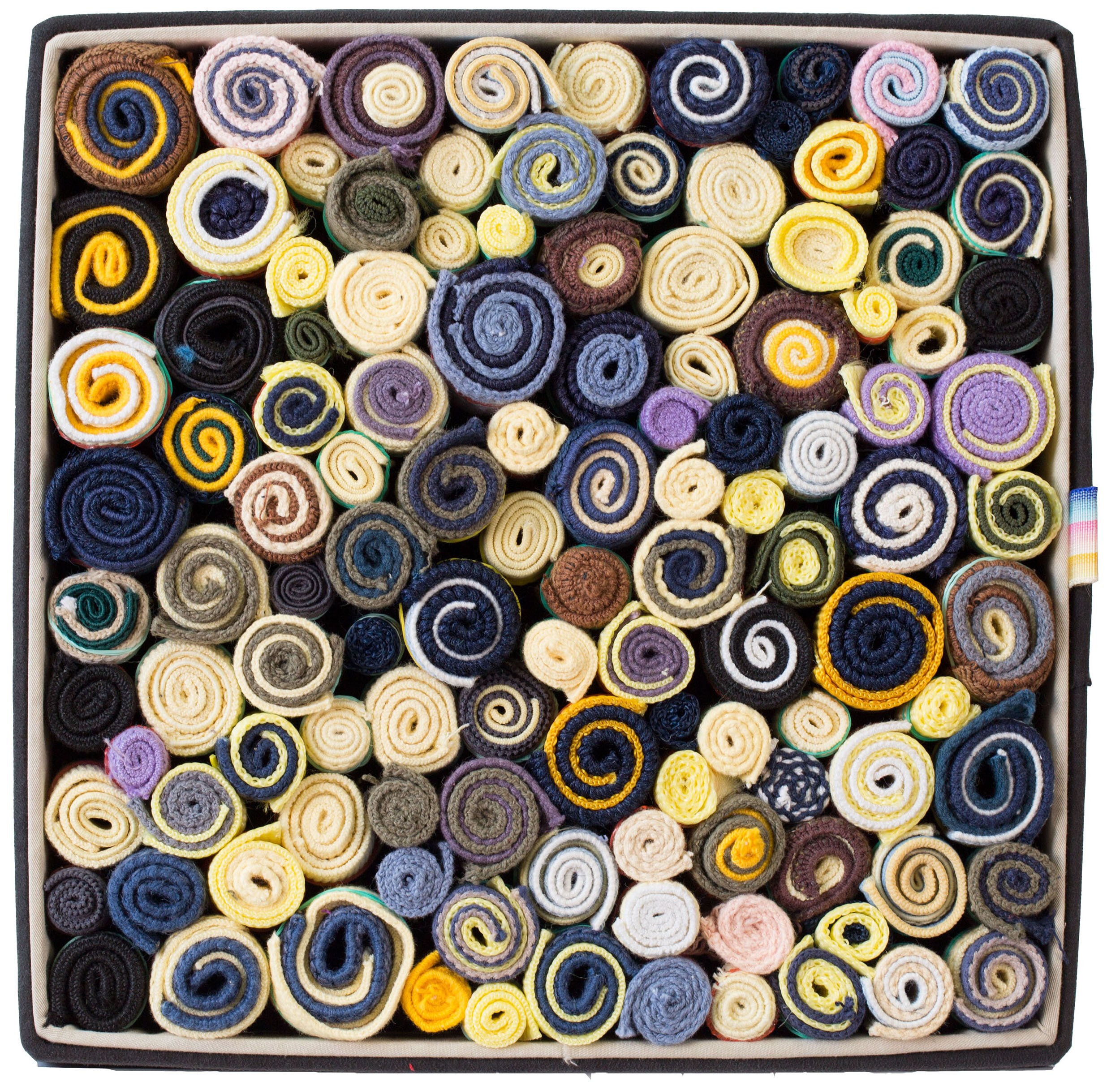

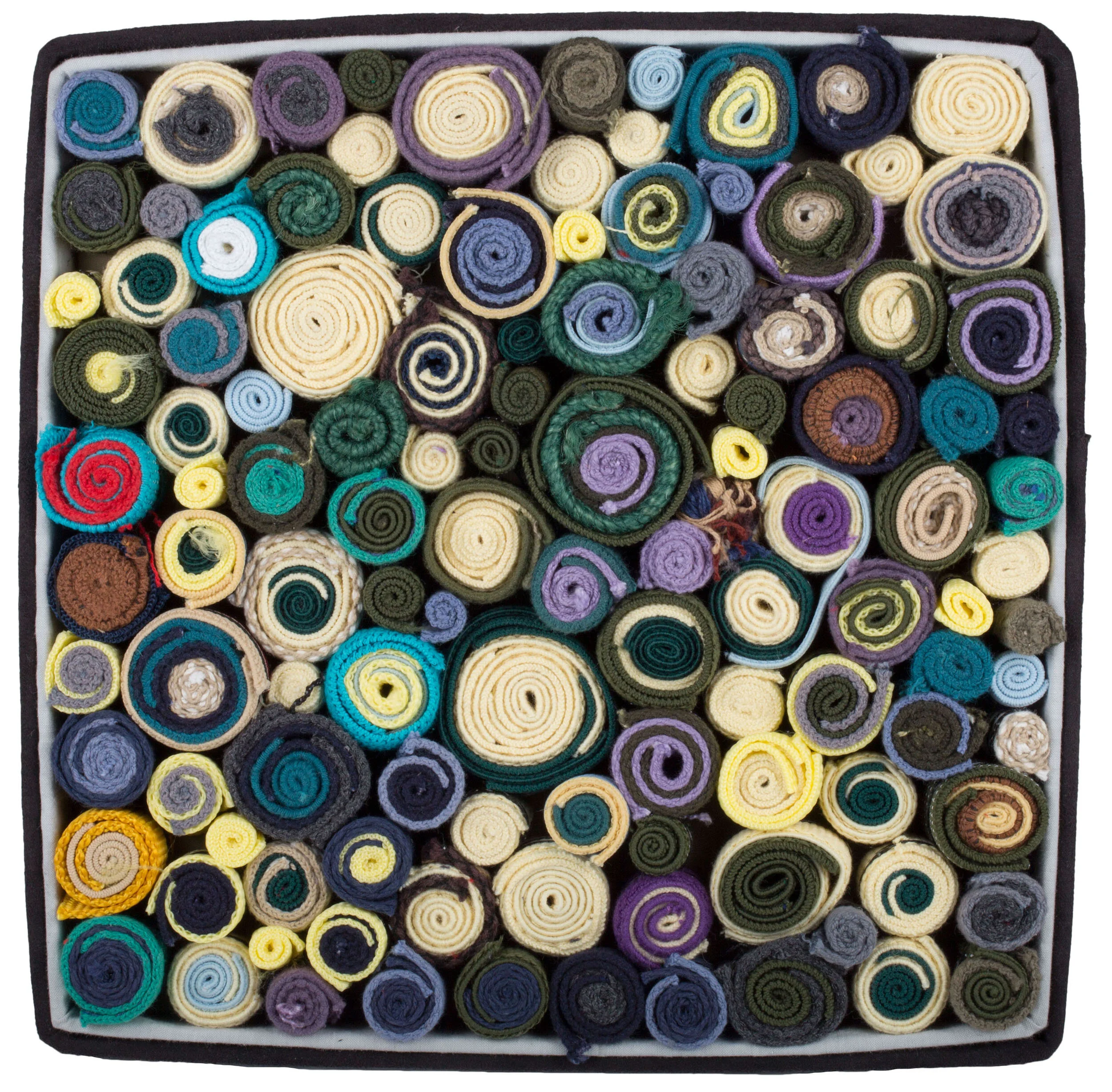
RIKERS: HOPE AND FAITH: Made in collaboration with inmates at Rikers Island’s Rose M. Singer Center
LWD 10 ¼ x 10 ¼ x 2 ⅝ inches
RIKERS: SHADES OF ROSIES
Made in collaboration with inmates at Rikers Island’s Rose M. Singer Center
LWD 10 ¼ x 10 ¼ x 2 ⅝ inches
RIKERS: MAQUETTE: Made in collaboration with inmates at Rikers Island’s Robert N. Davoren Complex
LWD 10 ¼ x 10 ¼ x 2 ⅝ inches
RIKERS: THINGAMAJIG: Made in collaboration with inmates at Rikers Island’s Robert N. Davoren Complex
(All) Archival board, fiber, rubber bands)
LWD 10 ¼ x 10 ¼ x 2 ⅝ inches
Once, doing a project at Rosies, we recognized a girl as soon as we walked in. We had worked with her on the outside—on our big public project at City Point in Downtown Brooklyn. She came from a local school where, we had been cautioned, many students ended up institutionalized or incarcerated. But we didn’t say anything to her. You just never know what has happened to these individuals recently, or what they are feeling, so we let them give us our cues. But towards the end, she walked right up and asked how the Brooklyn project was going. We gave her a huge high five and showed her the beautiful pamphlet we’d brought about that project. It included her photo. And she got permission to keep it.
2015-2016
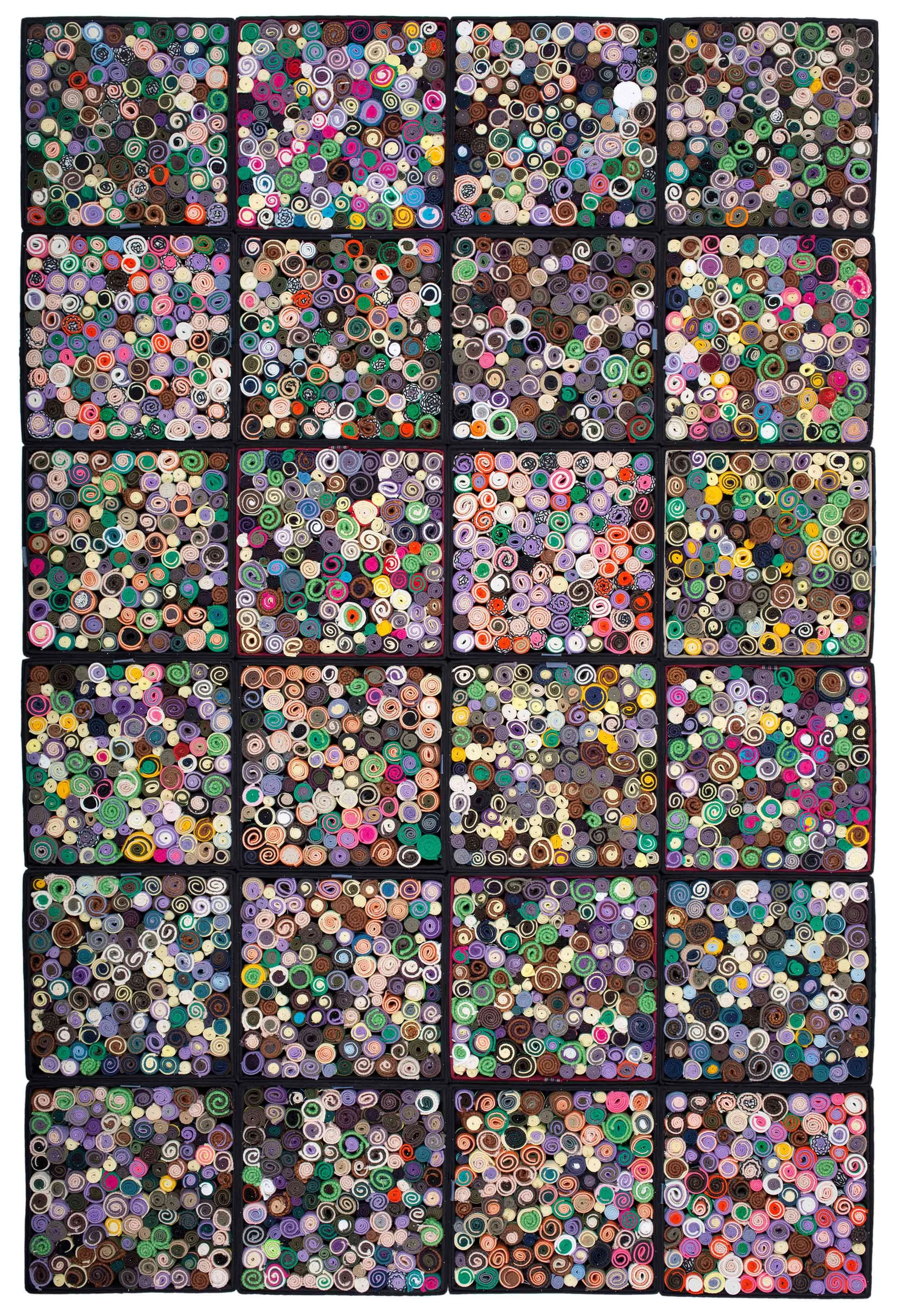
INVINCIBLE
Made in collaboration with inmates at Rikers Island’s Rose M. Singer Center and the George Motchan Detention Center
Archival board, fiber, rubber bands, ink
LWD 41 x 61 x 3 ½ inches
For Invincible, we made scrolls with 185 inmates in two women’s housing units over the course of a year. When it was finished, we pushed for clearance to install a full-size photographic print in each unit. When we finally scored a meeting with the warden, he greeted us with a big smile. “I used to be the warden at RNDC,” he said. “I remember you guys.” We ran over to give him a big hug, and he gave his approval. That was the only time we got permission to install something permanent in the housing units.
We were so proud as we carried the two giant metal photo reproductions through the hallways of the jail. Inmates and officers gawked and told us it was beautiful. We couldn’t stop grinning as each reproduction went up. The inmates just gravitated towards it and put their hands all over it. The title came from a participant who wrote: “The name of my scroll is Invincible. That is the way I see my son. He is a person that doesn’t never stop going to his goals. [My scroll means] peace, stress free, doing something that will become a part of something bigger. [Steven and William] thanks so much for giving hope to each one [of us].”
2017
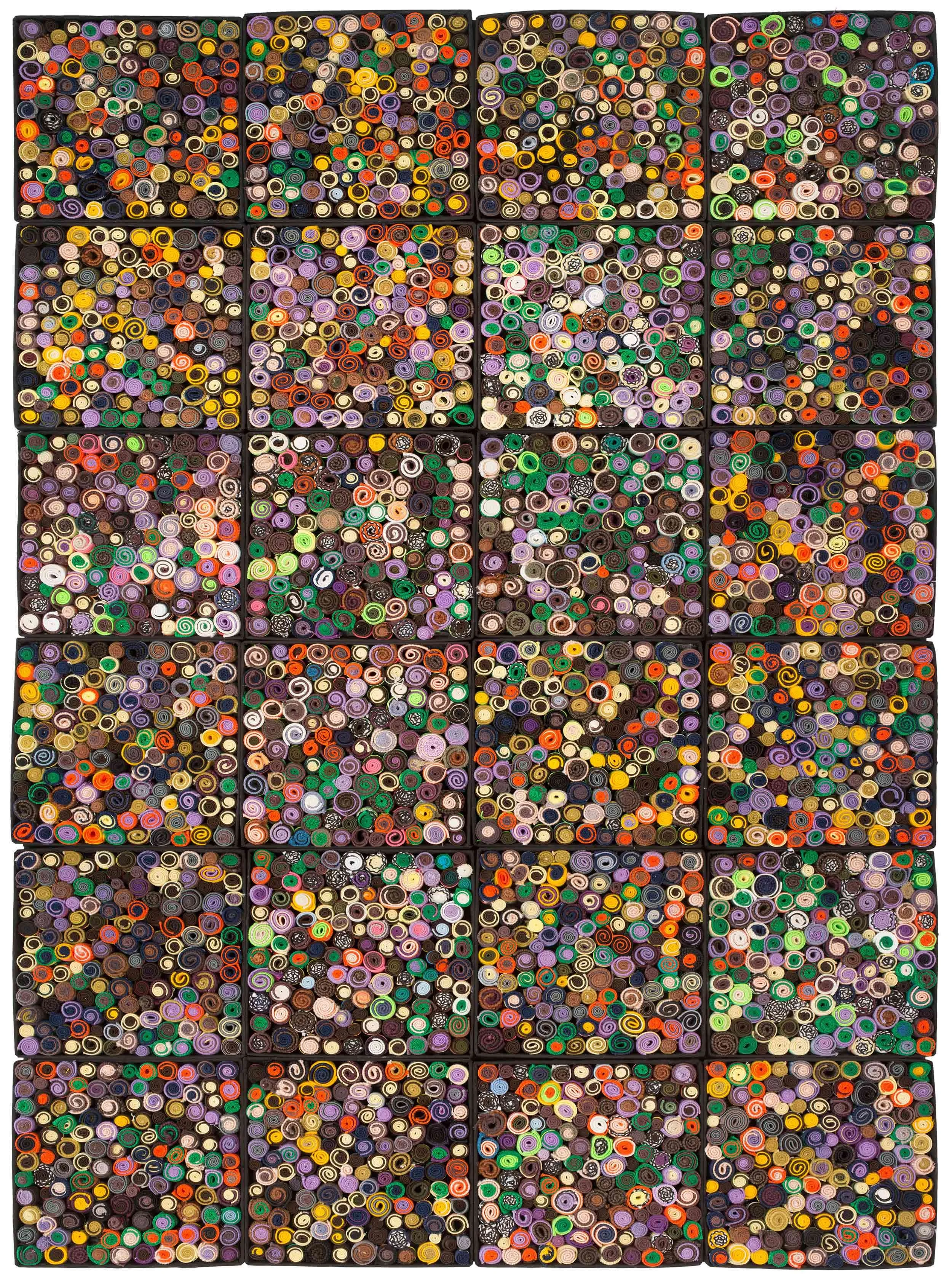
THE NEW NORMAL
Made in collaboration with inmates at the Manhattan Detention Complex (Transgender Housing Unit and Restart Housing Units 5N, 5S and 8W and Rikers Island’s Nurses at the CHS Medical Trailer
Archival board, fiber, rubber bands, glue, wood
LWD 39 ¾ x 59 ⅜ x 2 inches
We worked at the Manhattan Detention Complex on a year-long project in a housing unit strictly for LGBTQ+ inmates. They were more protected in this unit than in the general population. It has since been dissolved. We often worked with inmates multiple times; one day, a new inmate joined in and engaged right away. We could tell they felt welcome. When I asked them to share the title of their scroll, they said, “The name of my scroll is The New Normal. Everyone always told me I was abnormal. But now I am The New Normal.” Immediately William and I chimed in, “You are all The New Normal!”
In the LGBTQ+ unit, they pushed two tables together, and we sat making scrolls from the pile of colorful trimmings heaped in the middle. Tiffany, a black trans woman who shares William’s birthday, revealed that they had nine brothers. In their mid-teens, they resolved to tell their family who they knew they really are. But before they could, they realized that their father already knew. One night at dinner, he looked around the table at his kids and declared that he was proud to have all boys, and no girls. They knew there was no place for them in the family. The next day, they left home and moved onto the street.
2018
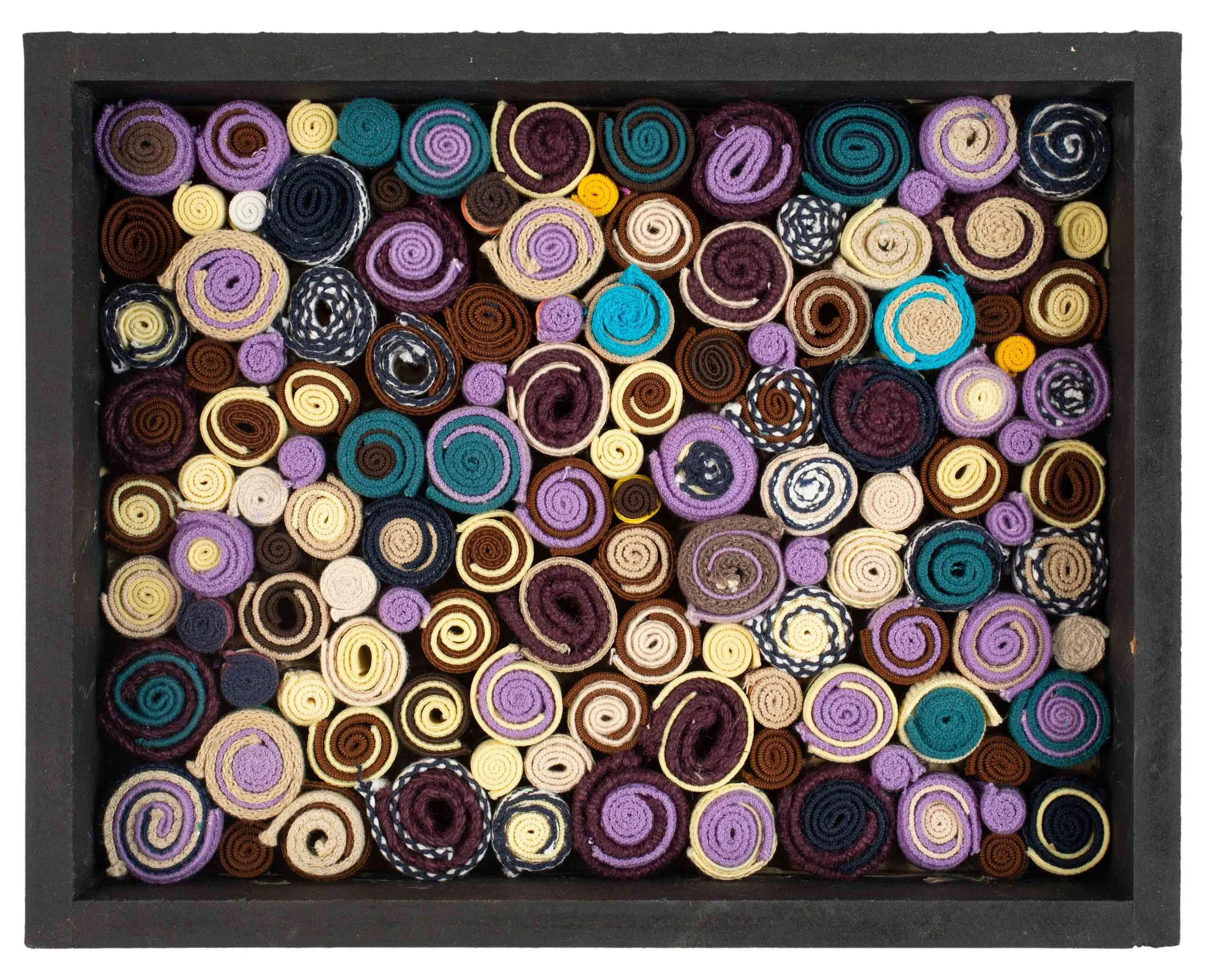
A PART OF MY LIFE
Made in collaboration with inmates at the Manhattan Detention Complex
LWD 9 ⅞ x 12 ⅜ x 2 ½ inches
ABSTRACT CHAOS
Made in collaboration with inmates at the Manhattan Detention Complex
(Both) Fiber, rubber bands, glue, wood
LWD 9 ⅞ x 12 ⅜ x 2 ½ inche
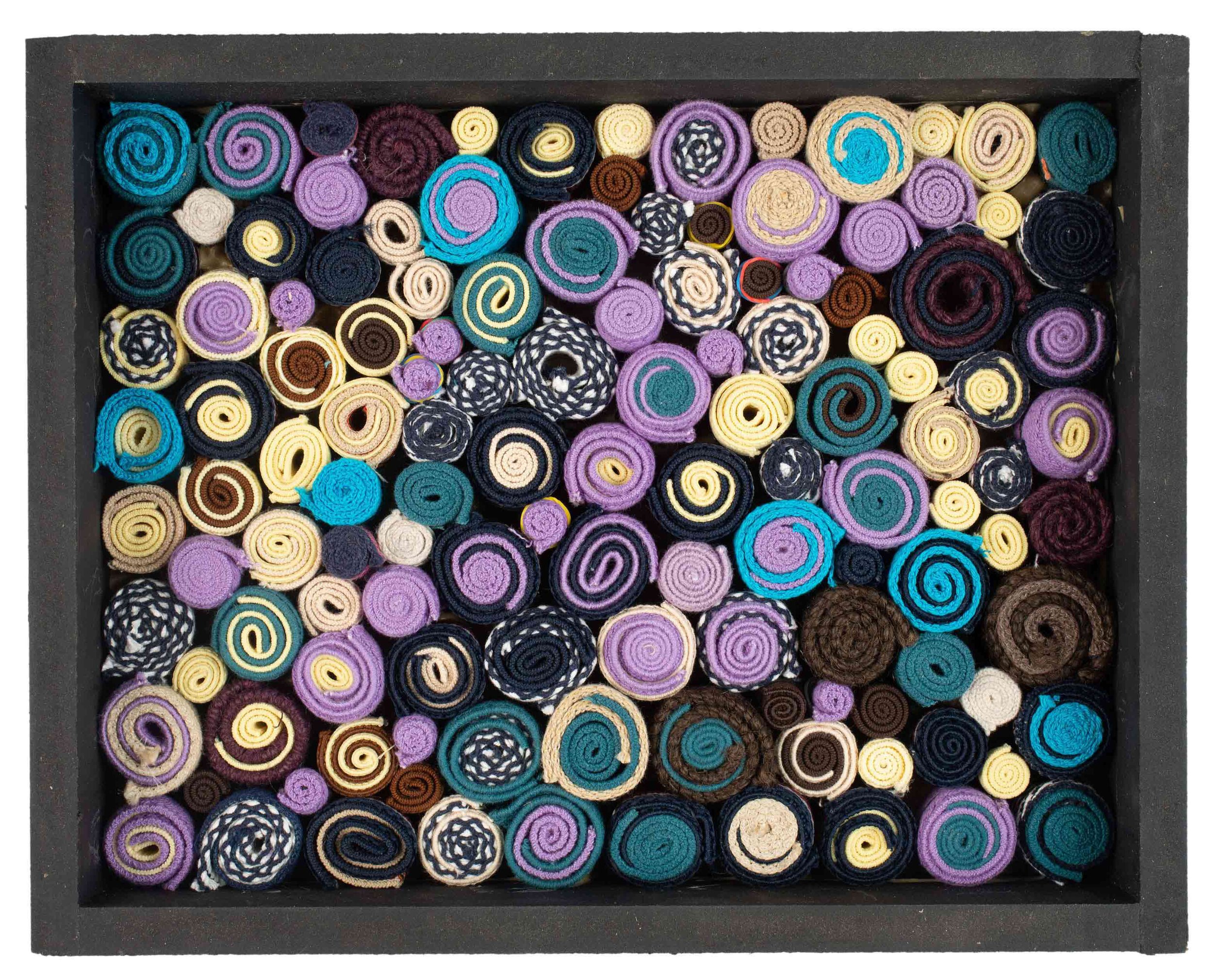
They were perched on a table bolted to the floor in a Manhattan jail. We walked in smiling and invited them over where we laid out a pile of colorful fabric strips. One kept asking, “Be honest with me, are you scared to be here?” We said no. “That’s what’s up,” he said, and gave me an exploding fist bump. They joined us around the table and opened up to us as we made art together. “No one will work with us. Everyone is afraid. They don’t give us anything. We’re all in here for murder.”
The inmate who “ran the house” wore about ten rosaries around his neck to prove it. Steven told him that William was a master bead worker, and he nodded toward another inmate and said that his friend was too. We never had permission to bring beads in with us because they could be manipulated to use as a weapon. Finding out that these inmates were allowed to make rosaries and wear the beadwork was incredible. It was such a cool connection to us and our work.
2019
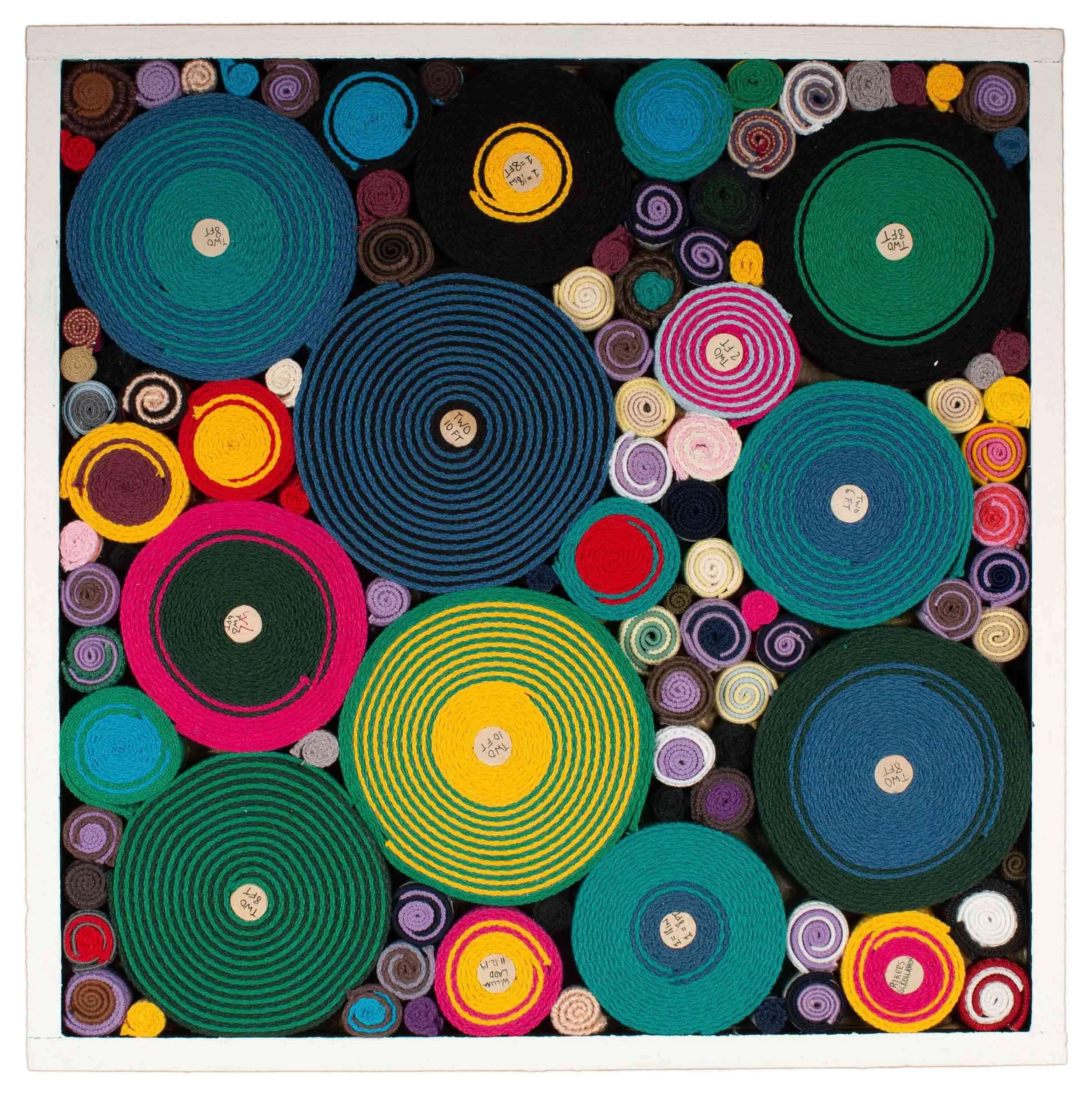
NYC DOC MAQUETTE 1
Made in collaboration with inmates at the Manhattan Detention Complex
LWD 16 ⅛ x 16 ⅛ x 1 ⅝ inches
This was the first time we were allowed to work with adult male inmates at Rikers. For an hour, 15 guys sat around a table with us, grabbing trimmings to make scrolls, naming them, and telling us their stories. At the end of the session, the jail went on lock-down, so we stayed put, talking with them for another half hour.
We asked one inmate about his hopes and dreams. He said he’d always wanted to own a service station. As a teenager, Steven’s first job was pumping gas. So he got all excited and said, “Let’s plan this out!” We talked about different steps the inmate might take over the next ten years in order to make that dream a reality. It was fun. At the end, he paused and said, “No one’s ever cared about me enough to have a conversation like this.”
2019
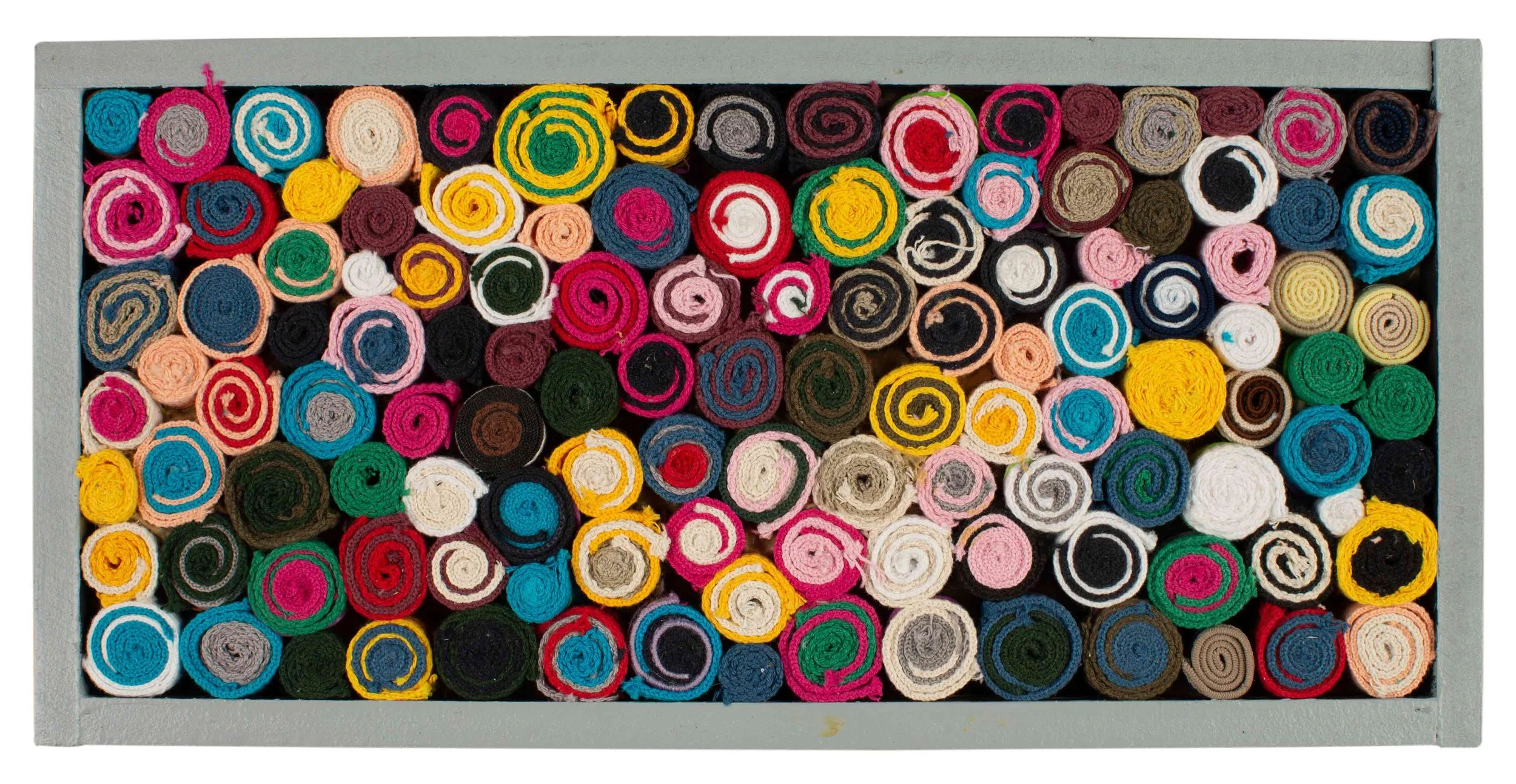
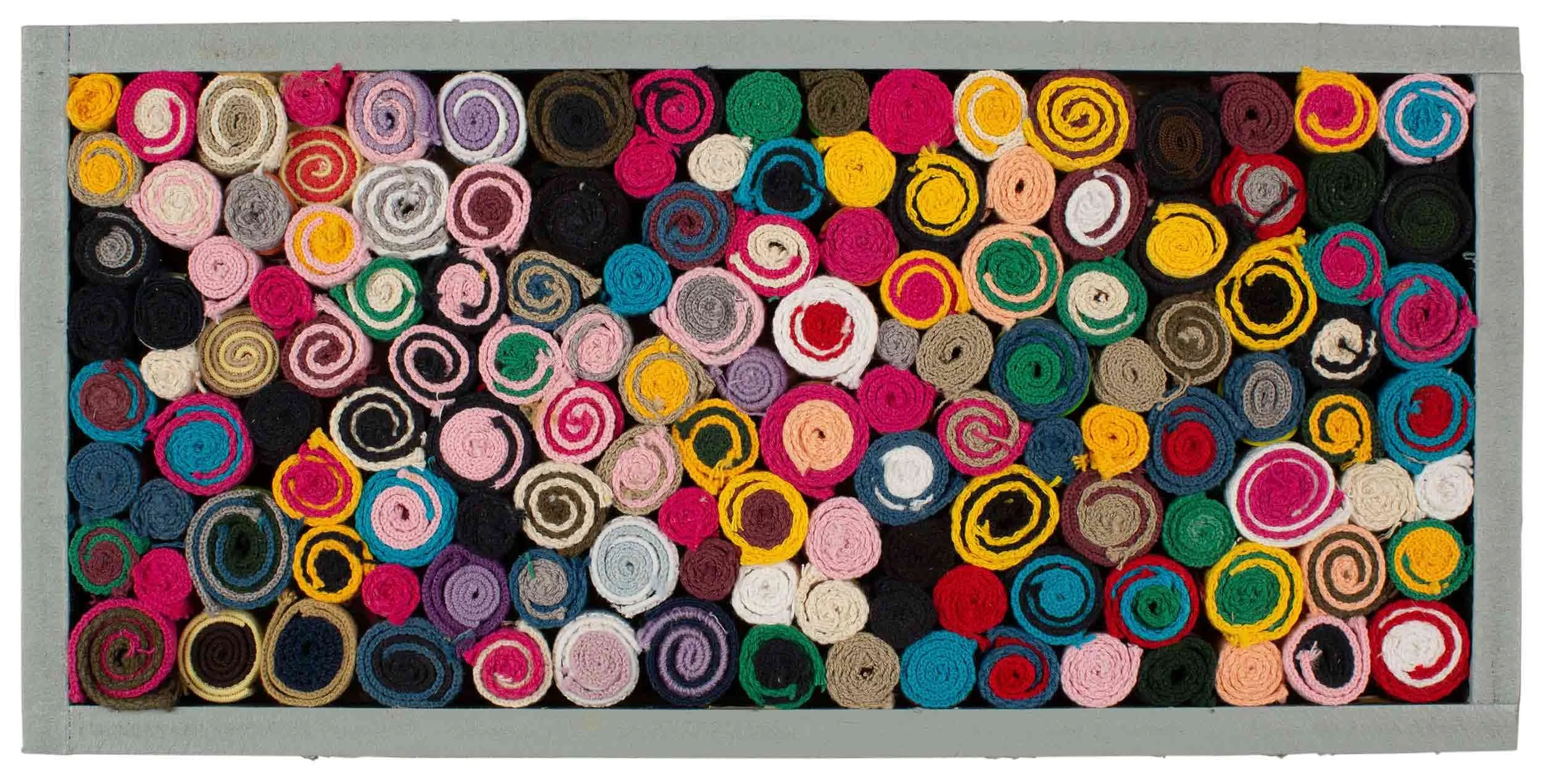
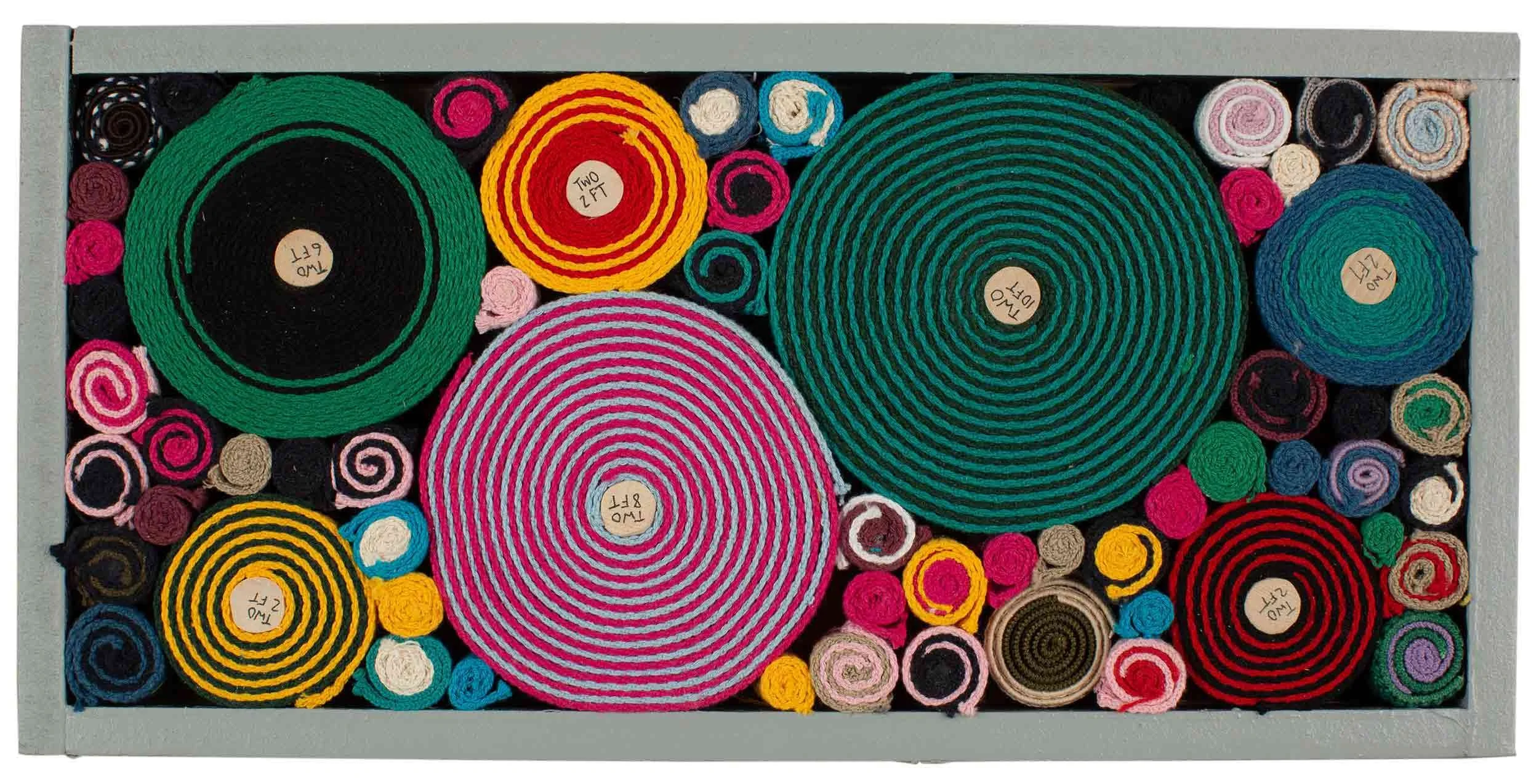
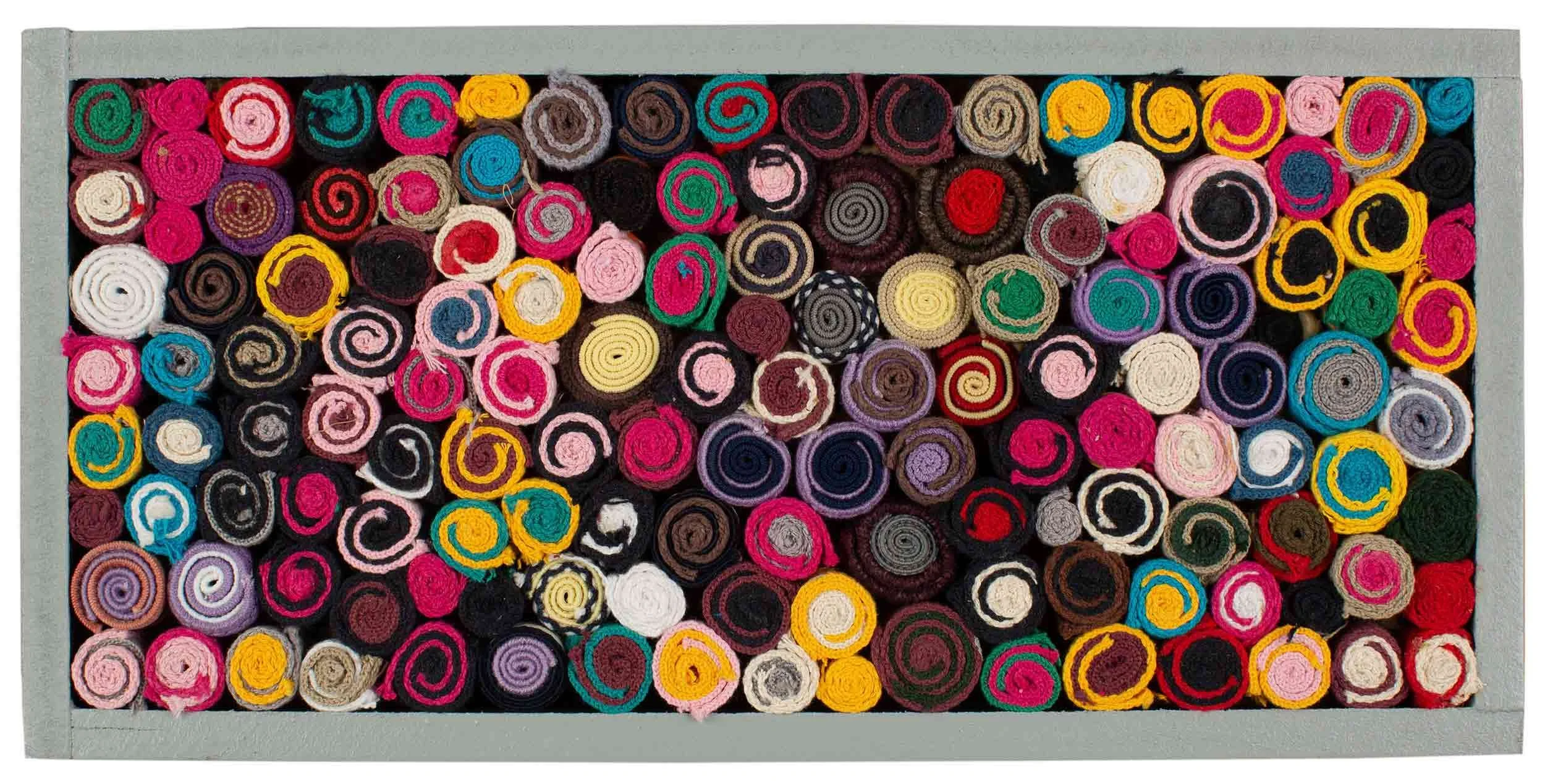
NYC DOC MAQUETTE 2 - 5
Made in collaboration with inmates at the Manhattan Detention Complex
(All) Fiber, rubber bands, pins, glue, wood
LWD 7 ⅝ x 15 ⅝ x 1 ⅝ inches
After another session with the adult men, we were waiting between two doorways for our escort out of the jail. We heard a man down the hall yelling to us “Brothers! Brothers!” When he got our attention, he gave us a huge grin and called out, “I got my scroll! They tried to take it. But I said, ‘This is my scroll!’ And they let me keep it.” We were so happy.
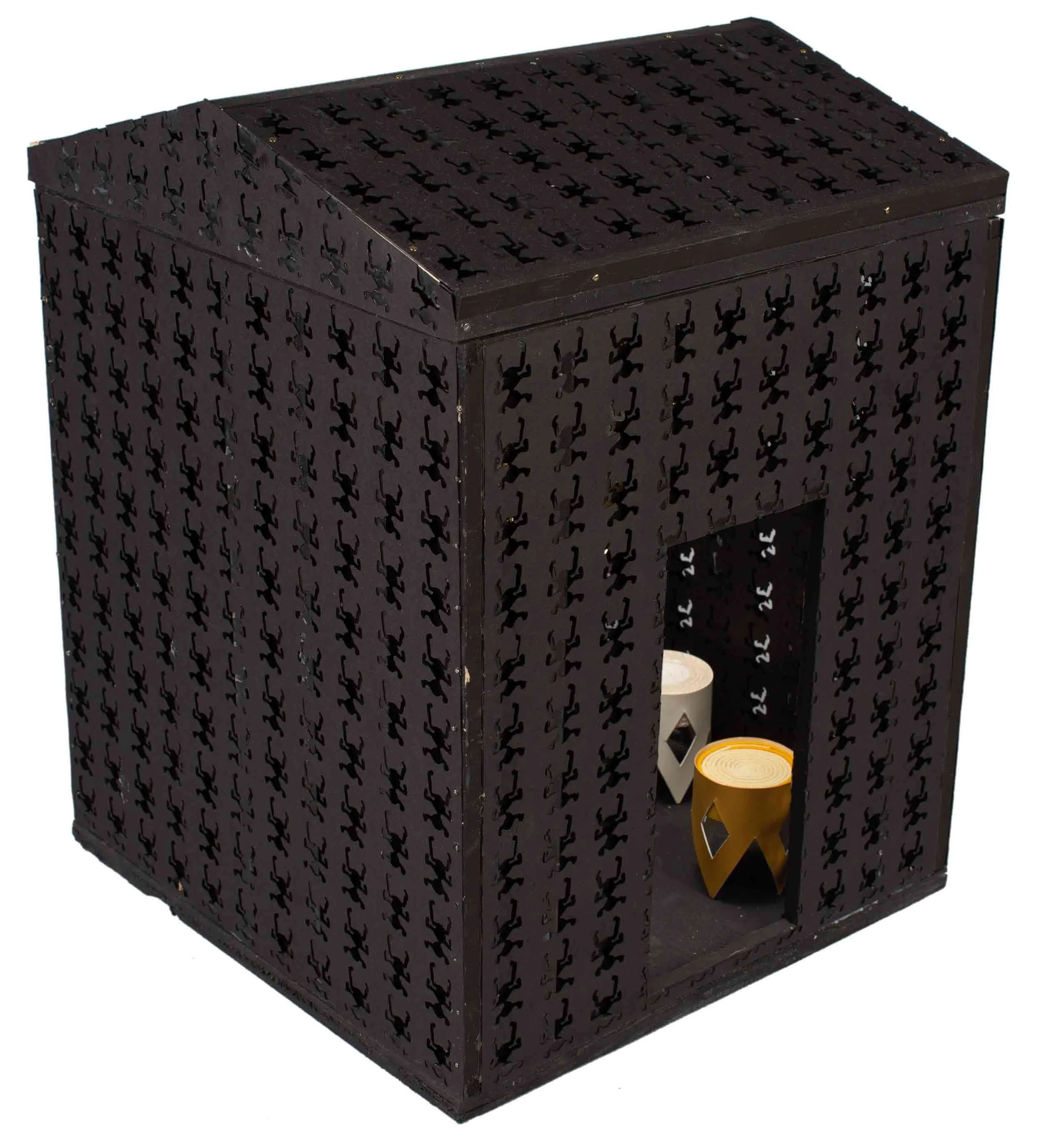
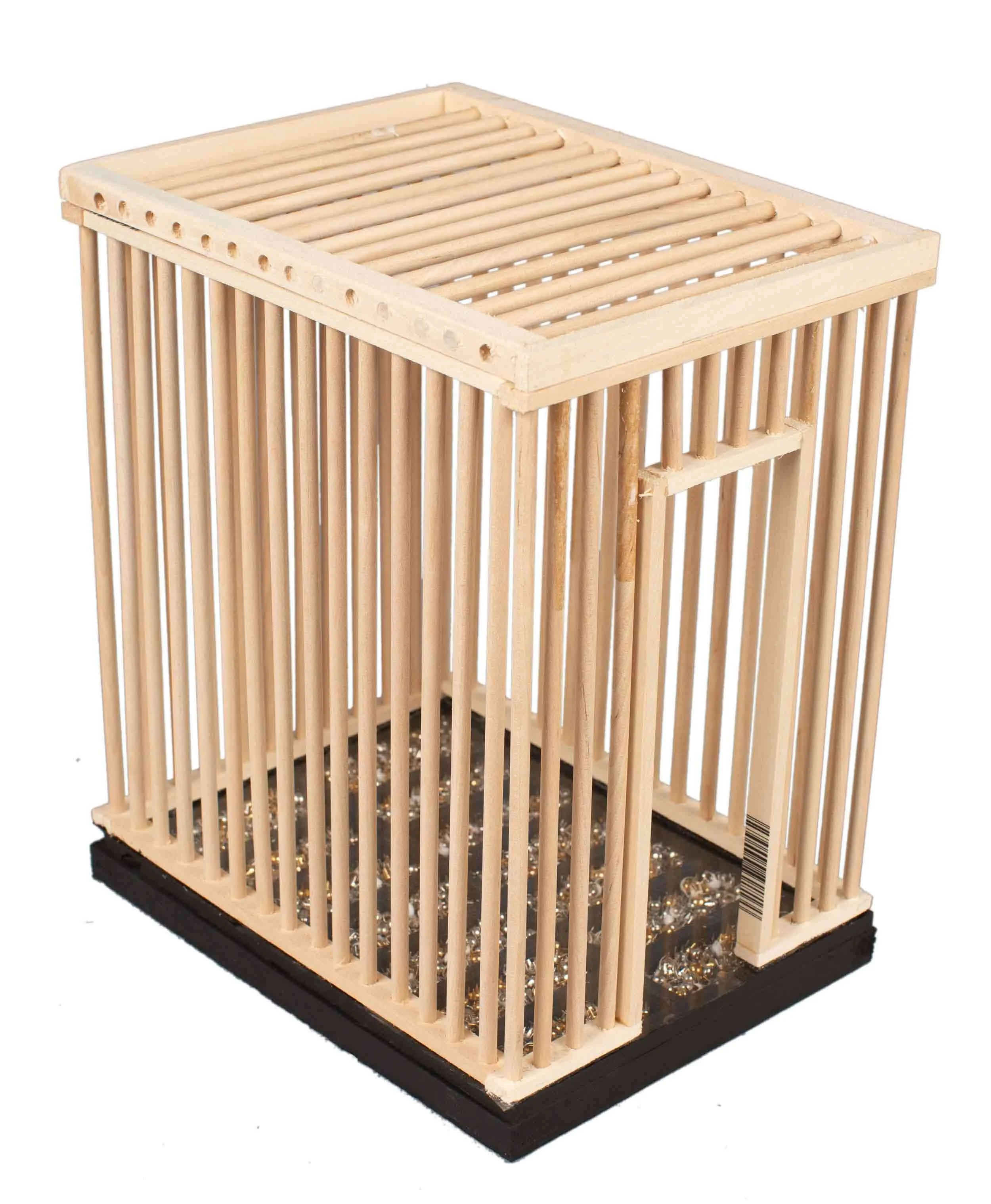
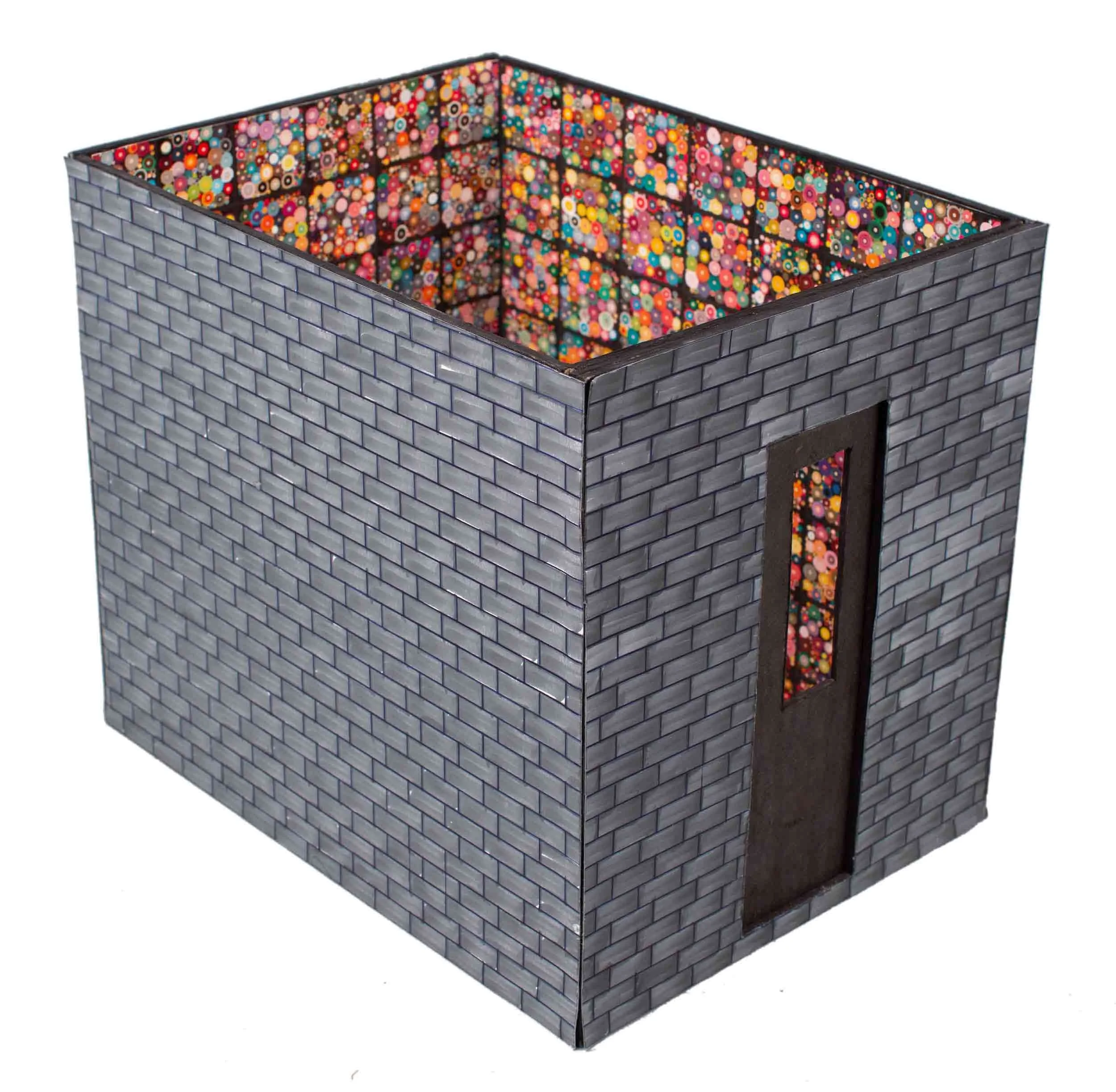
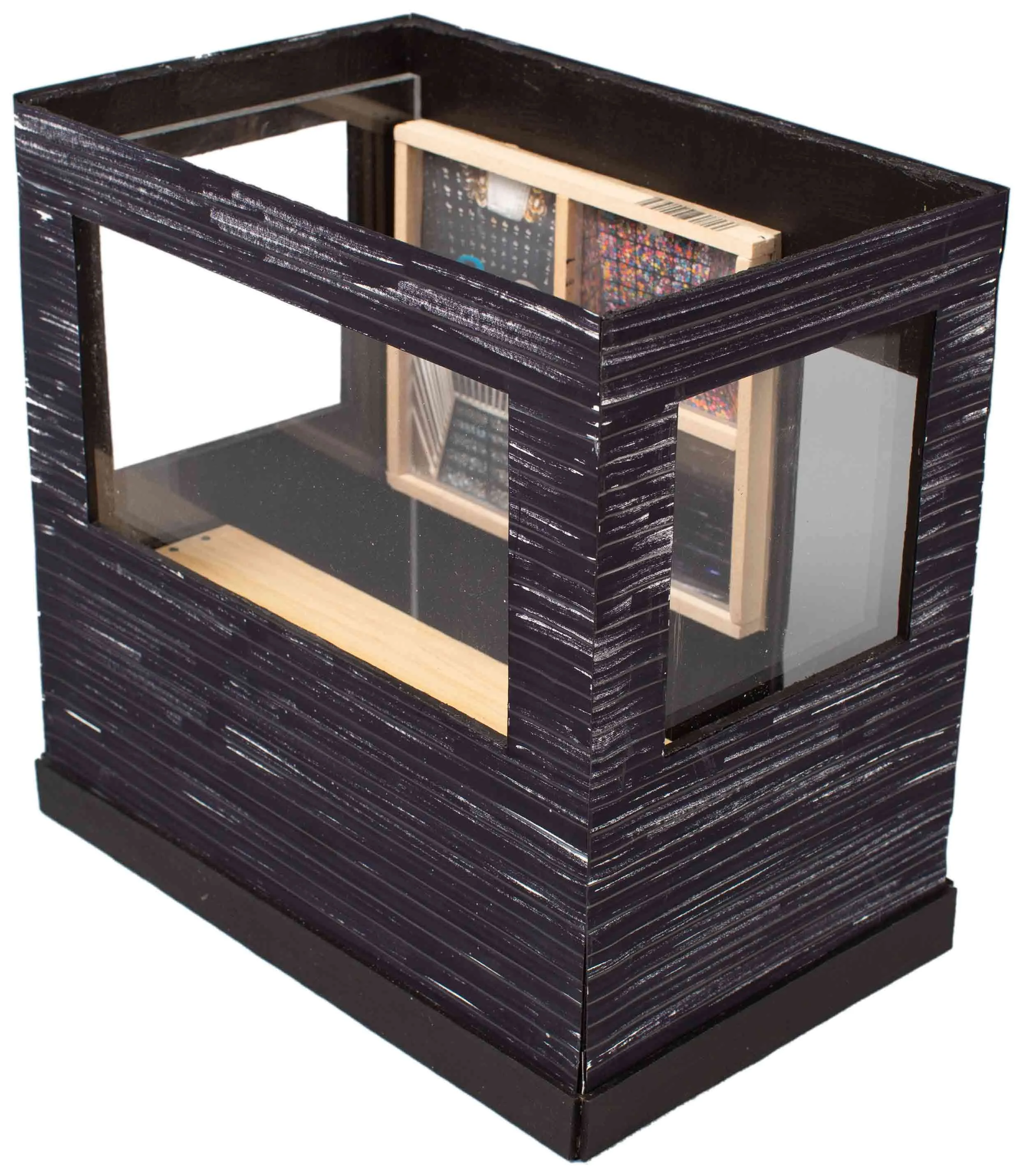
JAIL HOUSE MAQUETTE, 2019
LWD:15 ½ x 11 ⅞ x 12 inches
ISOLATION MAQUETTE, 2019
LWD 9 ¼ x 6 ⅛ x 8 inches
JAIL CELL MAQUETTE, 2019
LWD 8 ⅜ x 7 ⅜ x 9 ⅝ inches
JAIL BUBBLE, 2019
(All) Various Materials
LWD 9 ⅛ x 6 ⅛ x 9 ½ inches
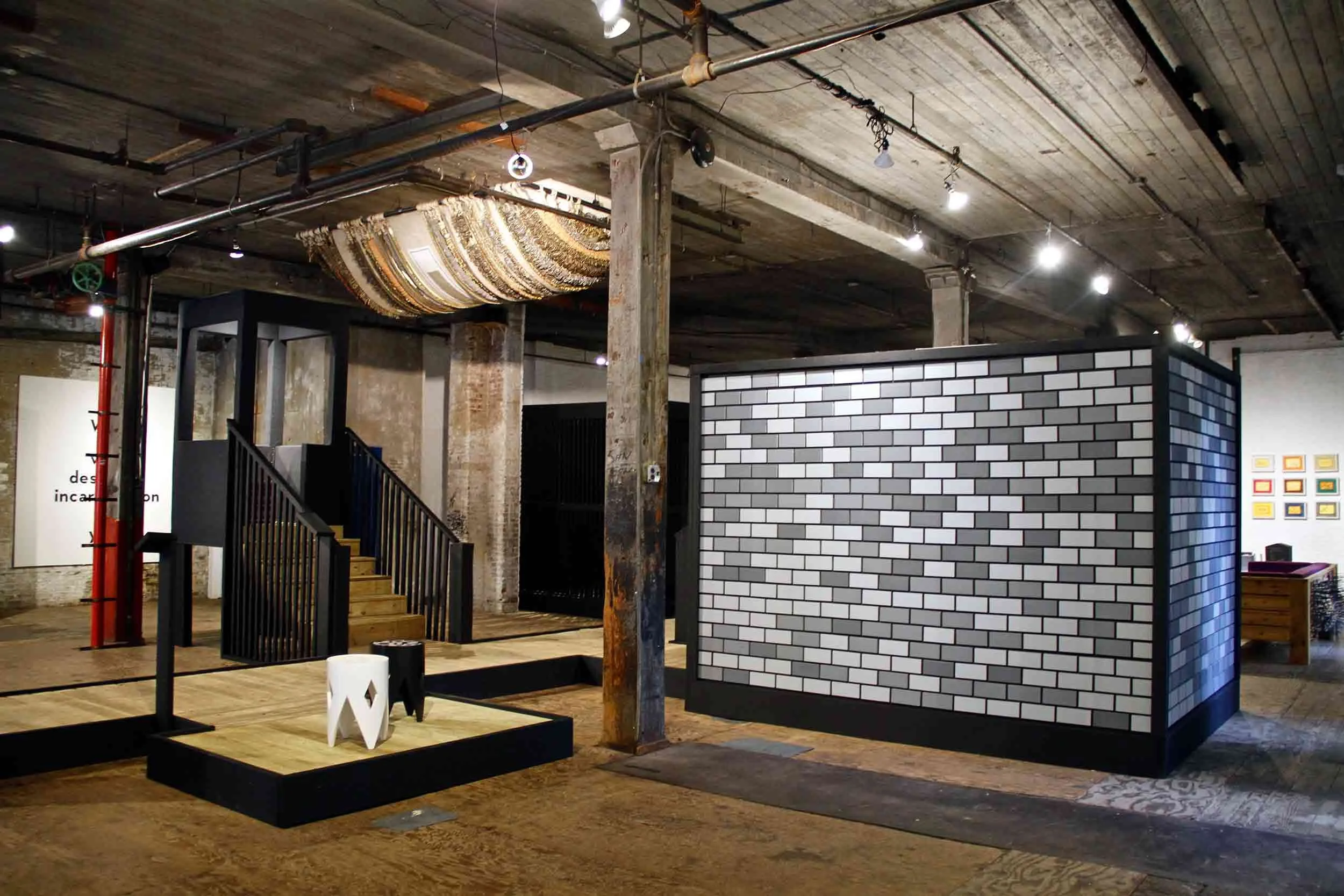
The idea for this exhibition has been germinating for many years; but early in 2019 we secured this space at The Invisible Dog and began a formal planning process. That involved the creation of these maquettes that represent a jail cell, a housing unit, solitary confinement, a surveillance booth, a pathway and metal detectors. We loved the idea of including them in the exhibition so you can see how our ideas evolve over time. If you look inside the Jail House, 2019, you’ll see a chandelier like the one in the center of the exhibition space as well as little maquettes of the crown stools.
Installation images Simon Courchel/The Invisible Dog
Images of Artwork Steven and William Ladd
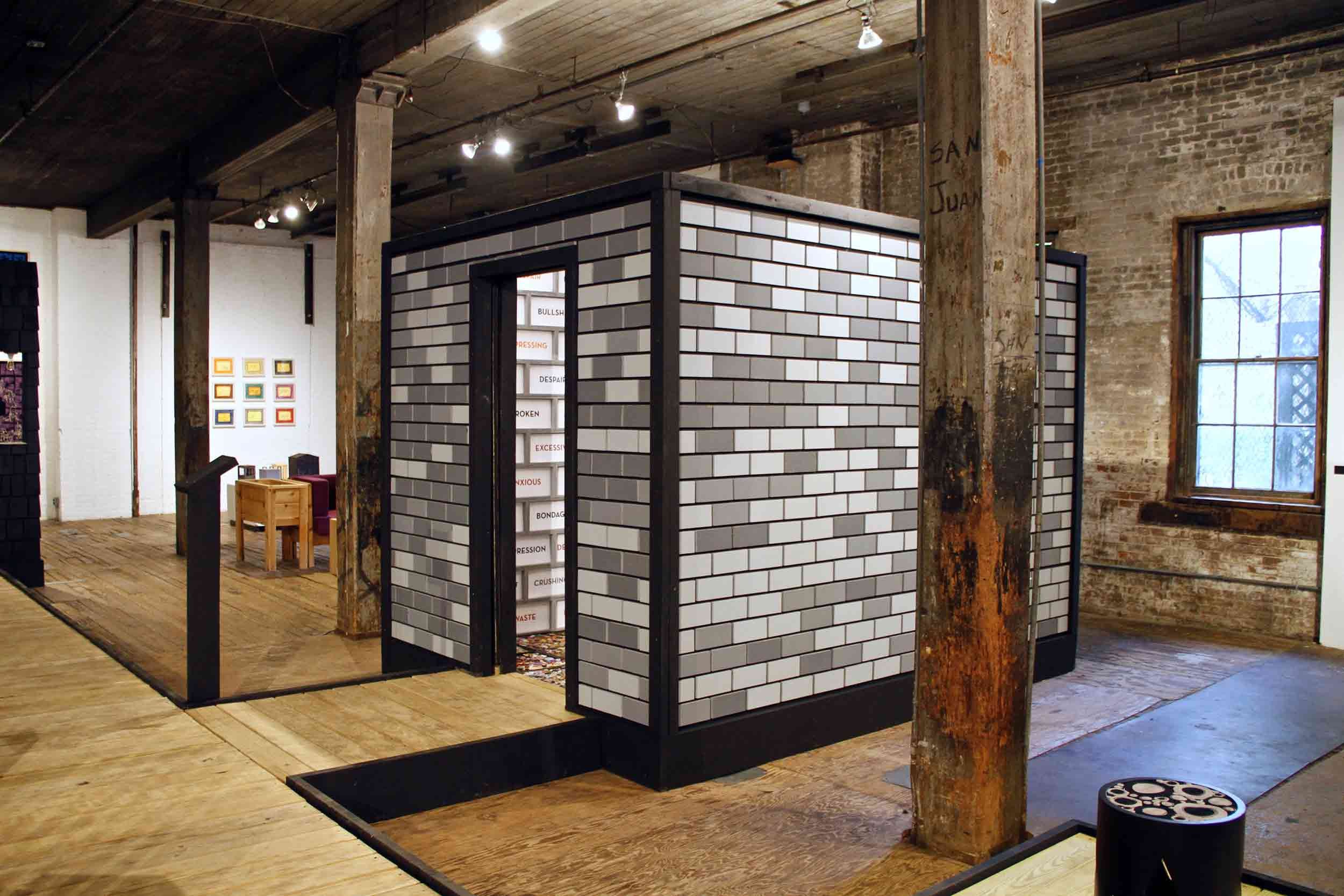
Installation Photos Simon Courchel for The Invisible Dog Art Center
2020
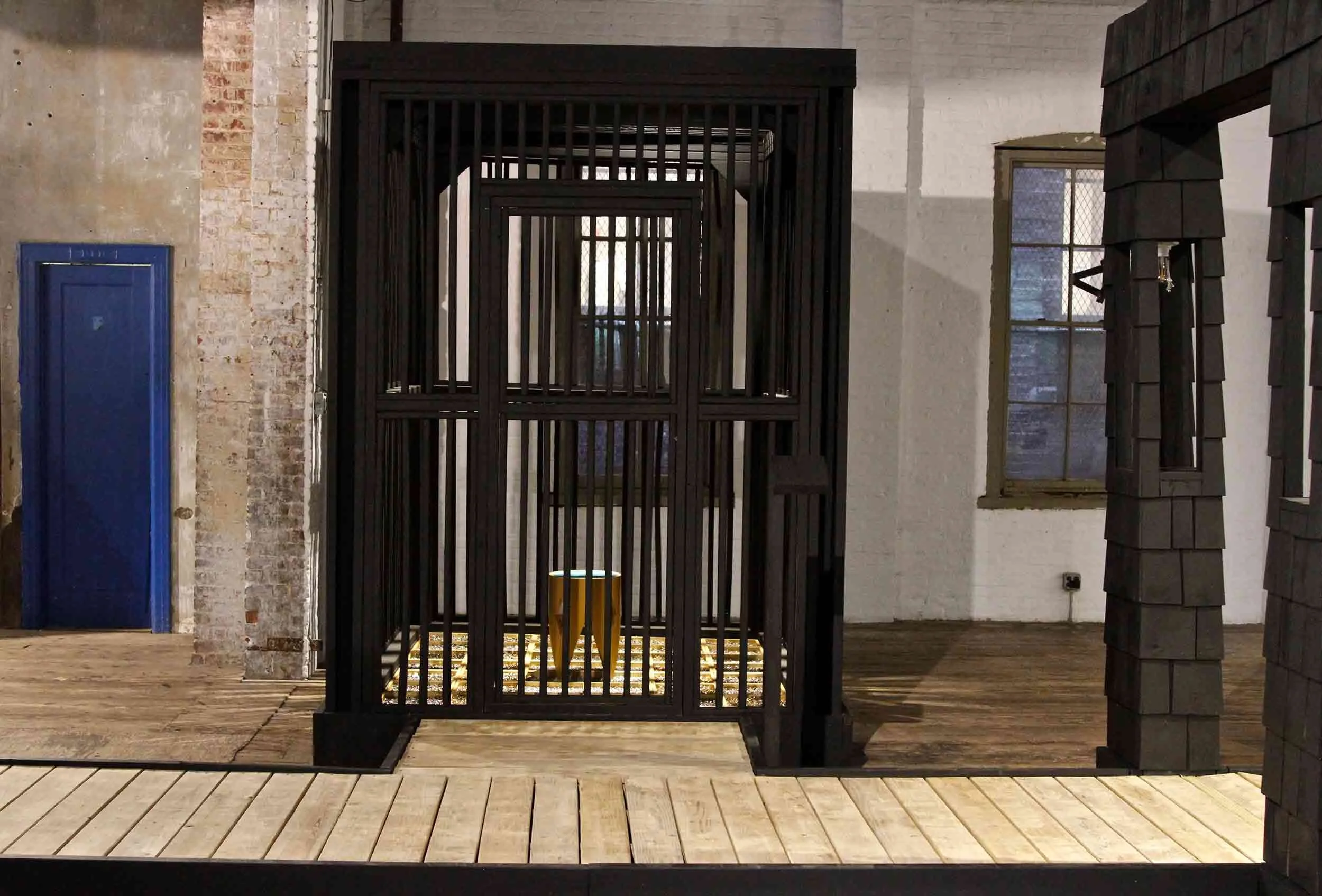
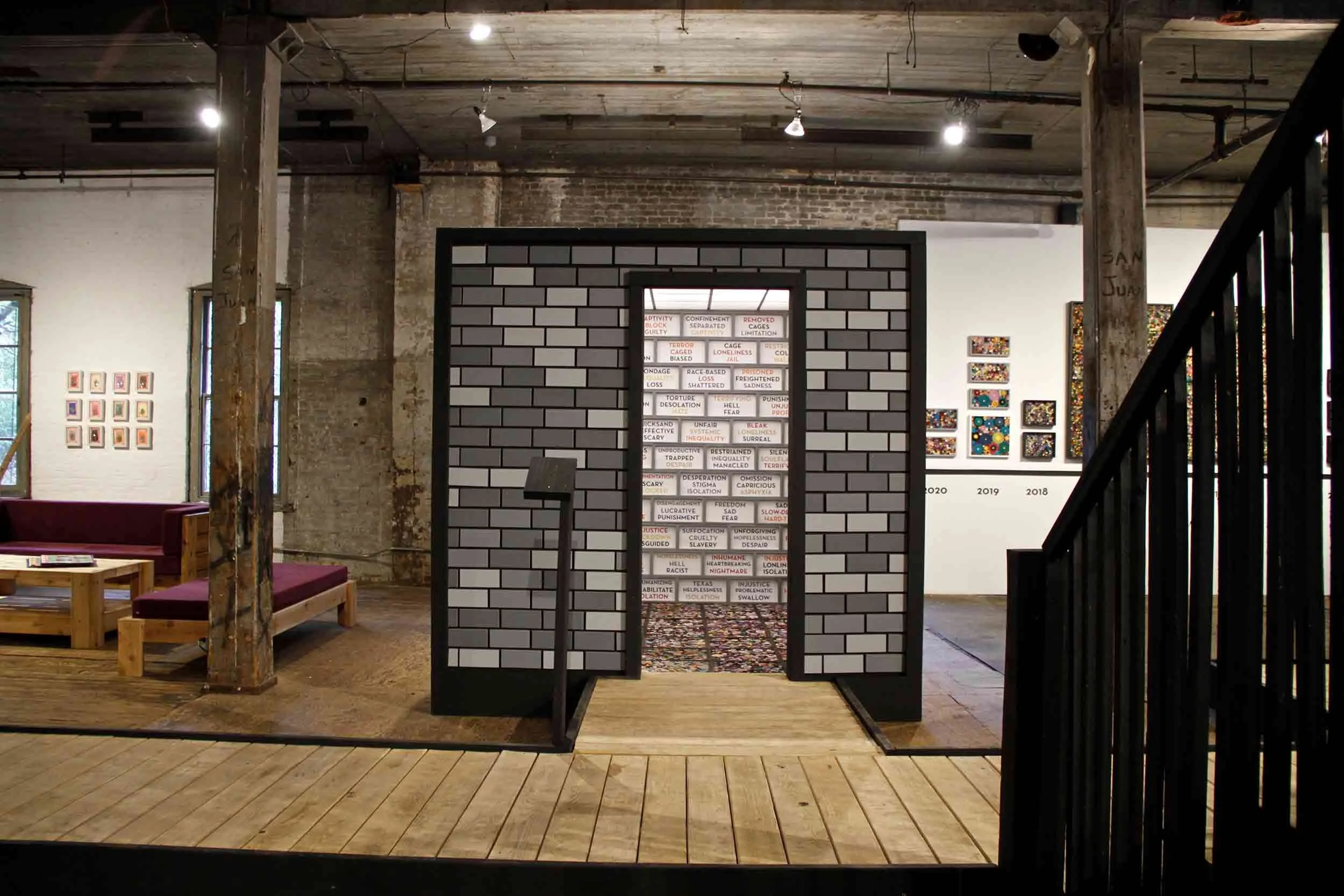
JAIL CELL
Made in collaboration with inmates at Rikers Island’s George R. Vierno Center, North Infirmary Command, Otis Bantum Correctional Center, Anna M. Kross Center and the Manhattan Detention Complex as well as over 500 people from our community on the outside
Various Materials
LWD: 100 x 100 ½ x 132 ½ inches
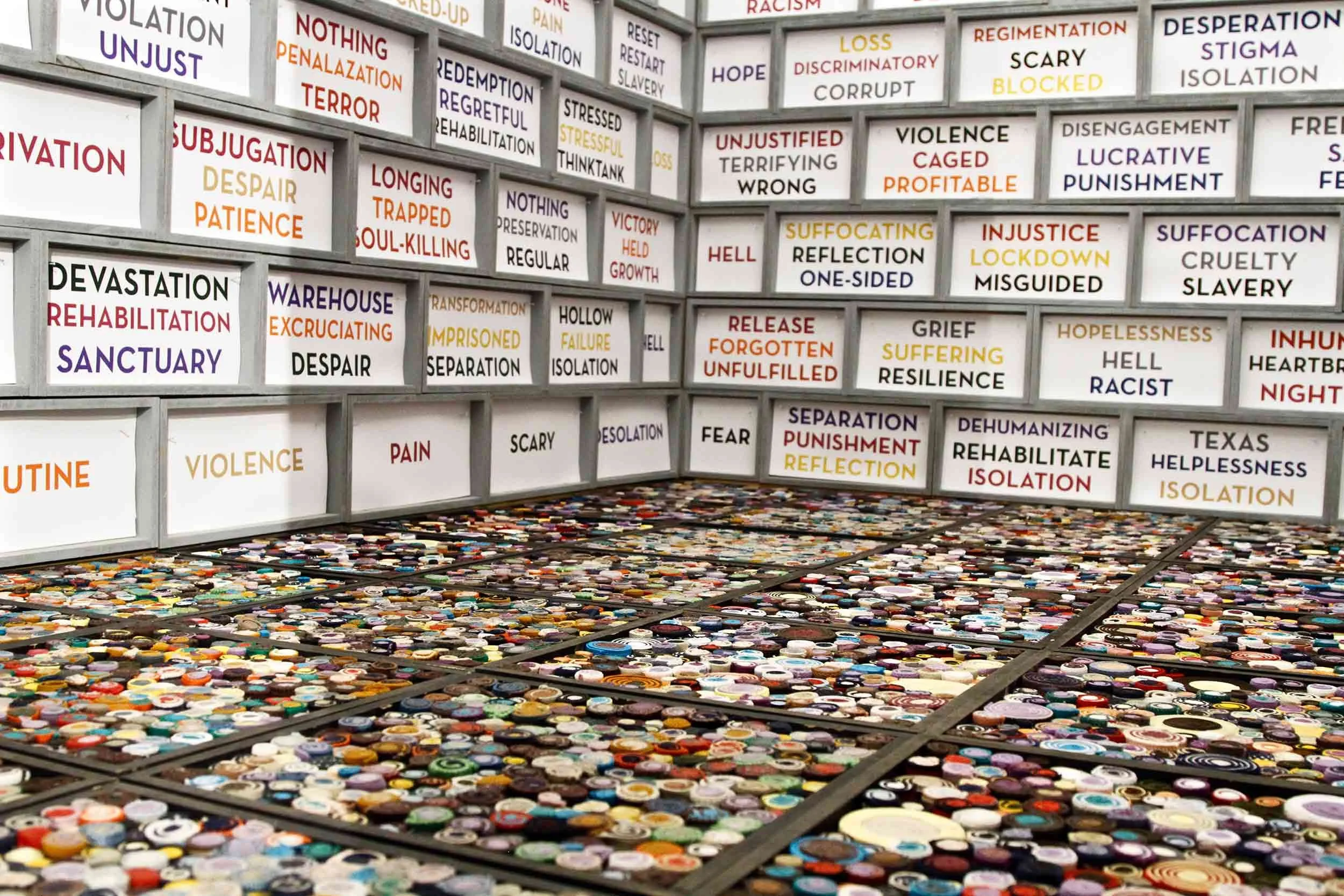
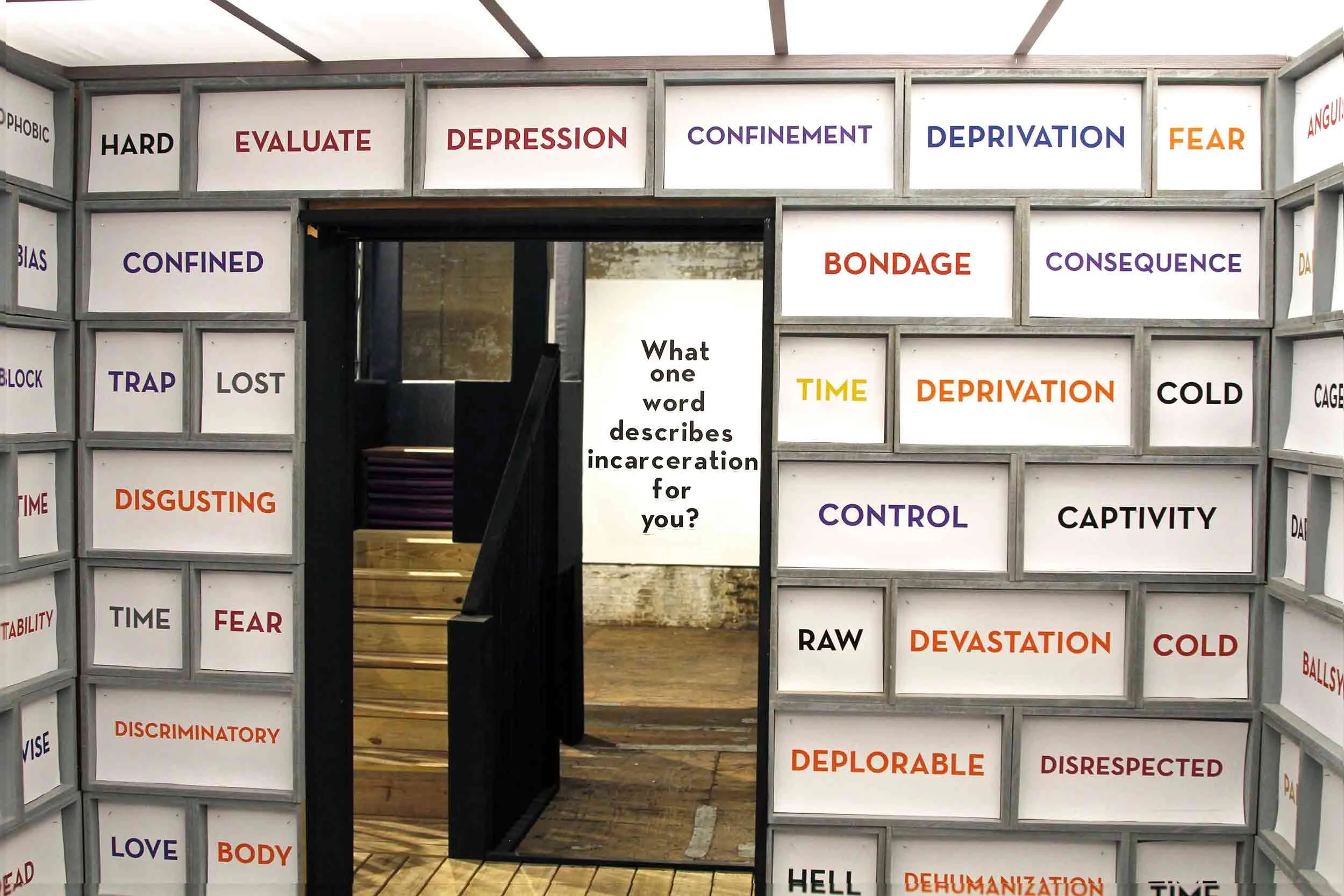
“What one word describes incarceration for you?”
The words lining this installation piece are responses to that question. We engaged with over 125 inmates in five jails and hundreds more from the outside community to build these word blocks.
This summer outside visitors were prohibited from entering the jail system, so we devised a way to engage inmates without being in direct contact. Usually in our workshops, each participant makes a colorful scroll to keep, and another as part of a collaborative piece.
Learning that inmates had access to colored pencils, we sent out packets with a drawing of blank scrolls so inmates could still create personal artworks to keep. We explained in the packet how we use art to tell stories and encouraged them to think of their own stories as inspiration.
We also asked them to send back anonymous responses to the prompt: “What one word describes incarceration for you?” We added responses from the outside community too, bringing inside and outside together. Walking inside Jail Cell, you’ll be surrounded by the voices of inmates.
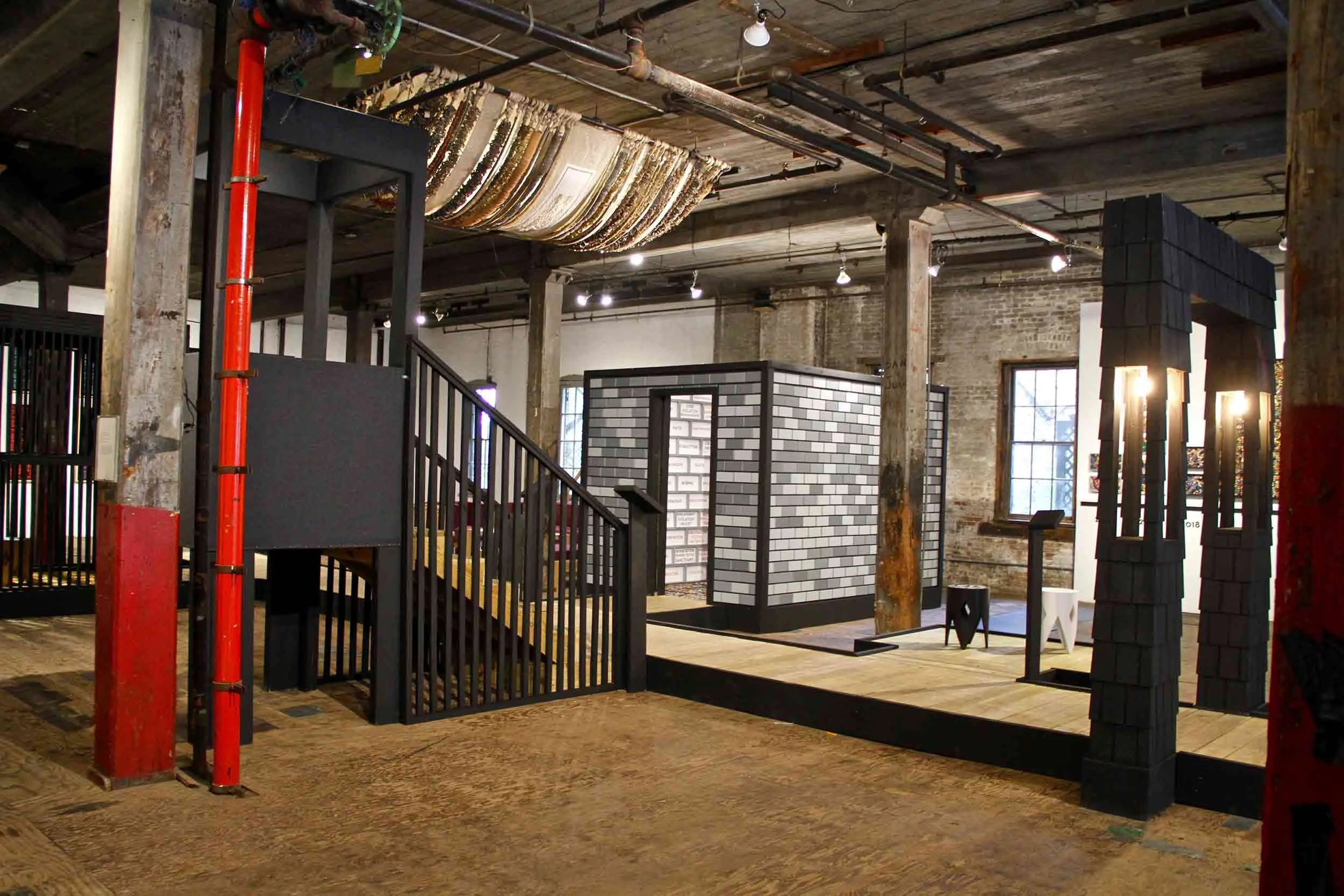
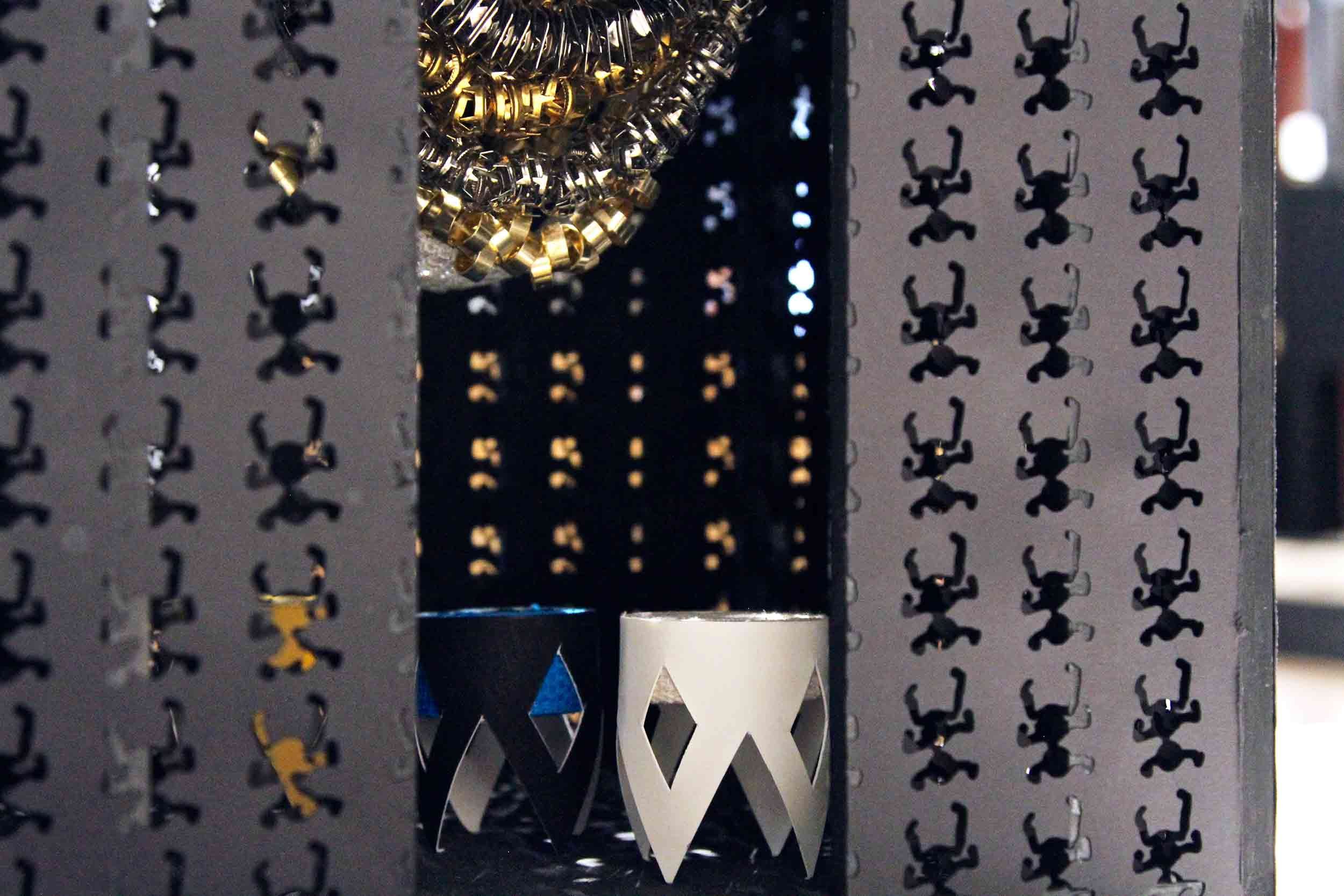
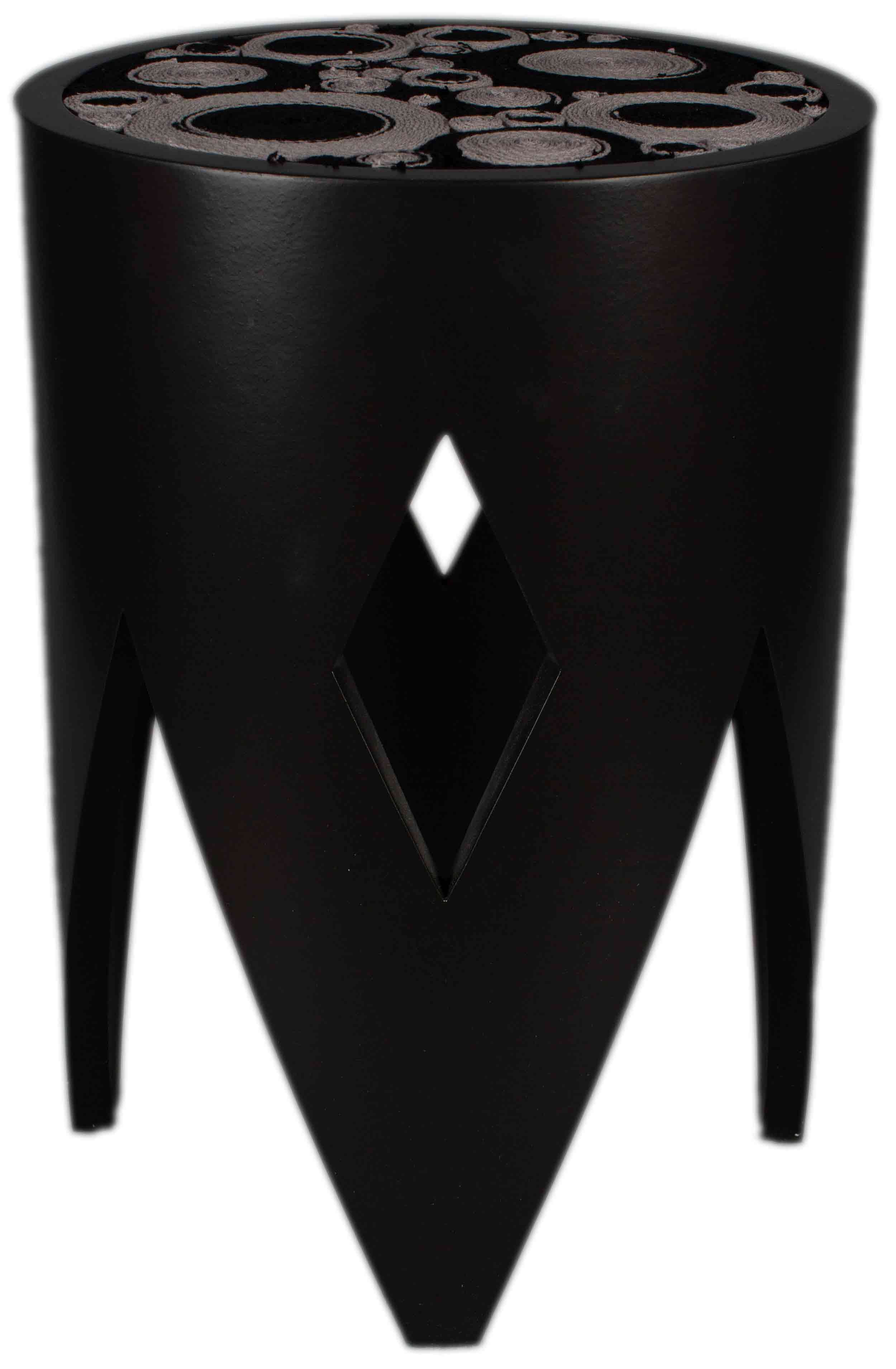
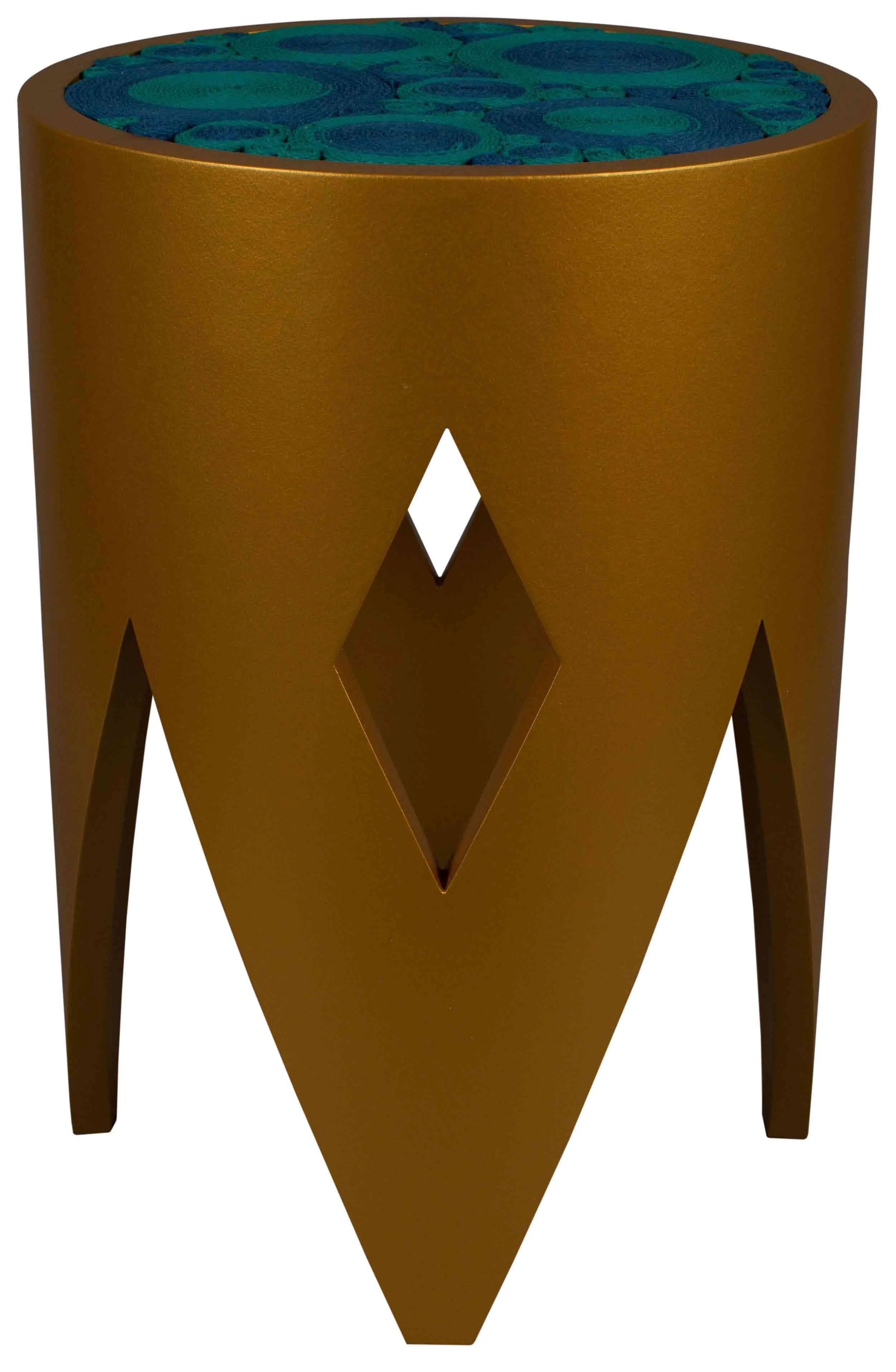
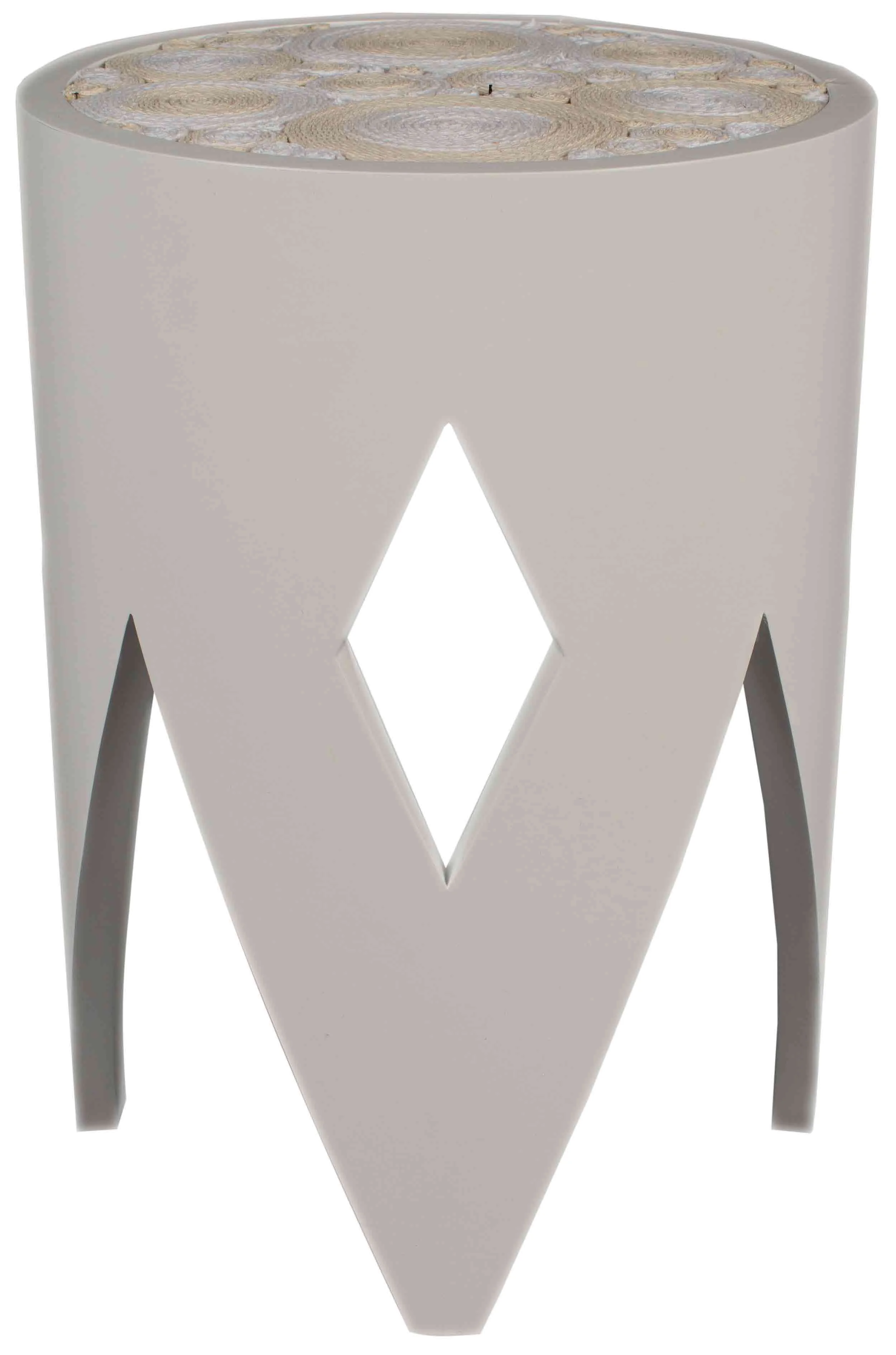
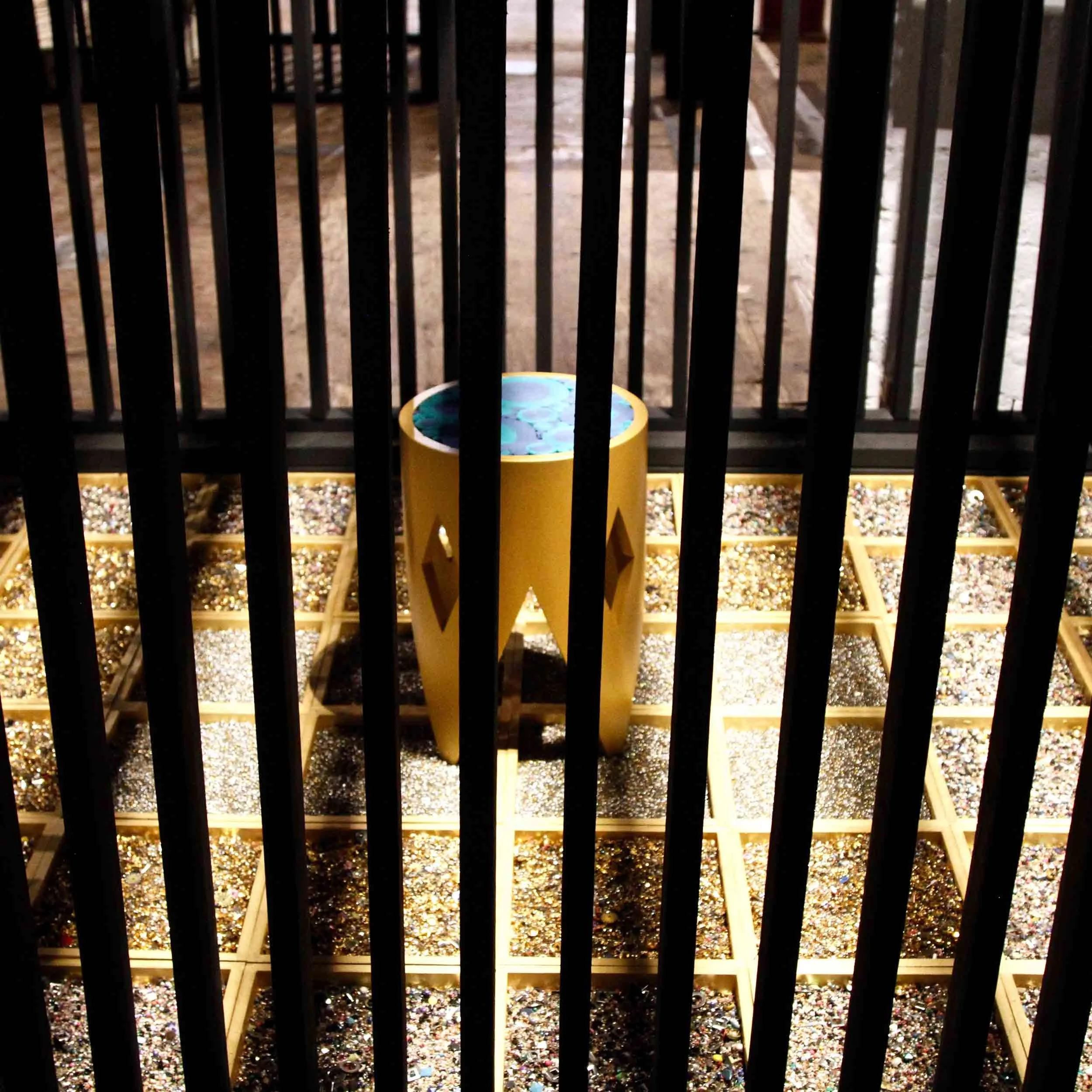
CROWN STOOLS WHITE, GOLD AND BLACK, 2020
Wood, metal, fiber
LWD 12 ½ x 12 ½ x 18 ¼ inches
Our first time at GMDC, one of the ten jails on Rikers Island, we worked with 19 to 21 year-olds. They seemed like kids to us. At their housing unit, the inmates placed the chairs around a table; but they stacked them up for one inmate, so he sat higher than the others. We learned that he was running the house—that he had the top rank in his unit. Because he wanted to participate in our project, the other inmates had his permission to join in. We found it fascinating how inmates used the chair as a way to demonstrate hierarchy and this inspired us to create a series of crown stools.
Installation Photos Simon Courchel for The Invisible Dog Art Center
WATCHTOWER, 2020
Plywood structure upholstered in wool
LWD 135 ½ x 58 ½ x 119 inches
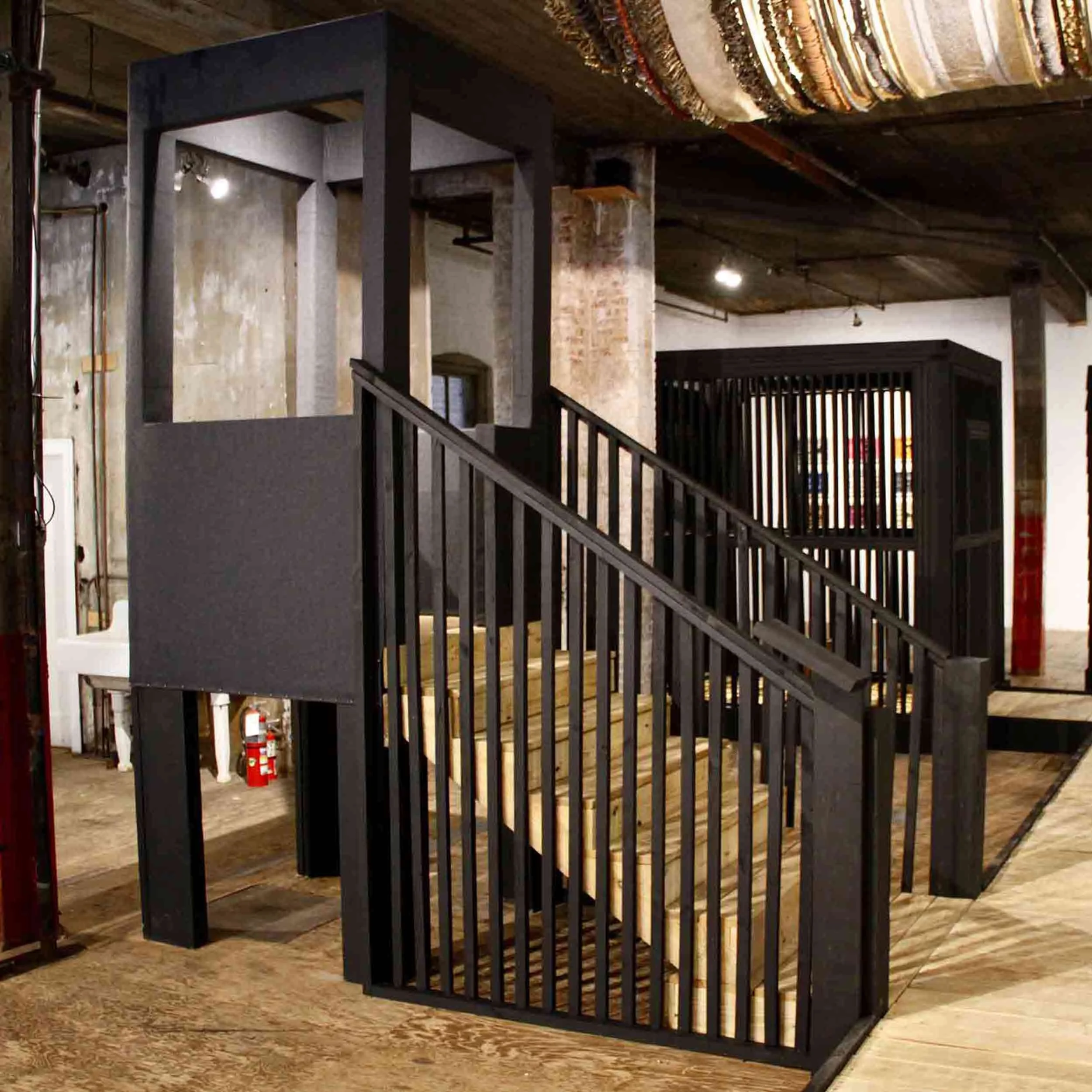
From the moment you arrive on Rikers Island you are confronted by the powerful corrections officers in their imposing surveillance spaces. You encounter them again as you approach the jail complex. You stand outside and sort of wave to them on the inside in an attempt to get their attention. Sometimes they wait to even acknowledge you. Every encounter is a moment for them to approve or deny your admittance. This happens again once you are inside, and then again and again and again. By the time you finally reach the housing unit there is a secured surveillance area where corrections officers keep watch over the lives of inmates and anyone else inside the jail. You are constantly being watched and we are always trying to engage the officers whose job it is to be the eyes and ears of these unpredictable spaces because they have the power to shut our project down or allow it take place.
Installation Photos Simon Courchel for The Invisible Dog Art Center
ISOLATION, 2020
Various Materials
LWD: 110 x 81 ½ x 103 ½ inches
On entering the jail, we emptied our pockets into a locker. A sign beside it read ‘Load and Unload Weapons in Red Sandbox.’ It was not a joke. Once when we arrived, there was a red light swiveling beyond the plexiglass barrier. The jail was on lock-down. There was no telling how long we would wait. About 45 minutes later, our contact arrived, and she took us through an unfamiliar area. We passed a kind of holding cell—a 6 by 6 foot cage with a young inmate inside. Our escort asked him what he had done. He was the reason the whole jail had gone into lock-down. We were on our way to his housing unit.

HOUSING UNIT, 2020
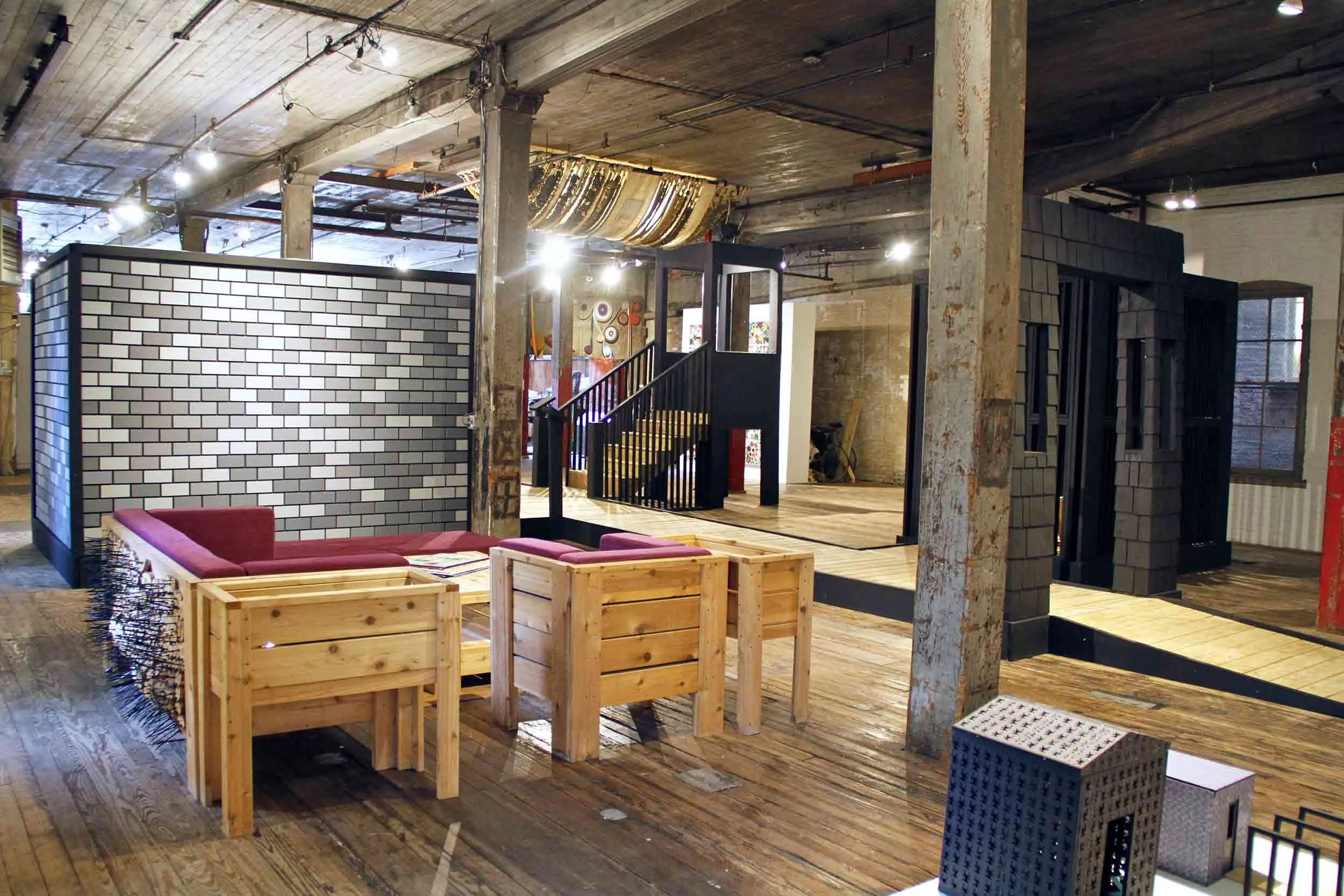
Cedar Structure with Outdoor Cushions
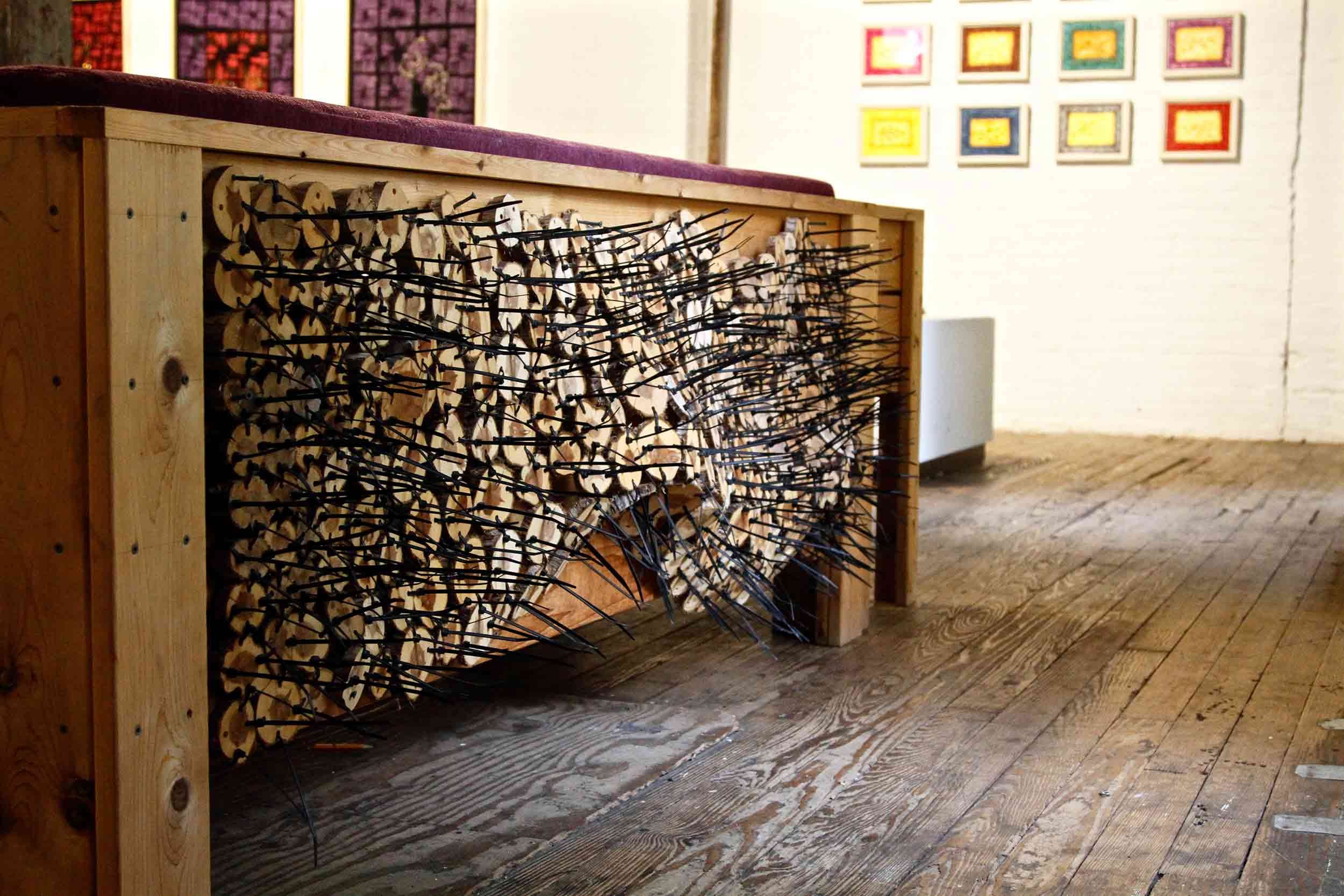
A housing unit is an area with a jail that houses inmates. It has a living area for inmates to sleep which can be individual cells for one or two inmates or a barrack style area where cots fill the room. There is a common area where inmates eat, watch TV, hang out, exercise, and participate in programming. This common area is where we do the Scrollathon. We created this seating area as a kind of common area. A place to congregate and engage during the run of the exhibition.
Once while working at the all-women’s jail Rosies on Rikers Island we were in the common area and one inmate told us that when they scrolled with us, they felt like a family. Then she gestured towards the living area. “But back there,” she said, “we’re enemies.” As we were leaving, one woman turned to William and said, “I’ll never forget you.”


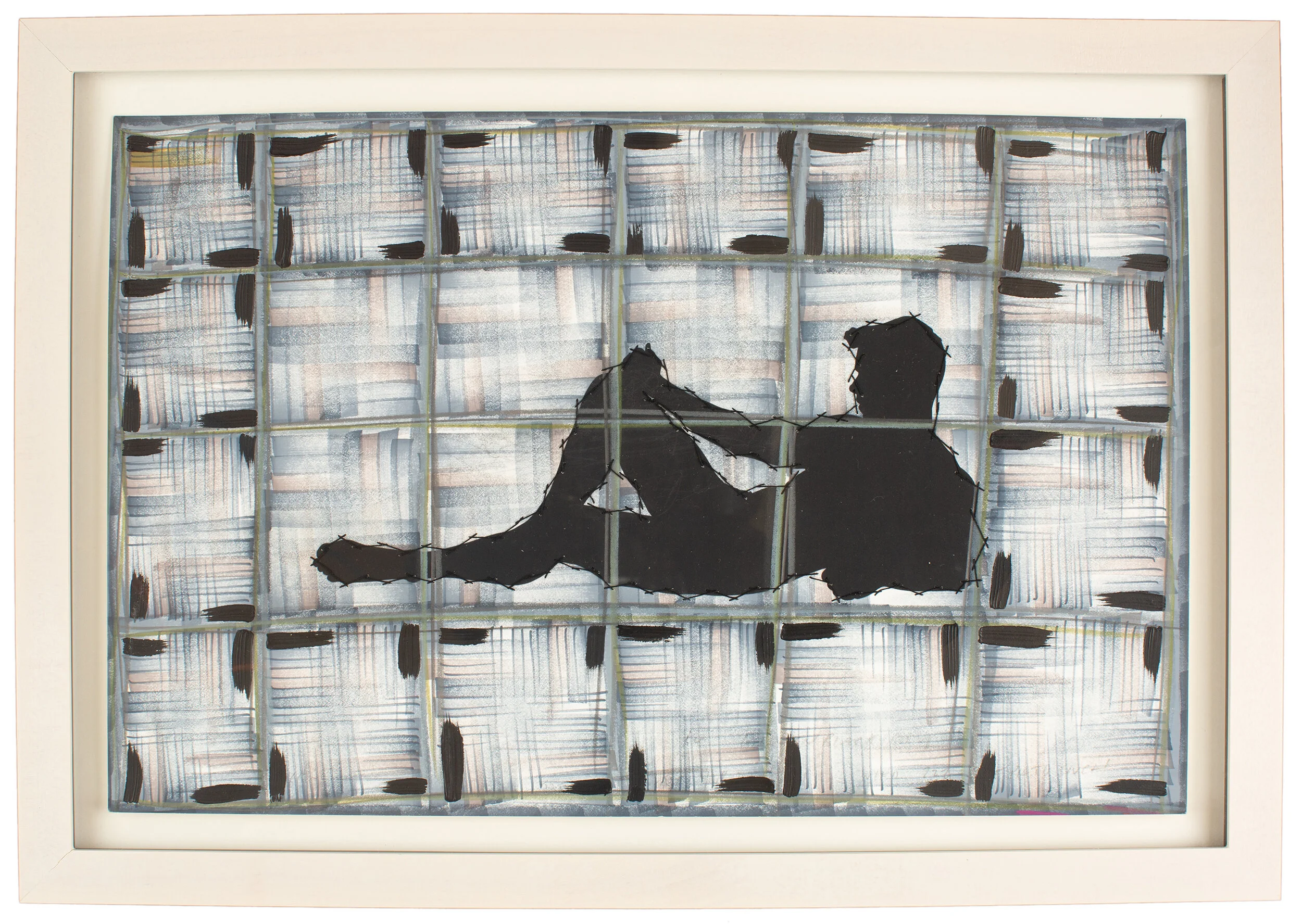


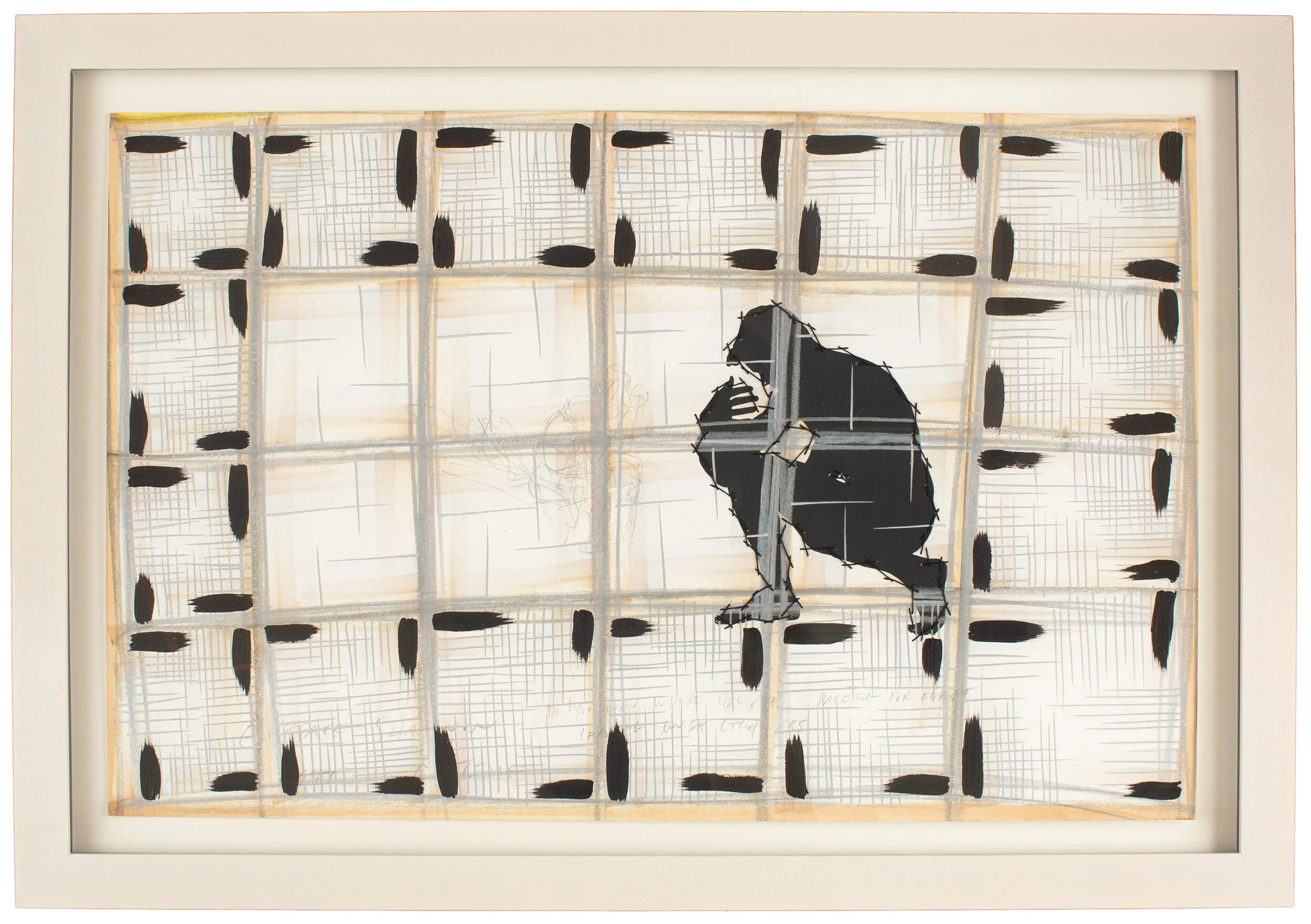
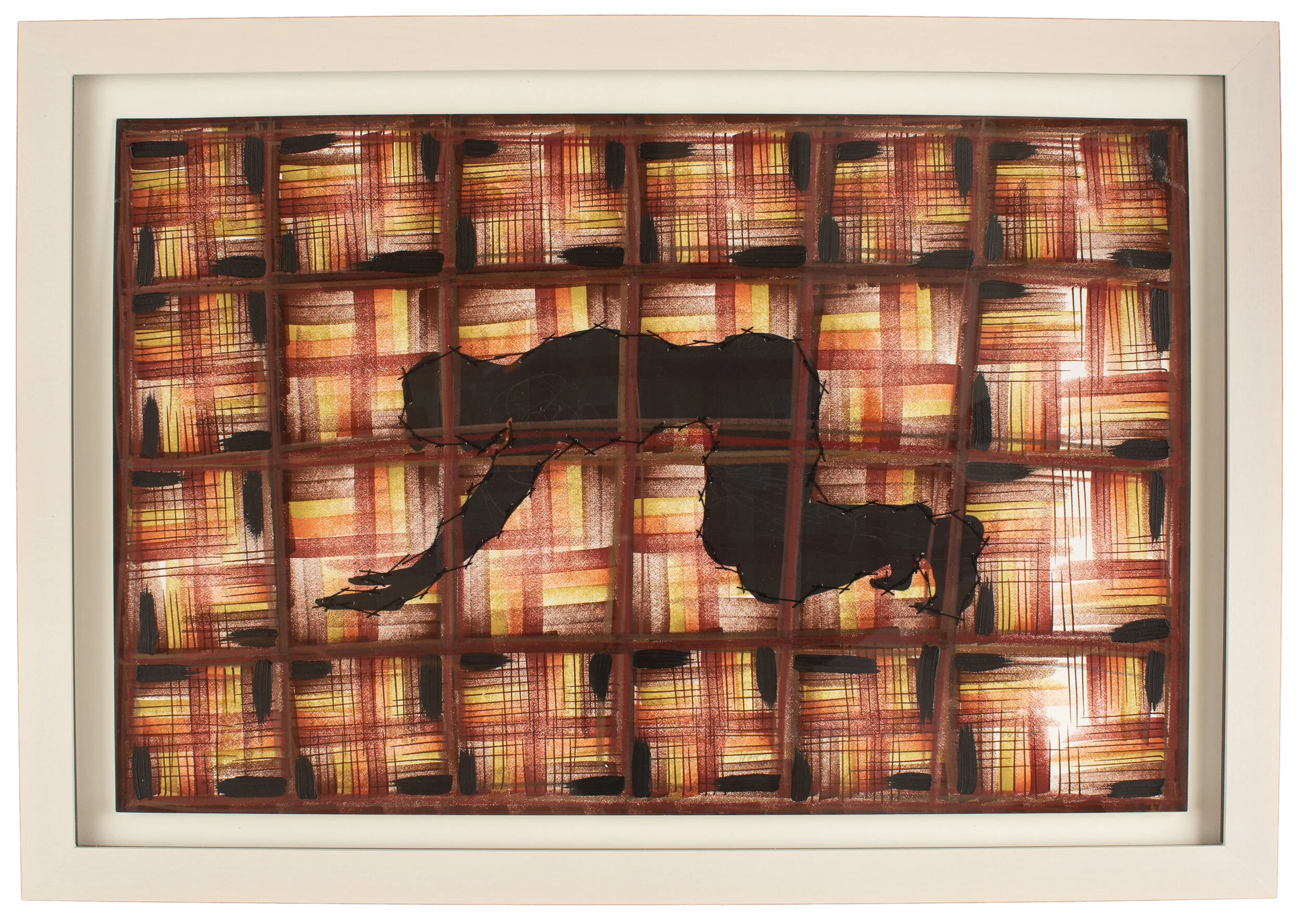
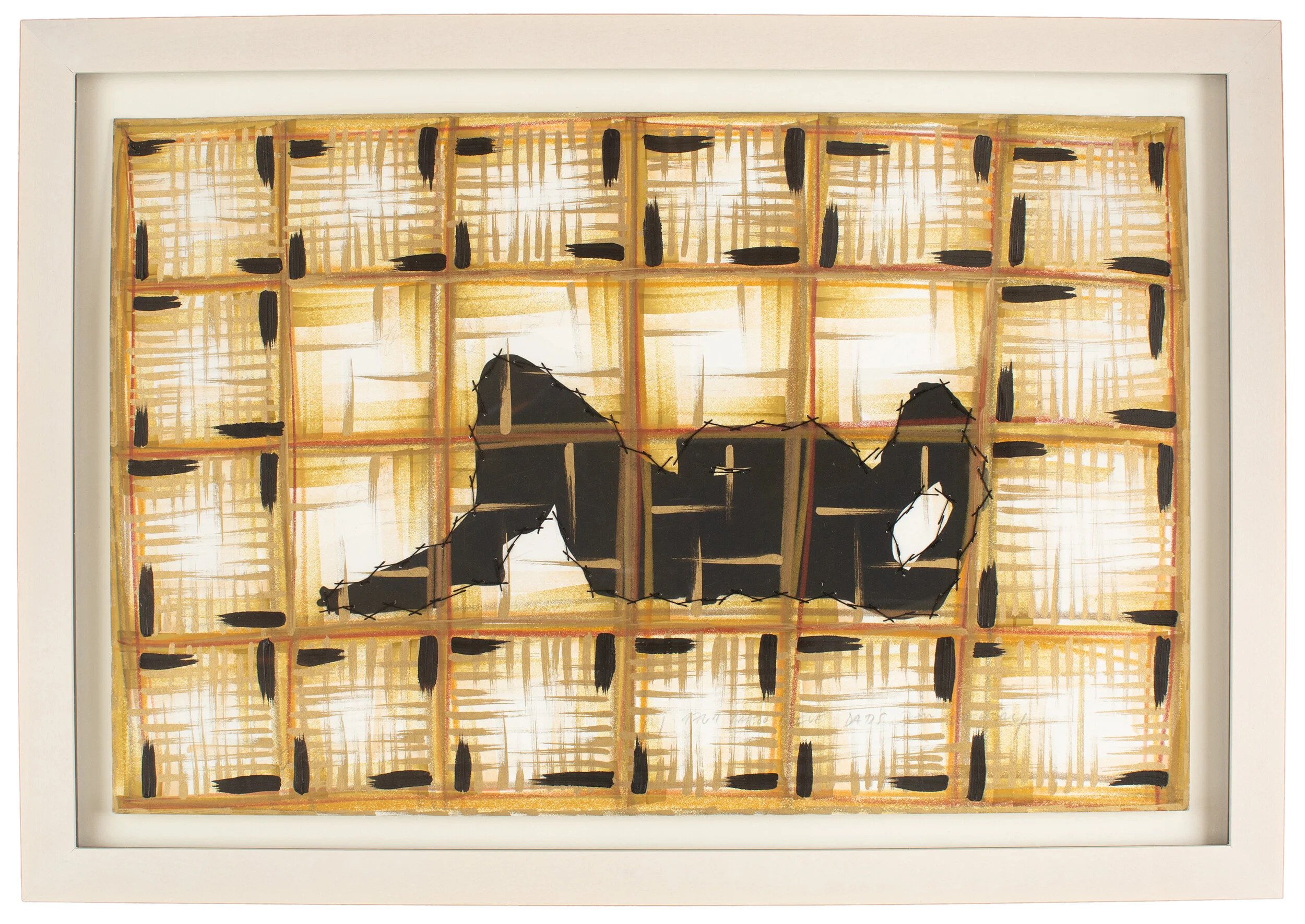
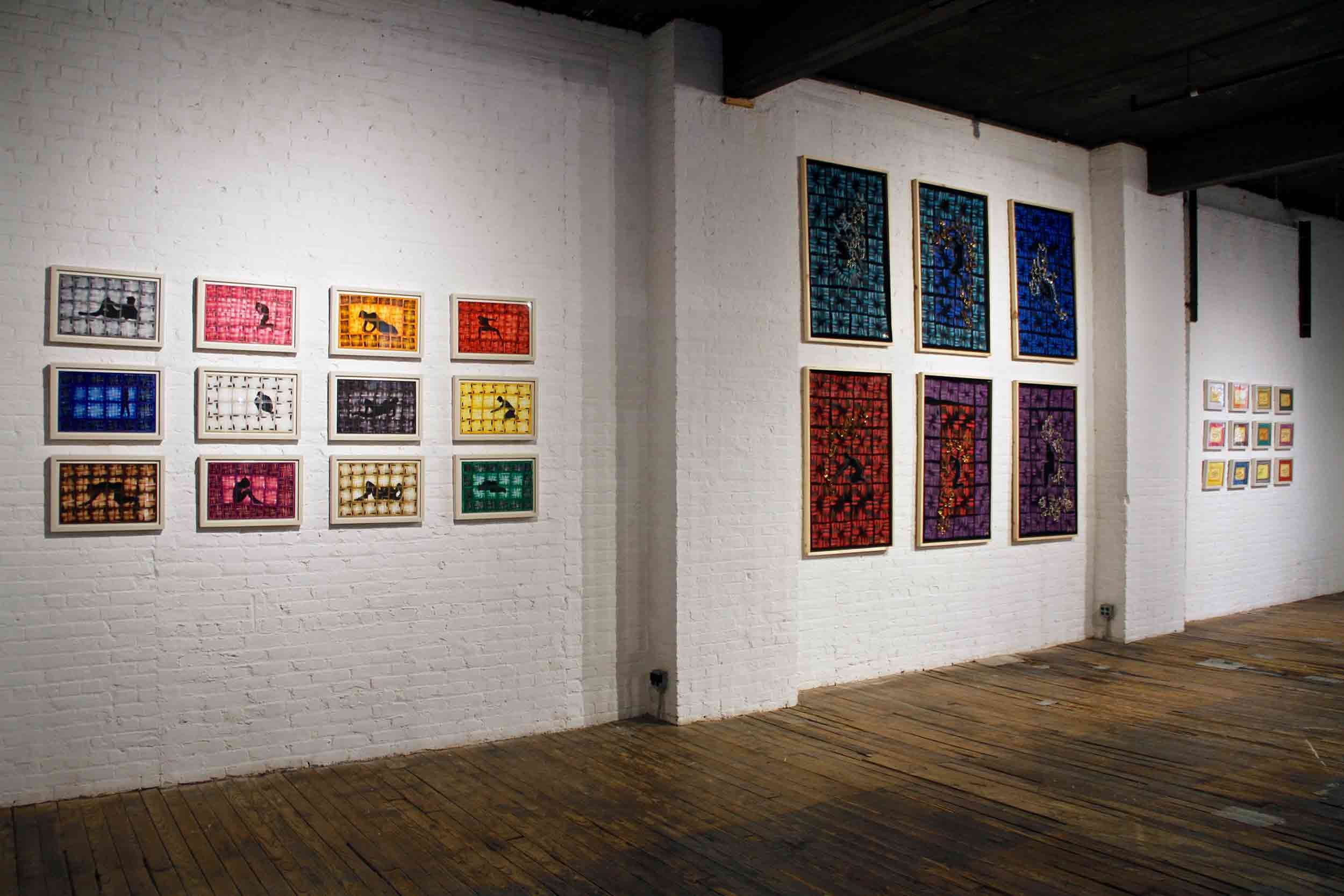
IDENTITY 1-12, 2020
Archival paper, pencil, colored pencil, ink, paint, thread
(Each) LWD 13 ⅞ x 19 ⅞ x 1 ½ inches
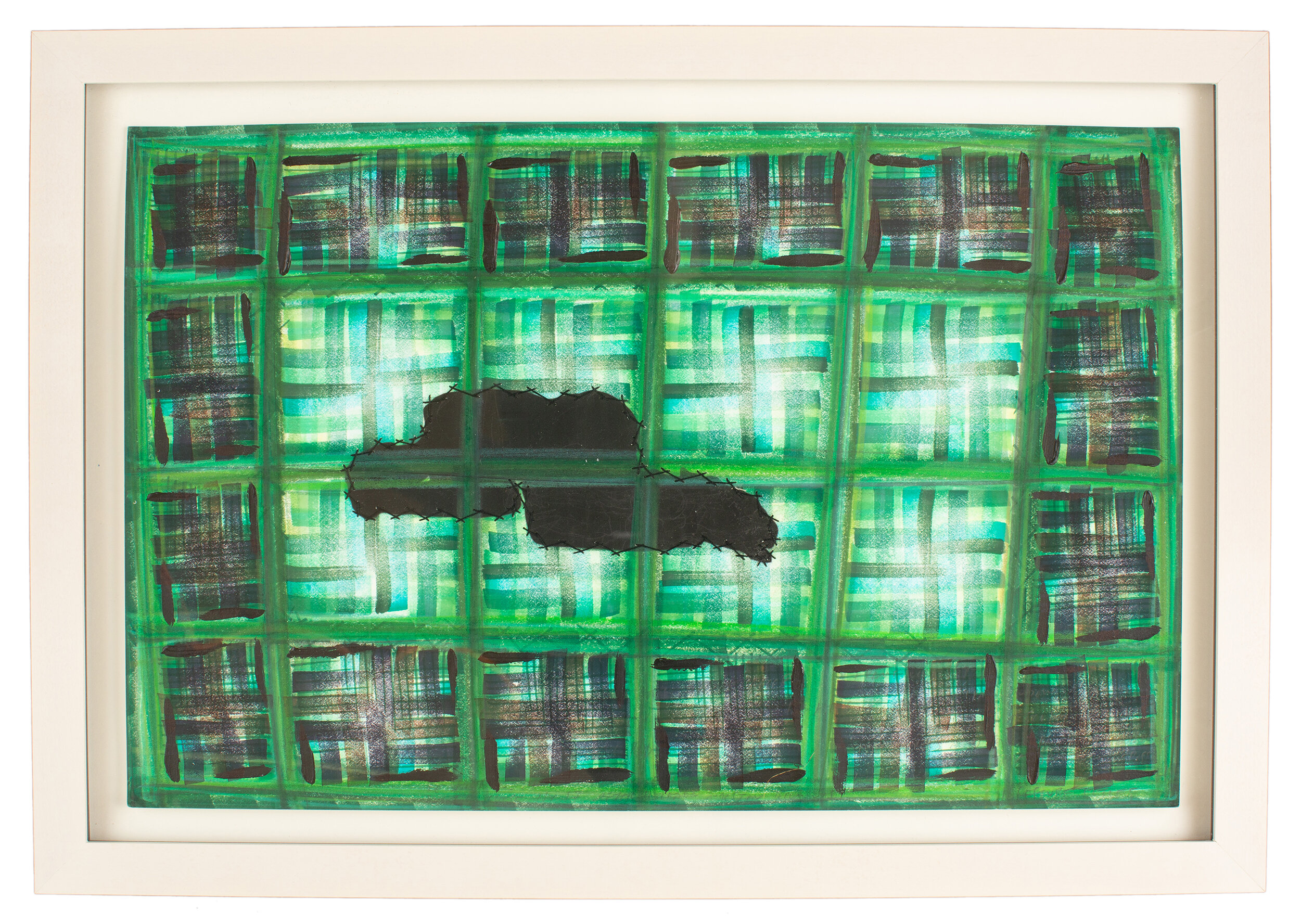
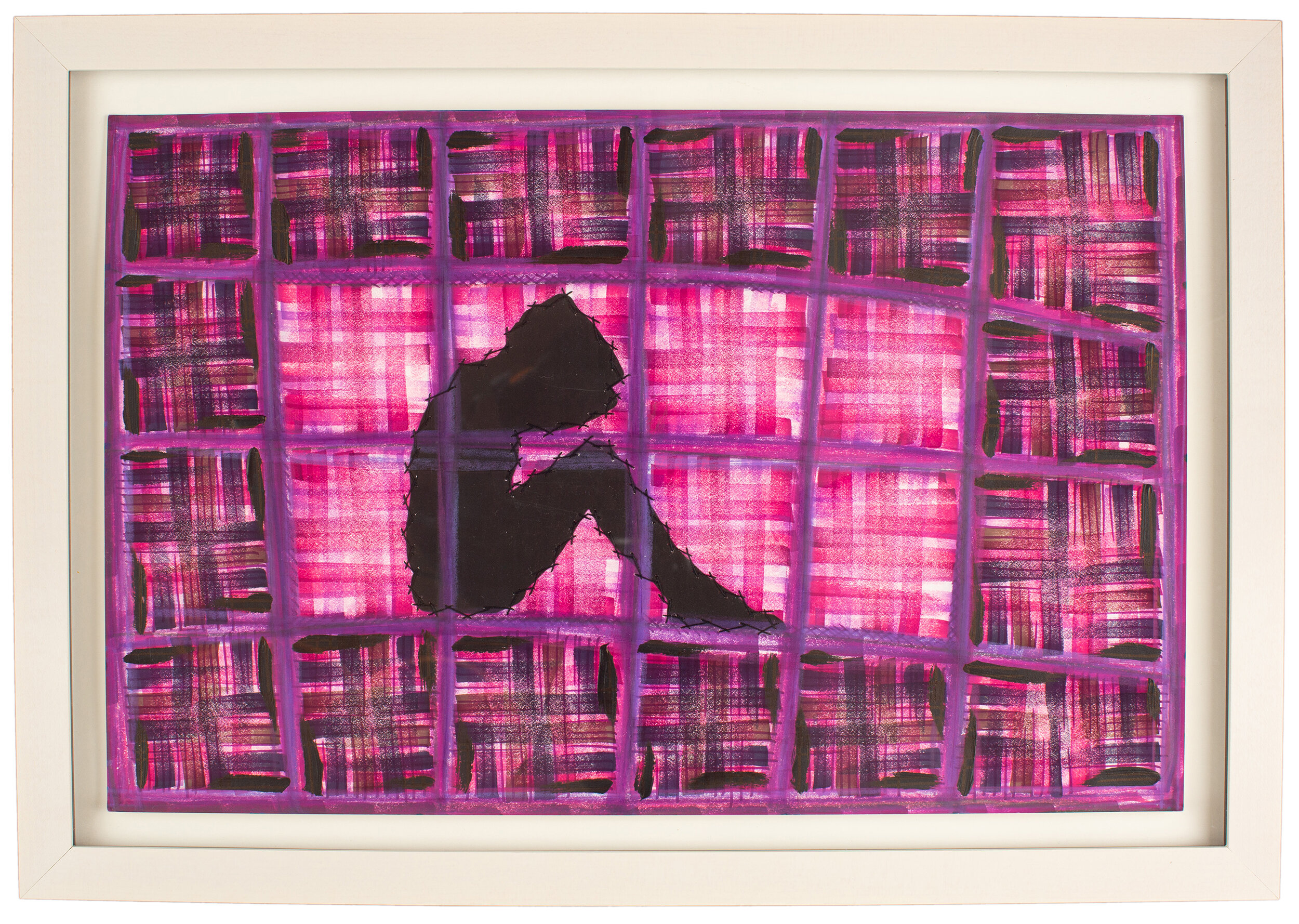
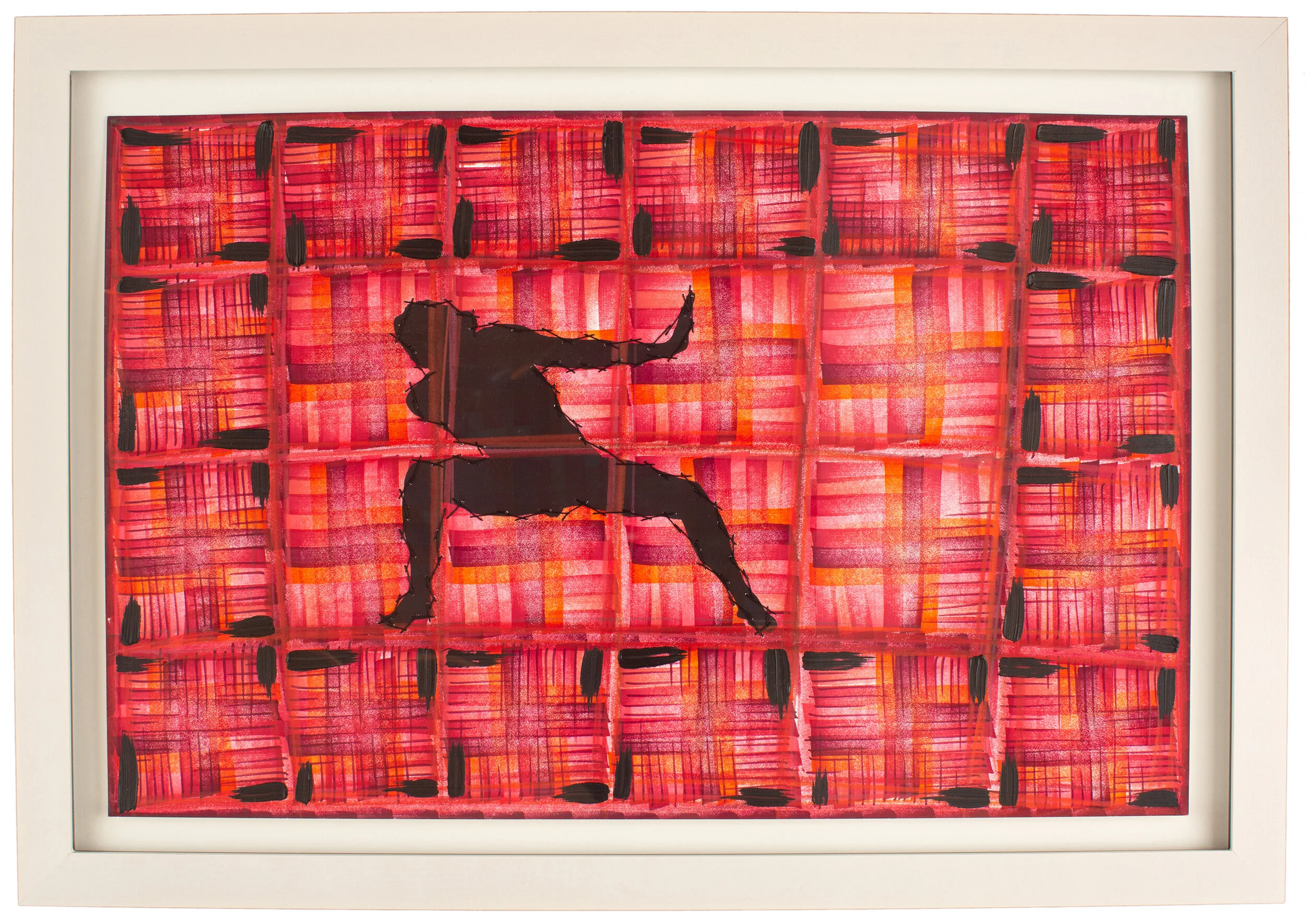
We don’t know the identity of the inmates we work with and we aren’t allowed to ask about why they are there. What they choose to share with us about who they are is up to them. This is the first time we’ve used the figure in a series of drawings and we used the silhouette as a way to create anonymity. We defined 12 specific memories we wanted to represent, distilled them to a single word and then evolved that into a posture. These postures were then expressed as a silhouette in the center of each page and bordered with a catch stitch. The figures are “caught.”

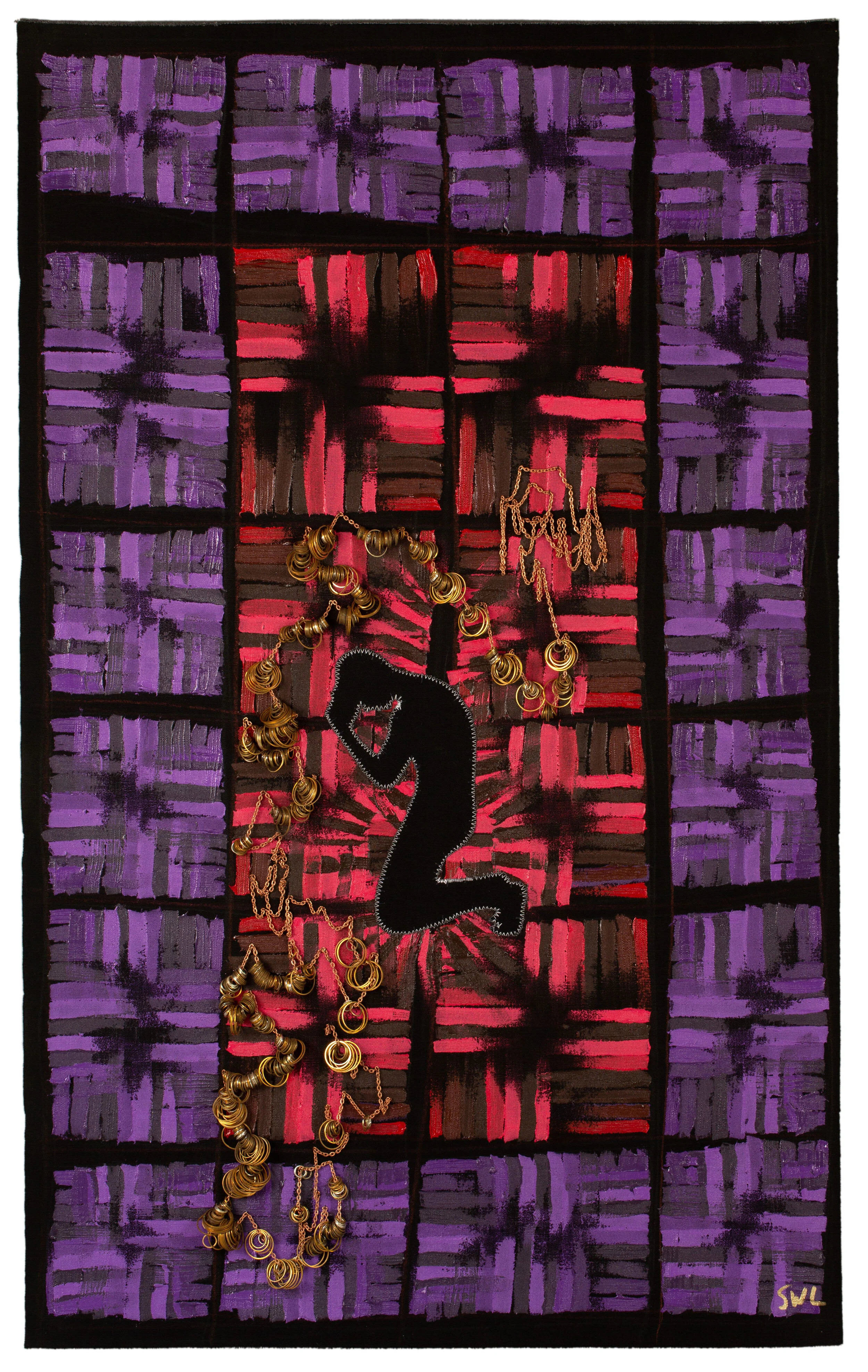


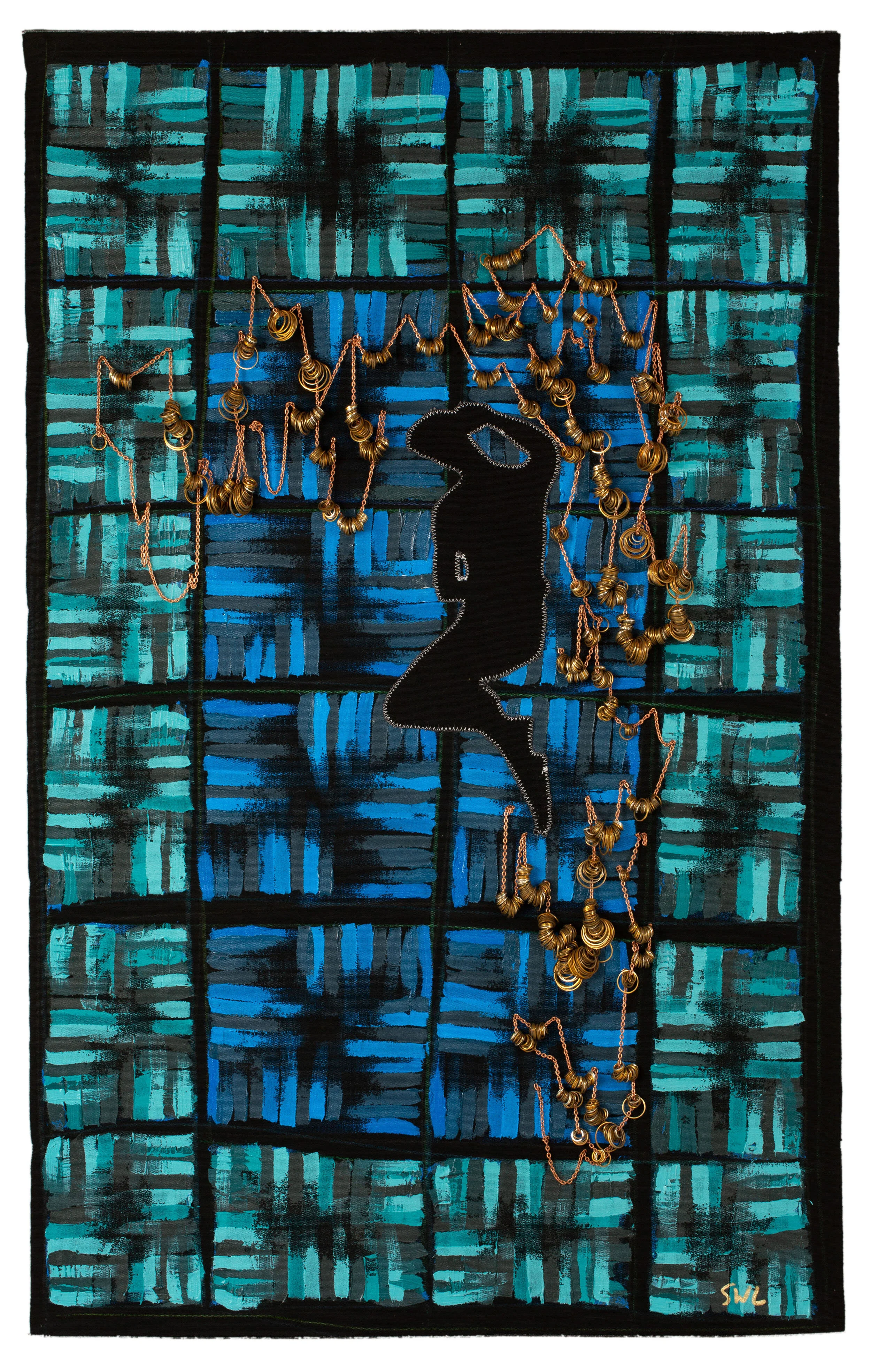
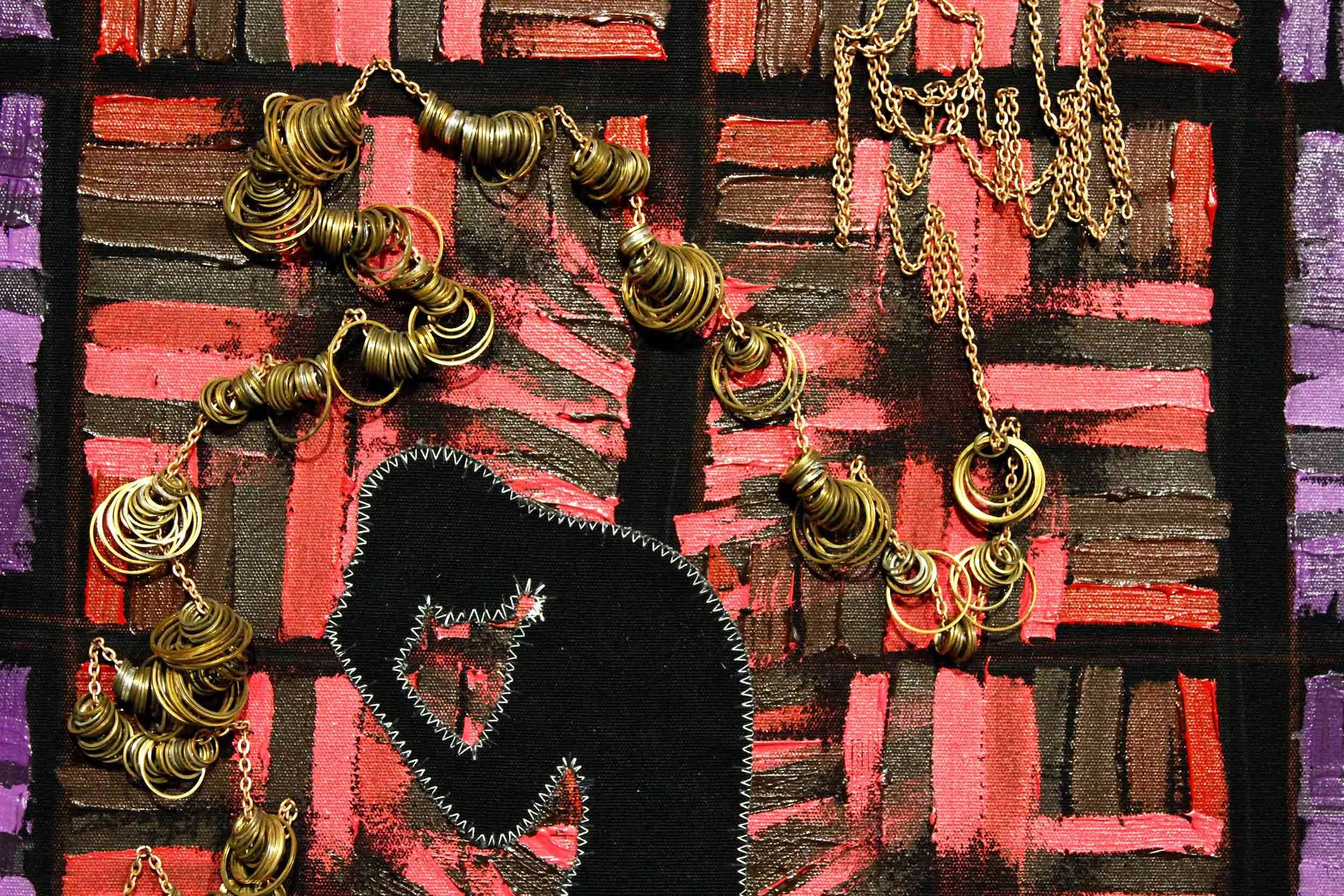
ISOLATION 1-6, 2020
Colored pencil, paint, canvas, thread, metal chains and trinkets
(Each) LWD 49 ½ x 31 ½ x 1 ½ inches
Isolation can have a range of impacts and in the system it is often a result of infractions or used as a means of protection for a vulnerable inmate. This is our first time making paintings on canvas. We were isolating upstate this summer and incorporated the figure which we cut from canvas and bordered with a zig zag stitch. These are the same silhouettes used for some of the drawings in the exhibition and we were thrilled at the idea of taking something that represented a very specific memory and then using it in a new context. It opened the posture up to a new interpretation for us.
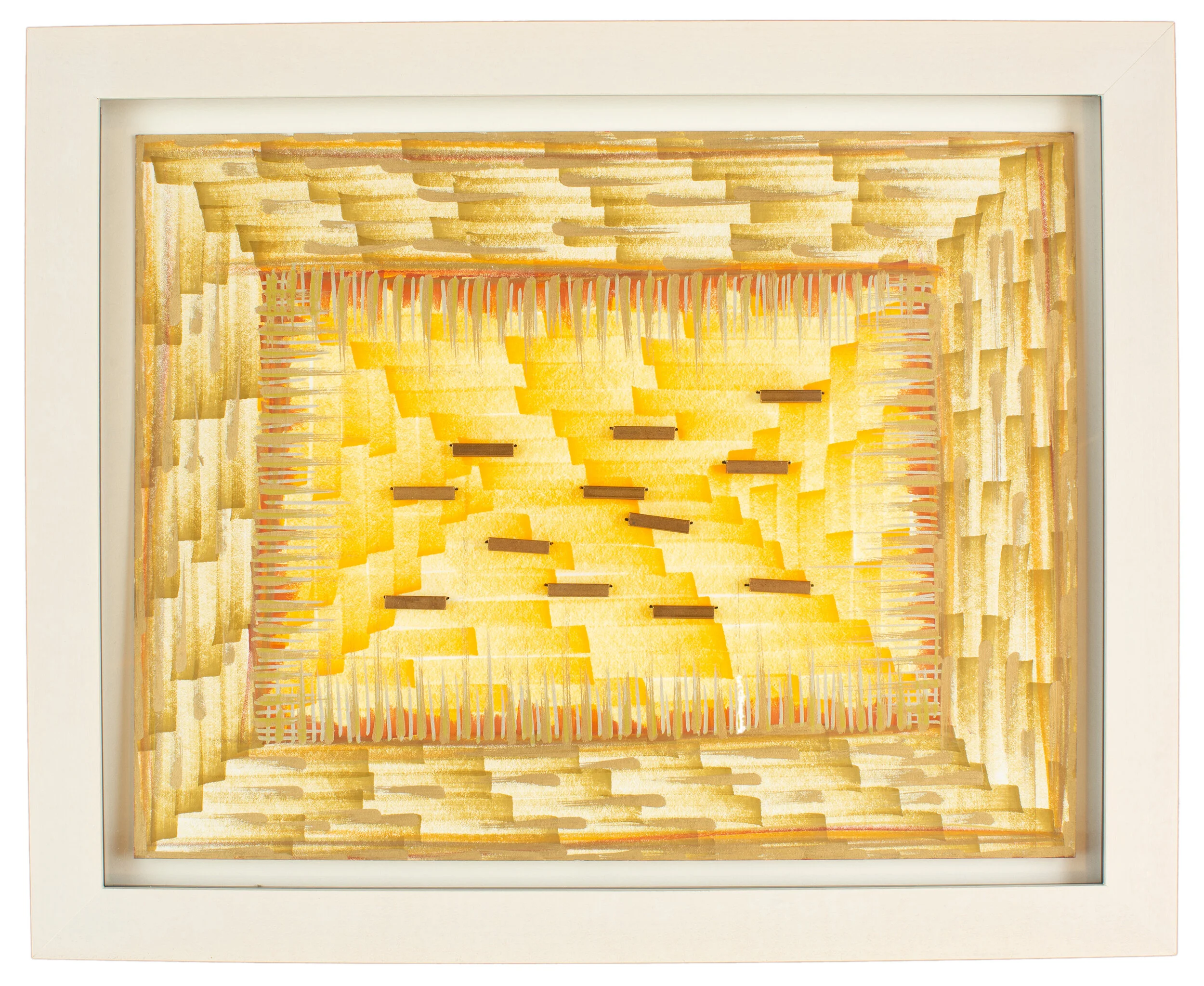
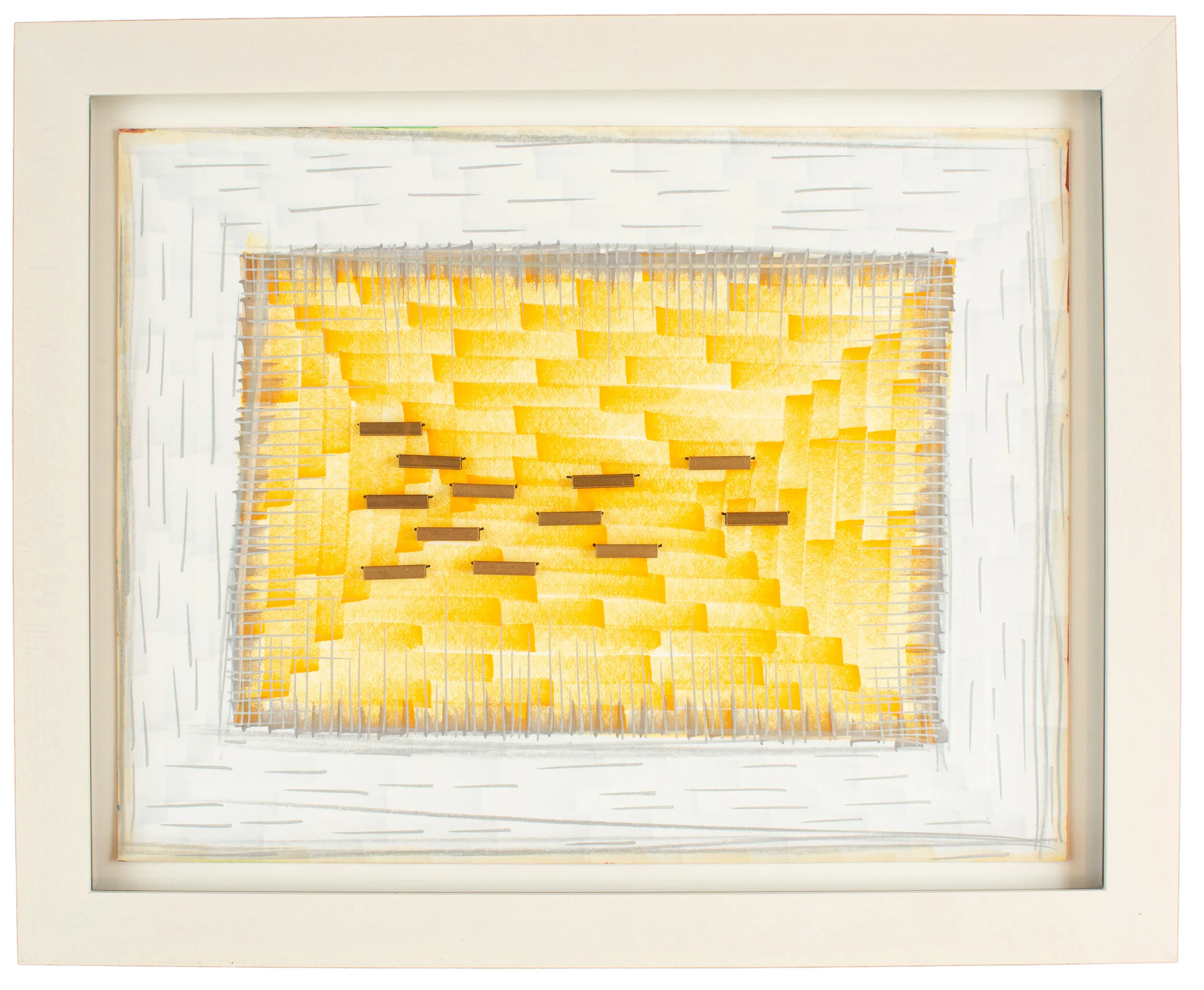
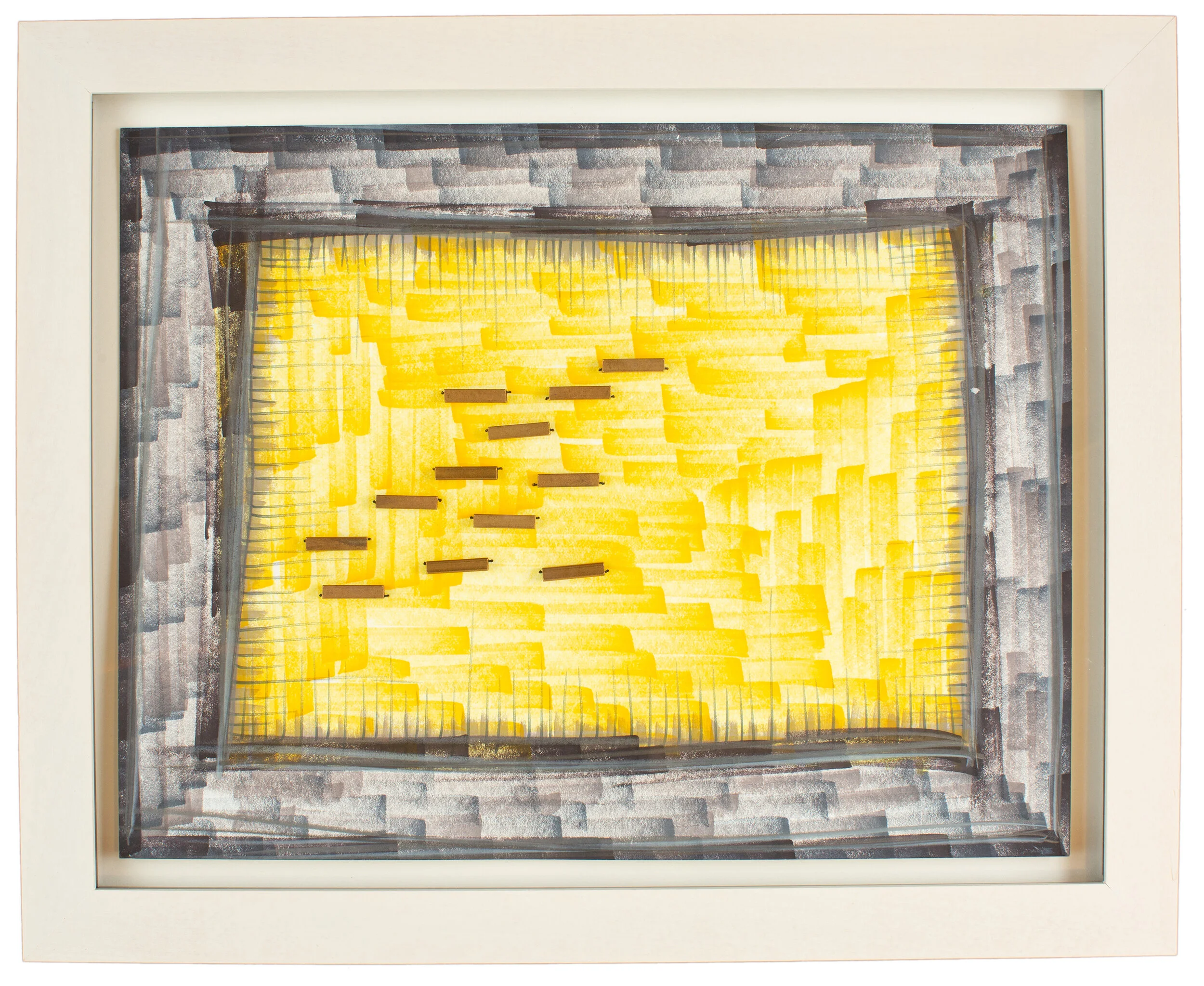
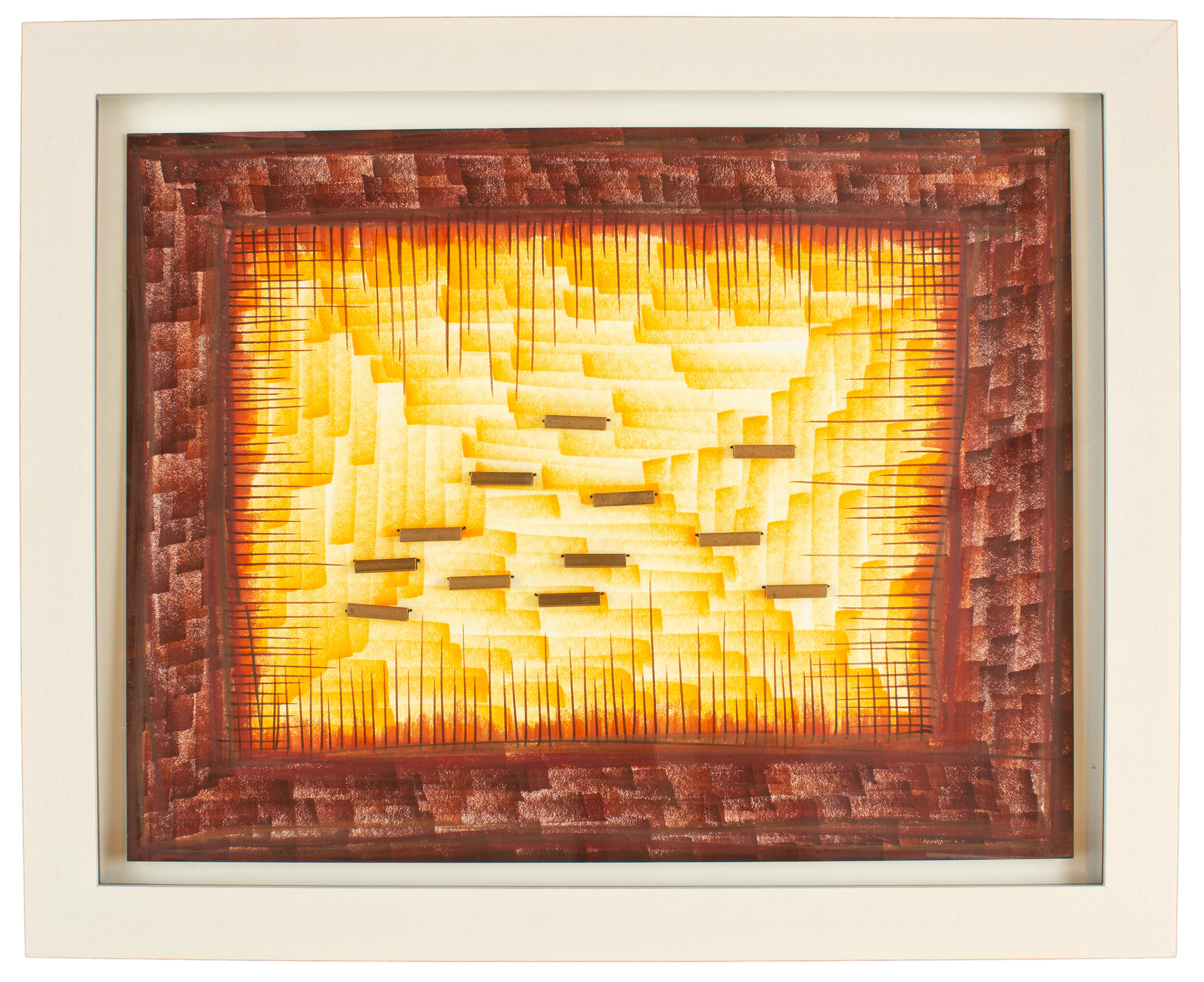
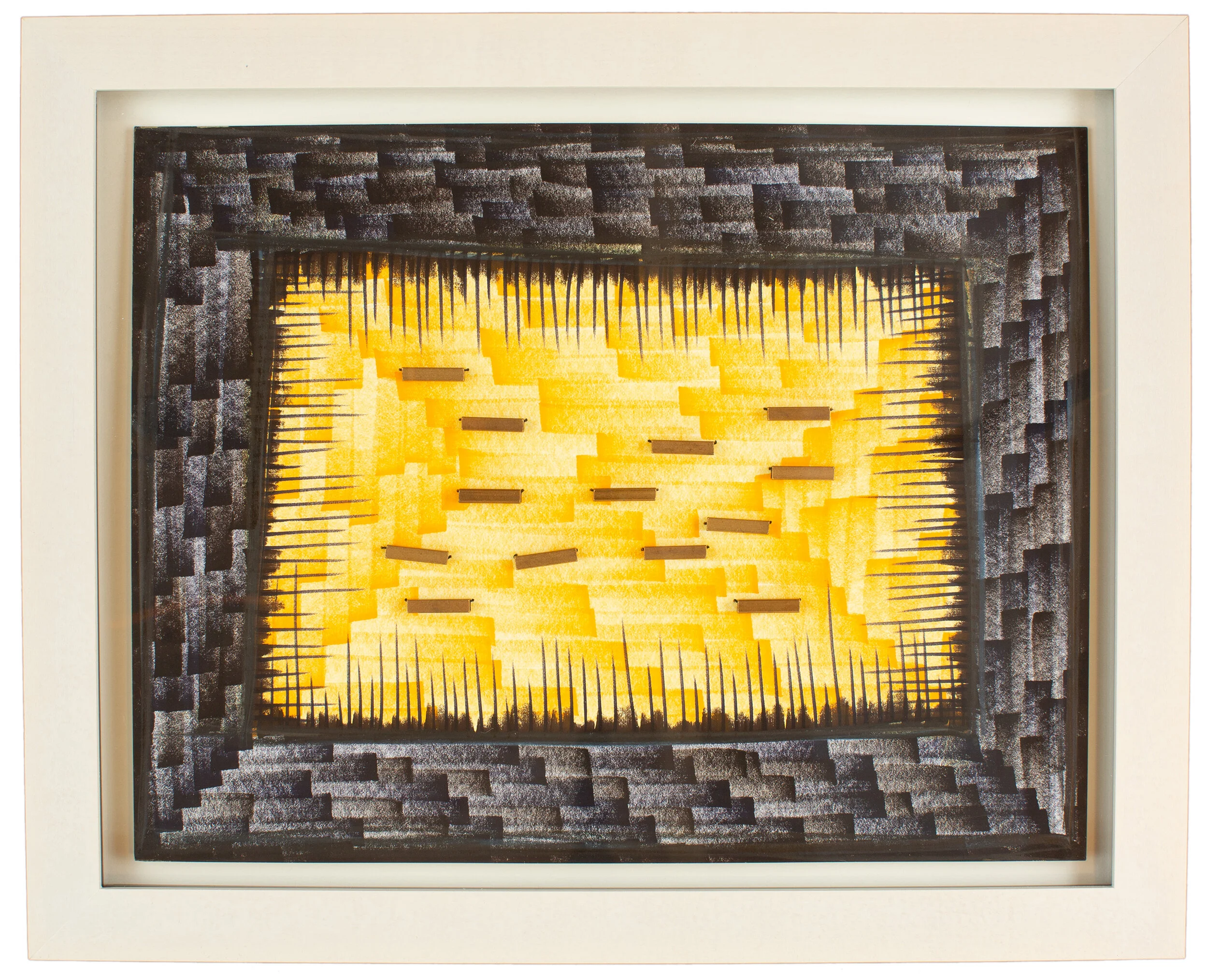
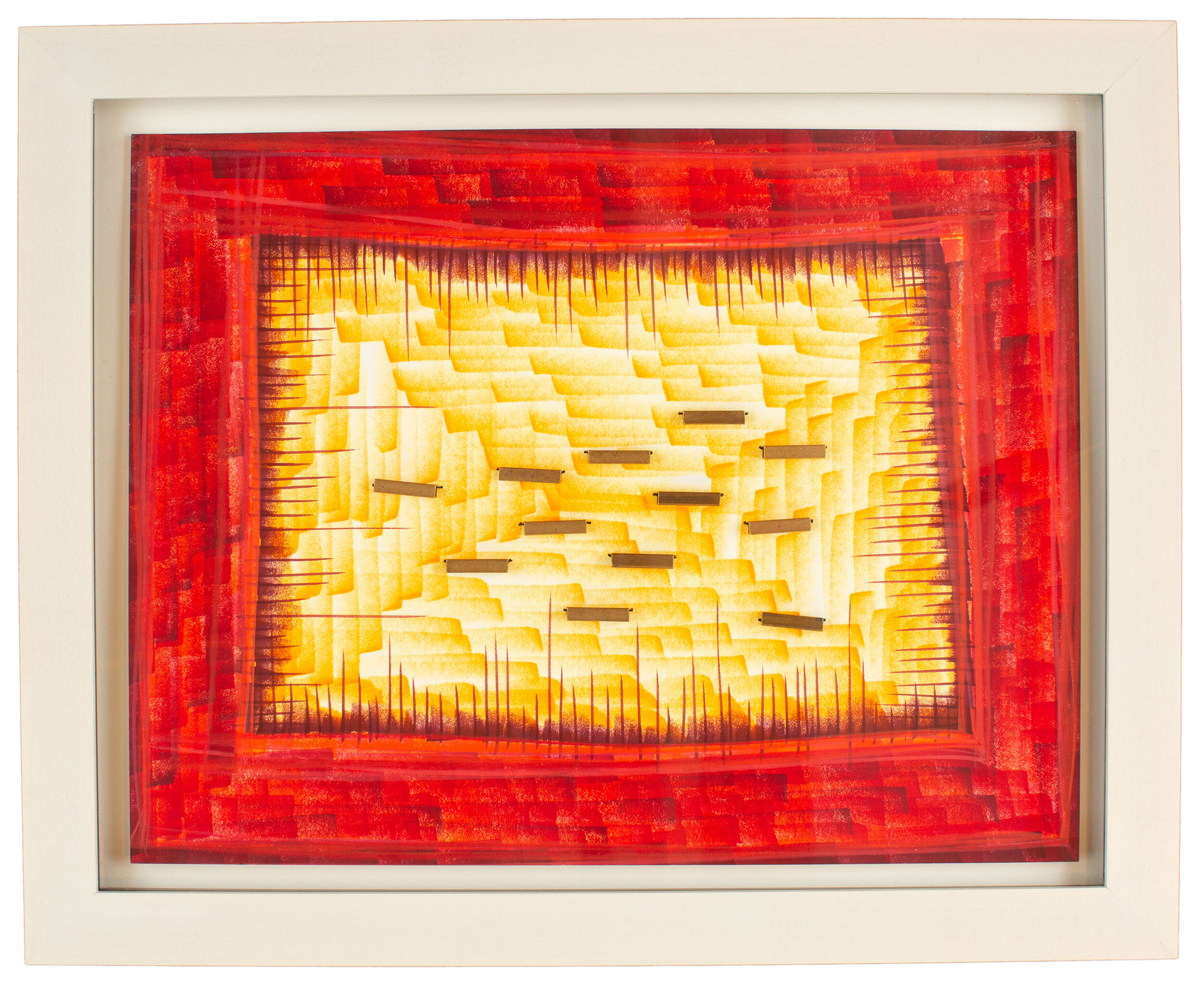
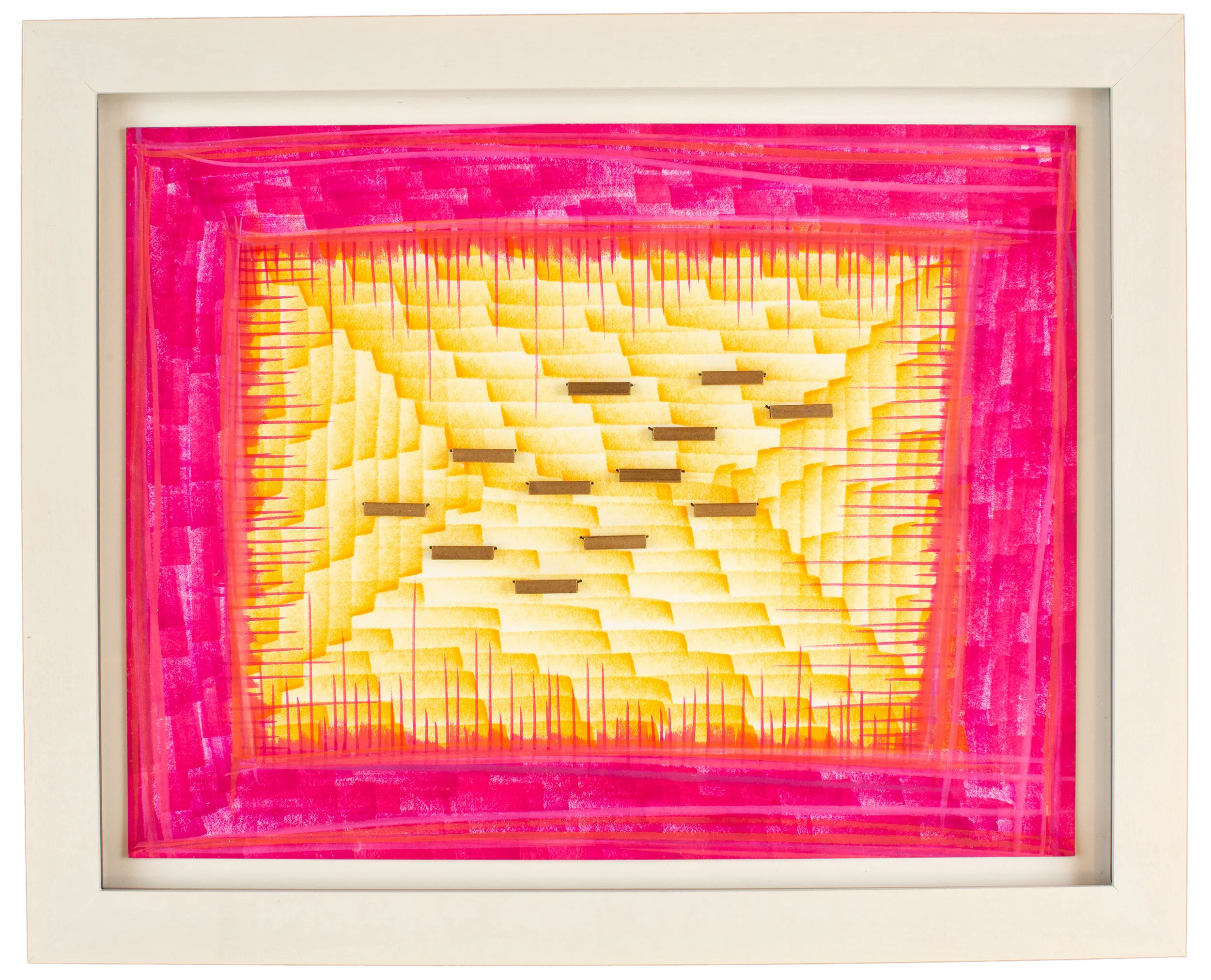


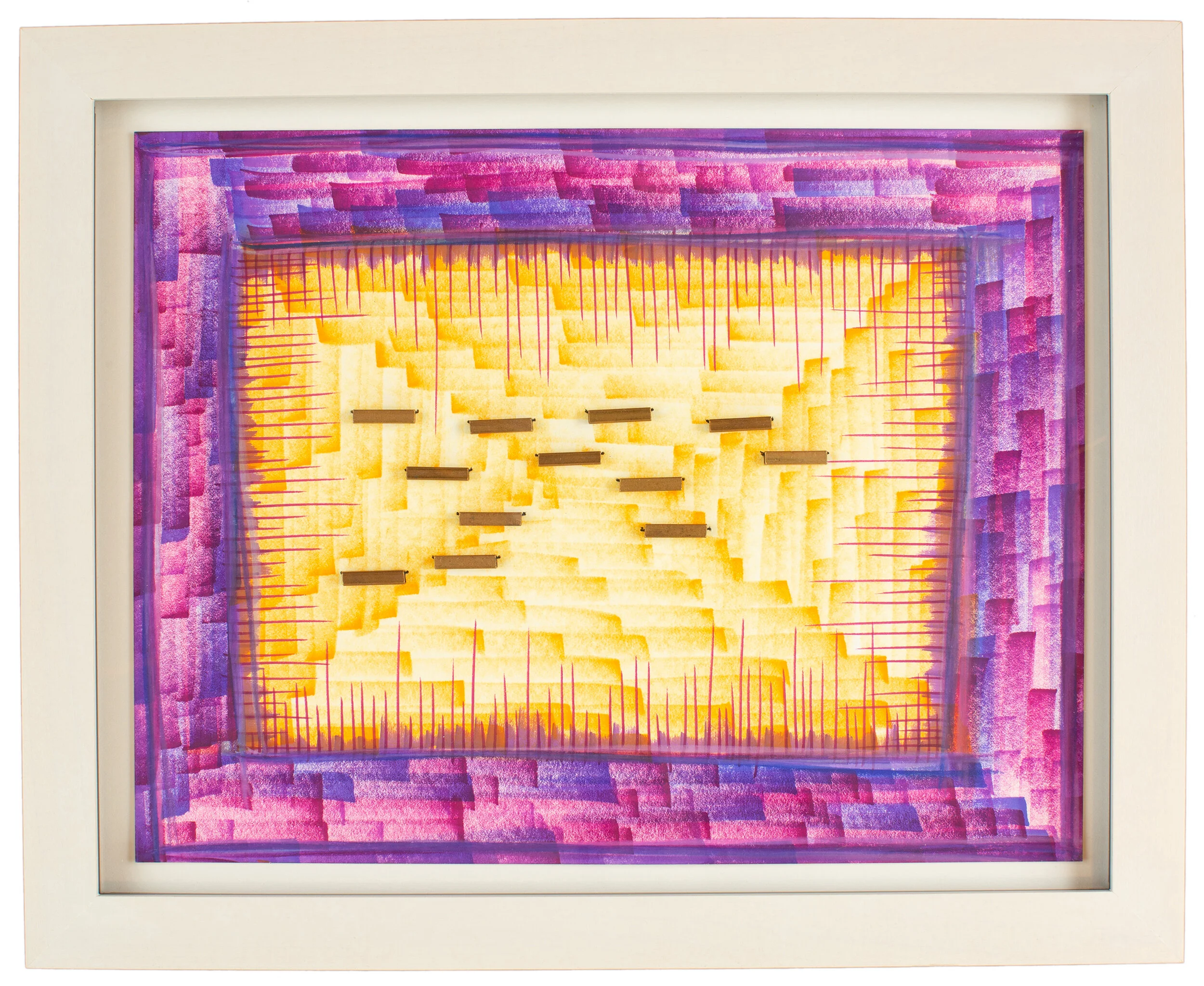
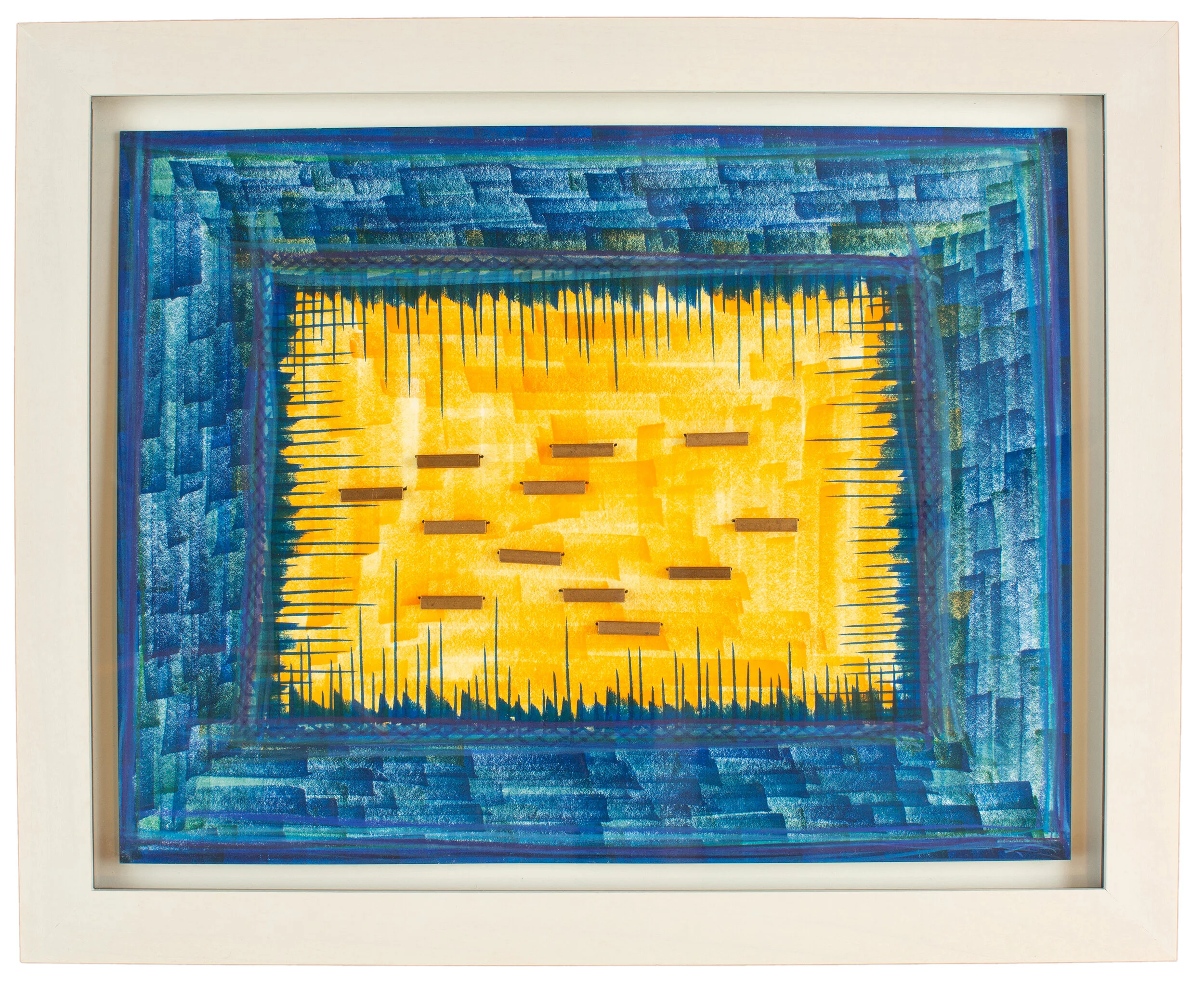

PORTAL 1-12, 2020
Archival paper, pencil, colored pencil, ink, paint, thread, metal trinkets
(Each) LWD 10 ⅞ x 13 ⅜ x 1 ½ inches
A portals is an imposing doorway or gate and in the system you are constantly confronted with them. The more you pass through the closer you get to the inmates. That final moment when the door to their housing unit is opened and we are allowed to step inside is often a very heavy and profound moment of encountering a group of incarcerated people. We see these abstract drawings as portals between emotional states.

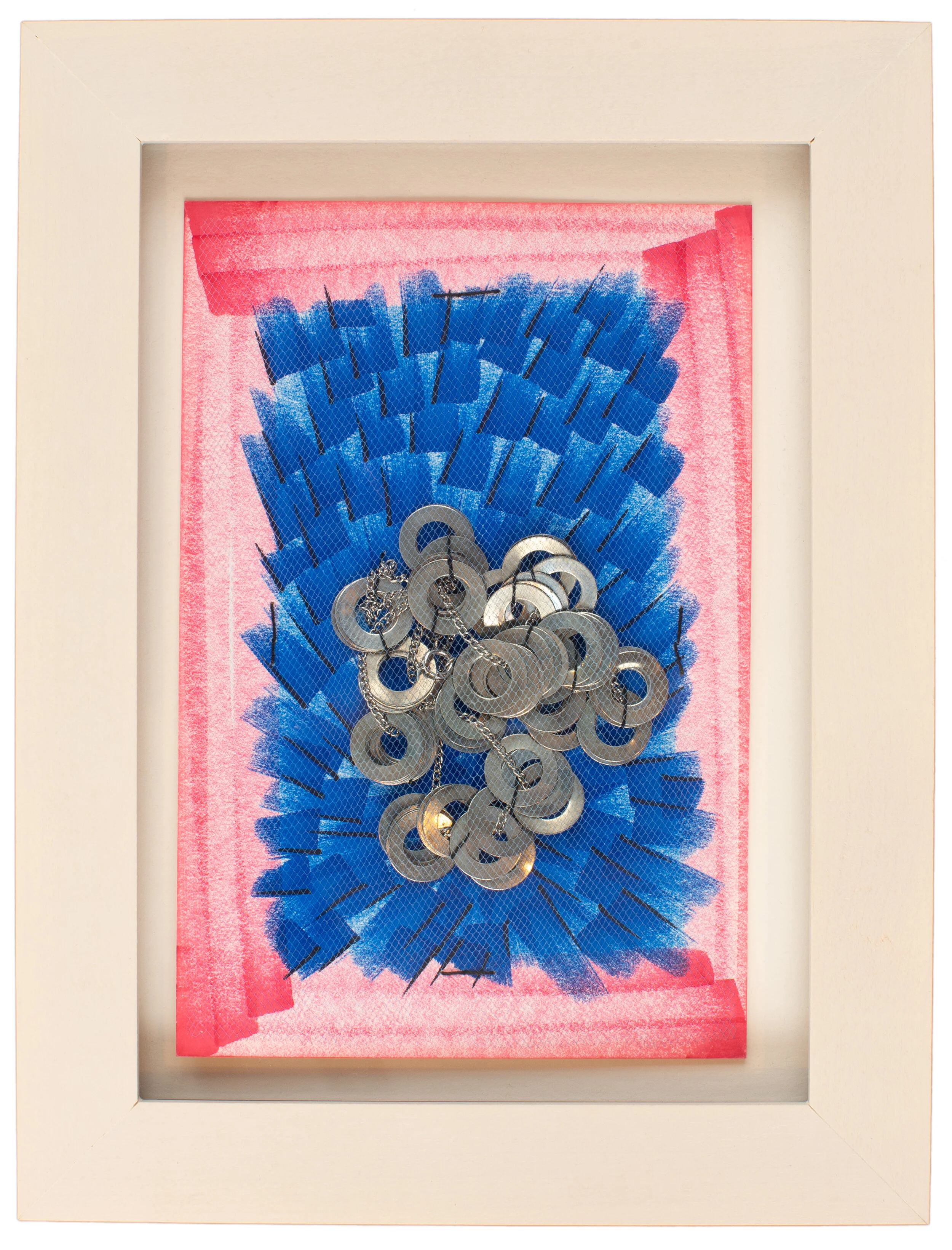

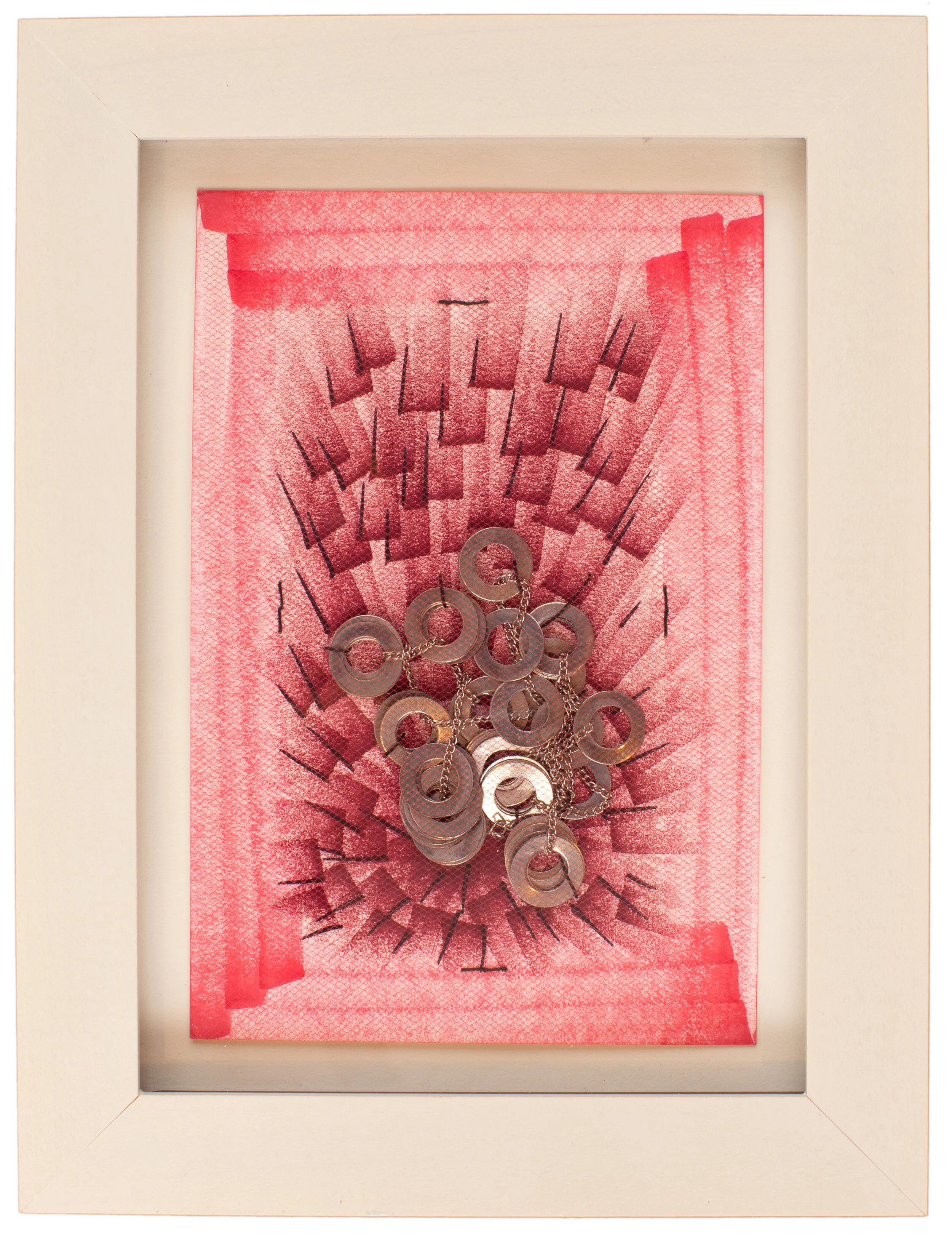
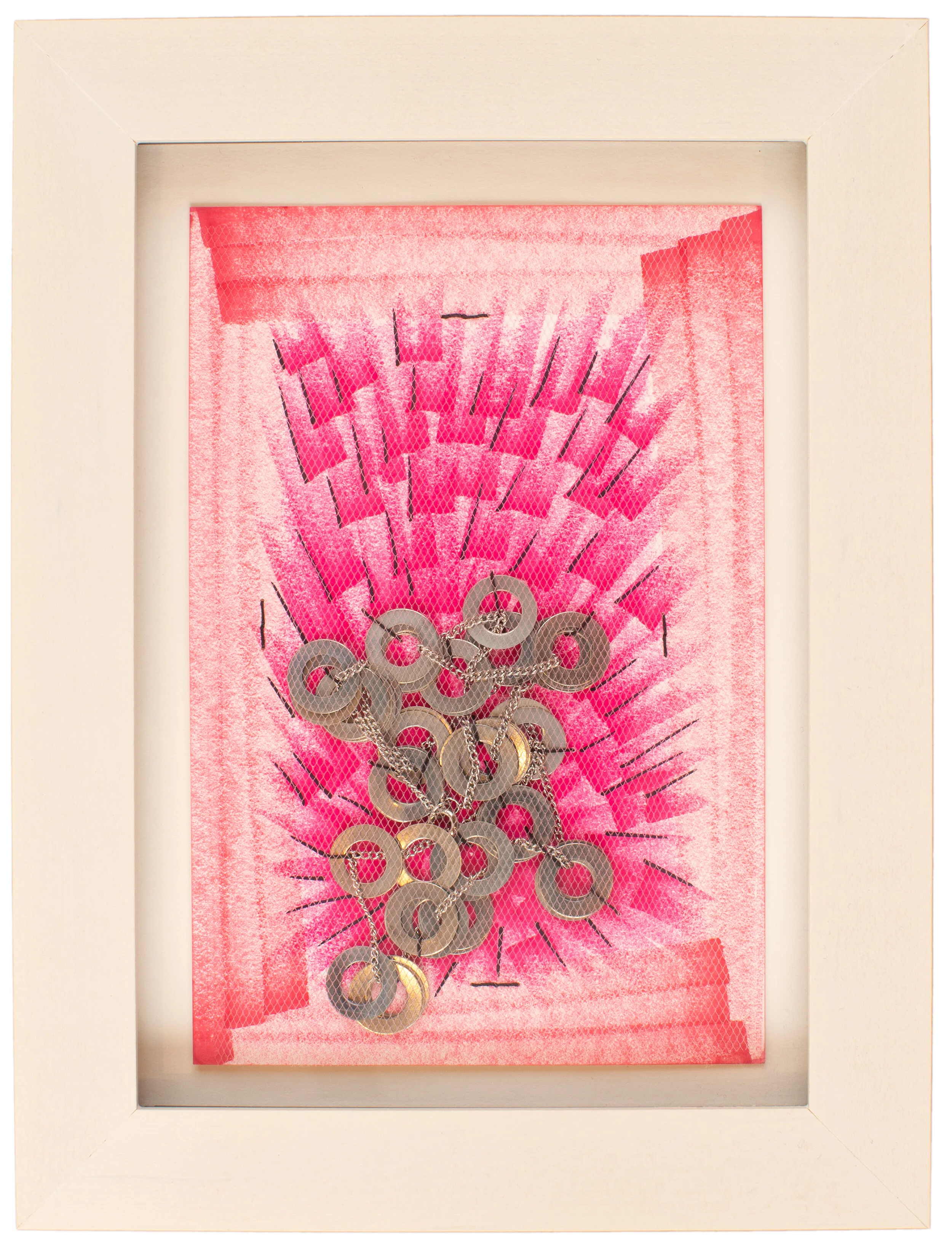
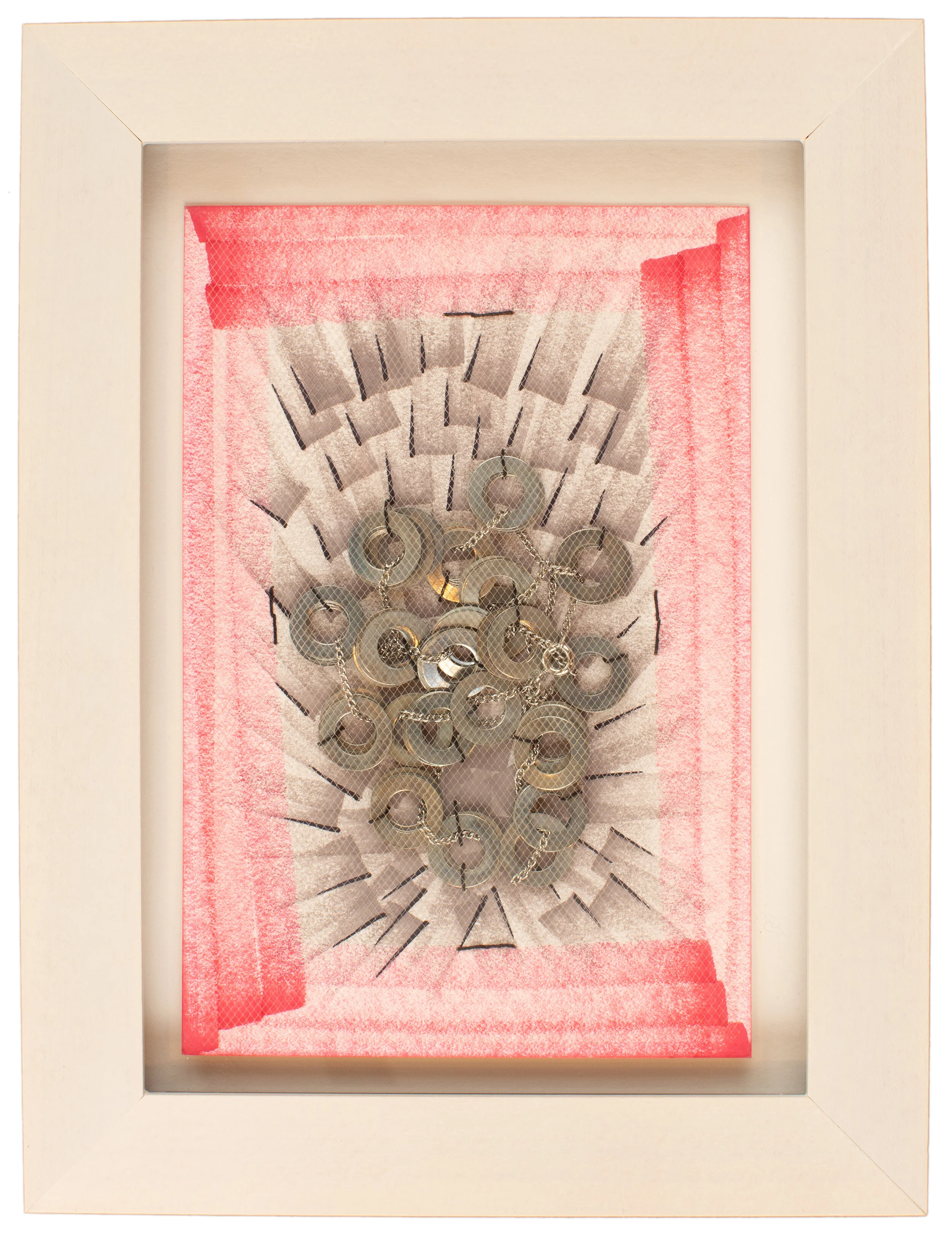

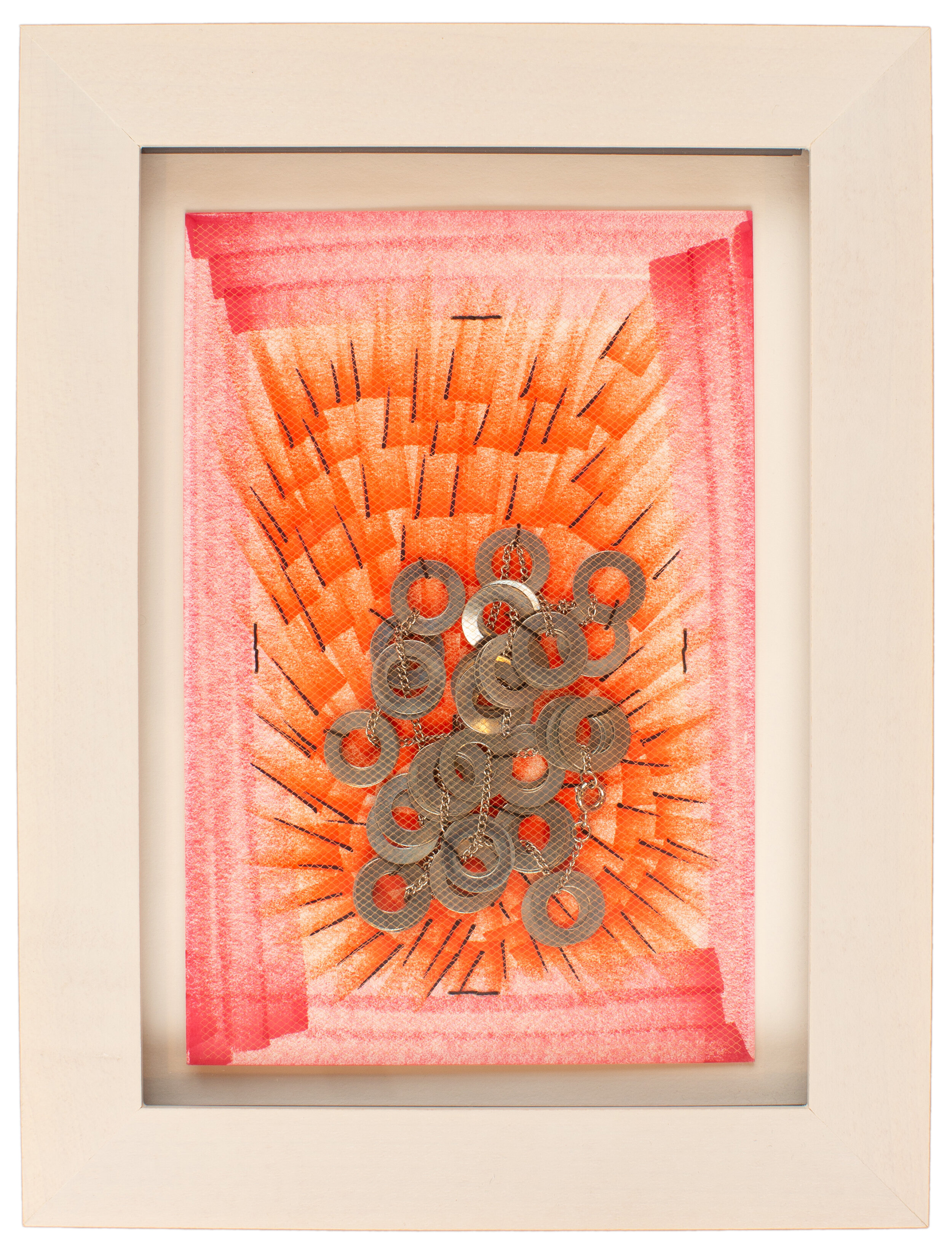
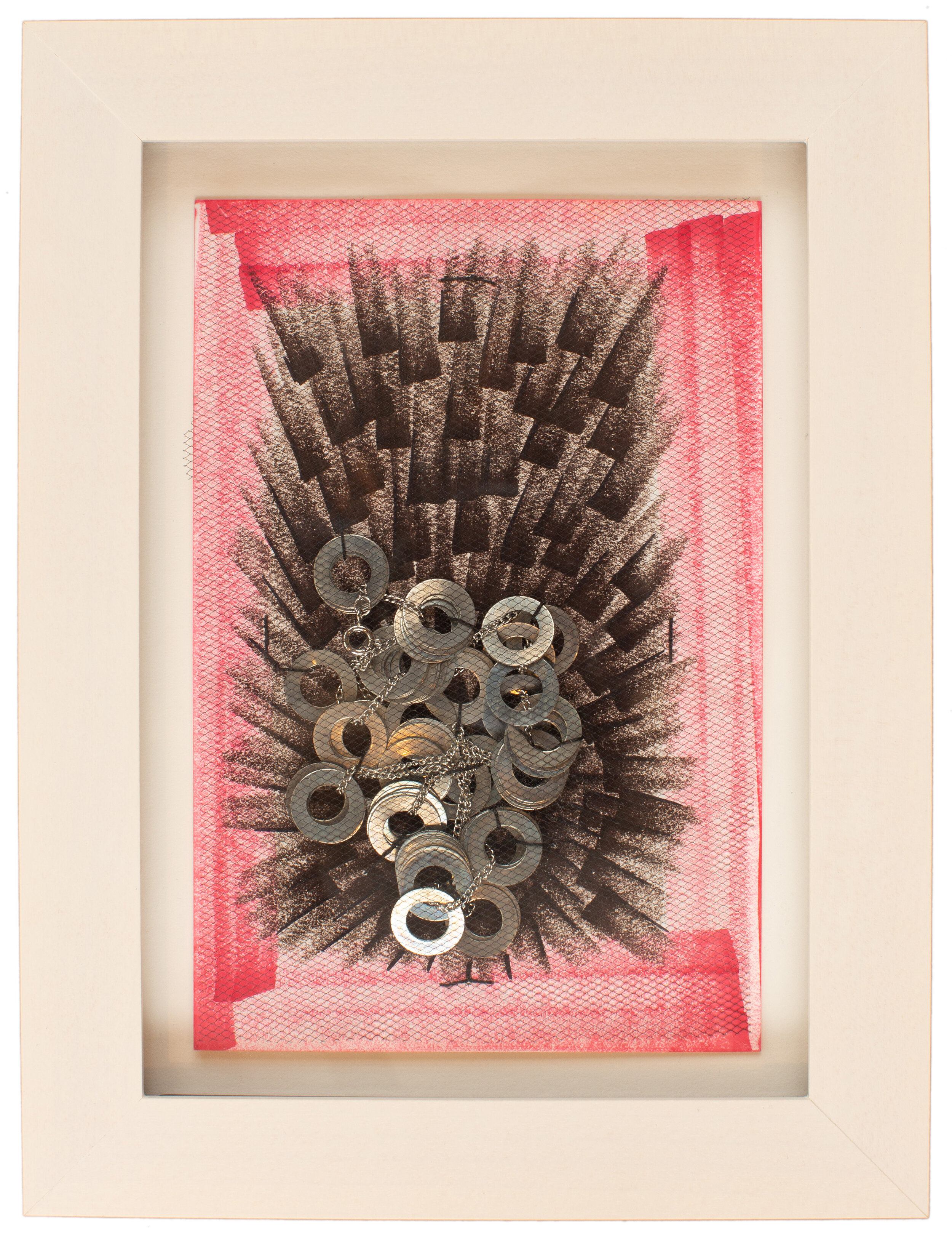
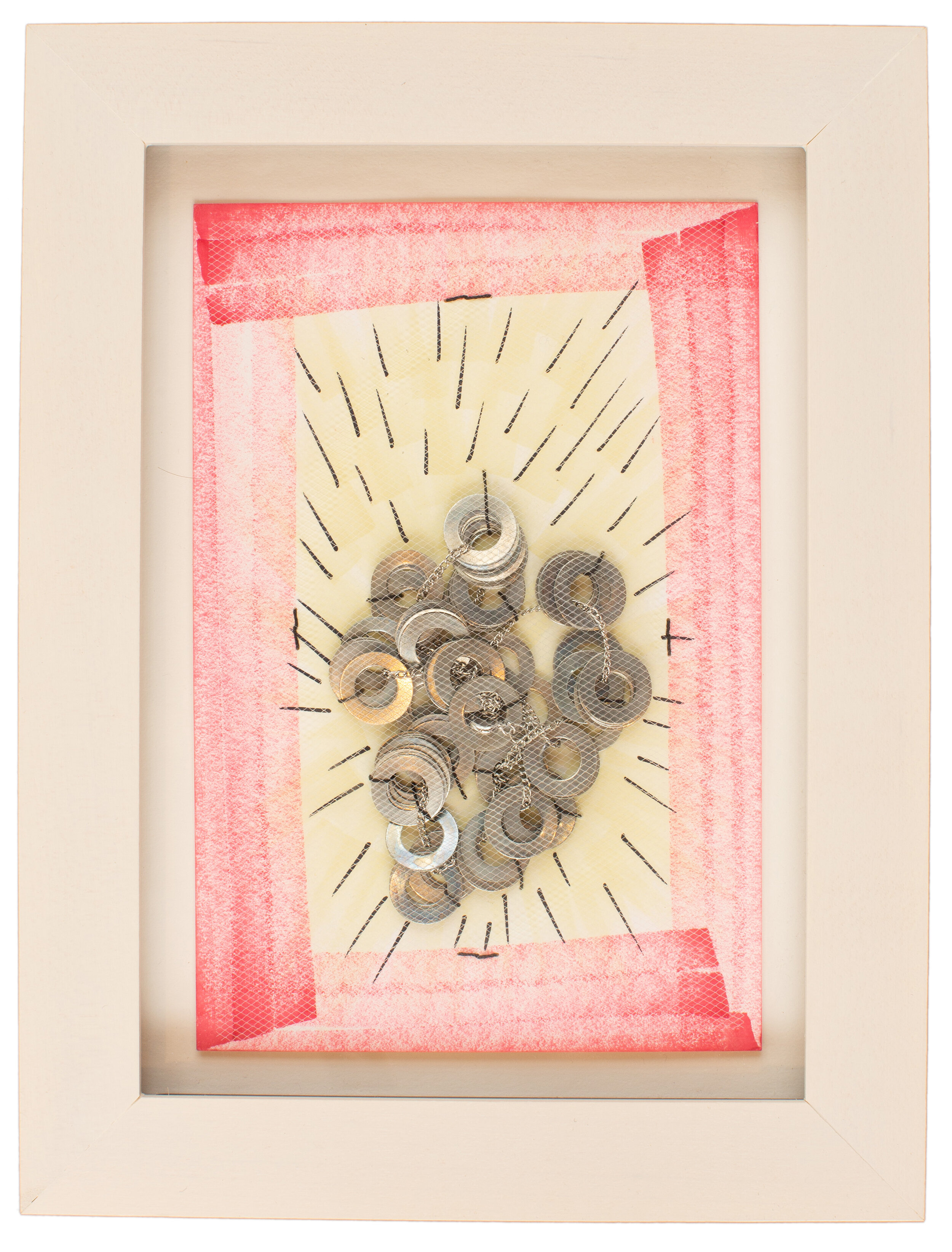
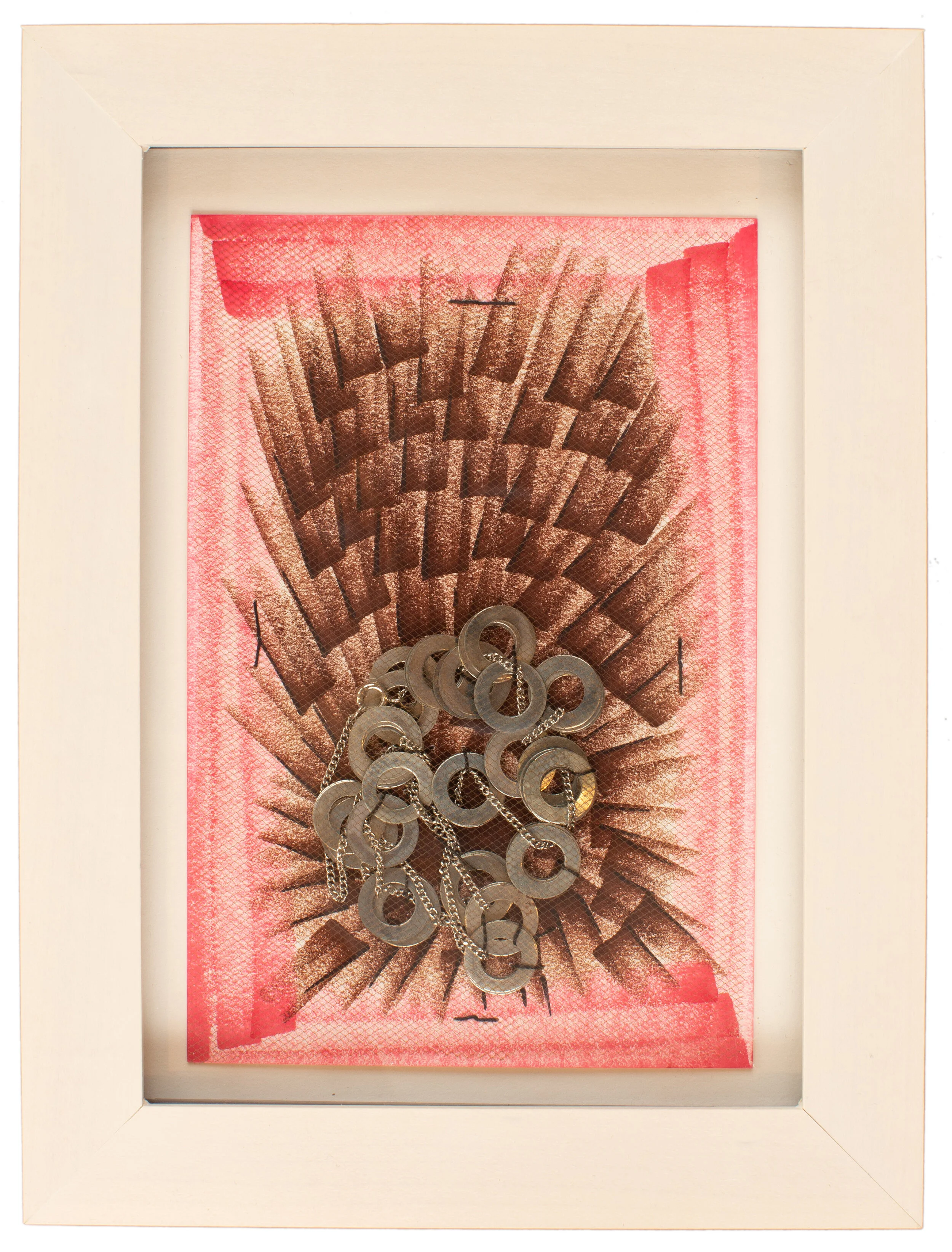
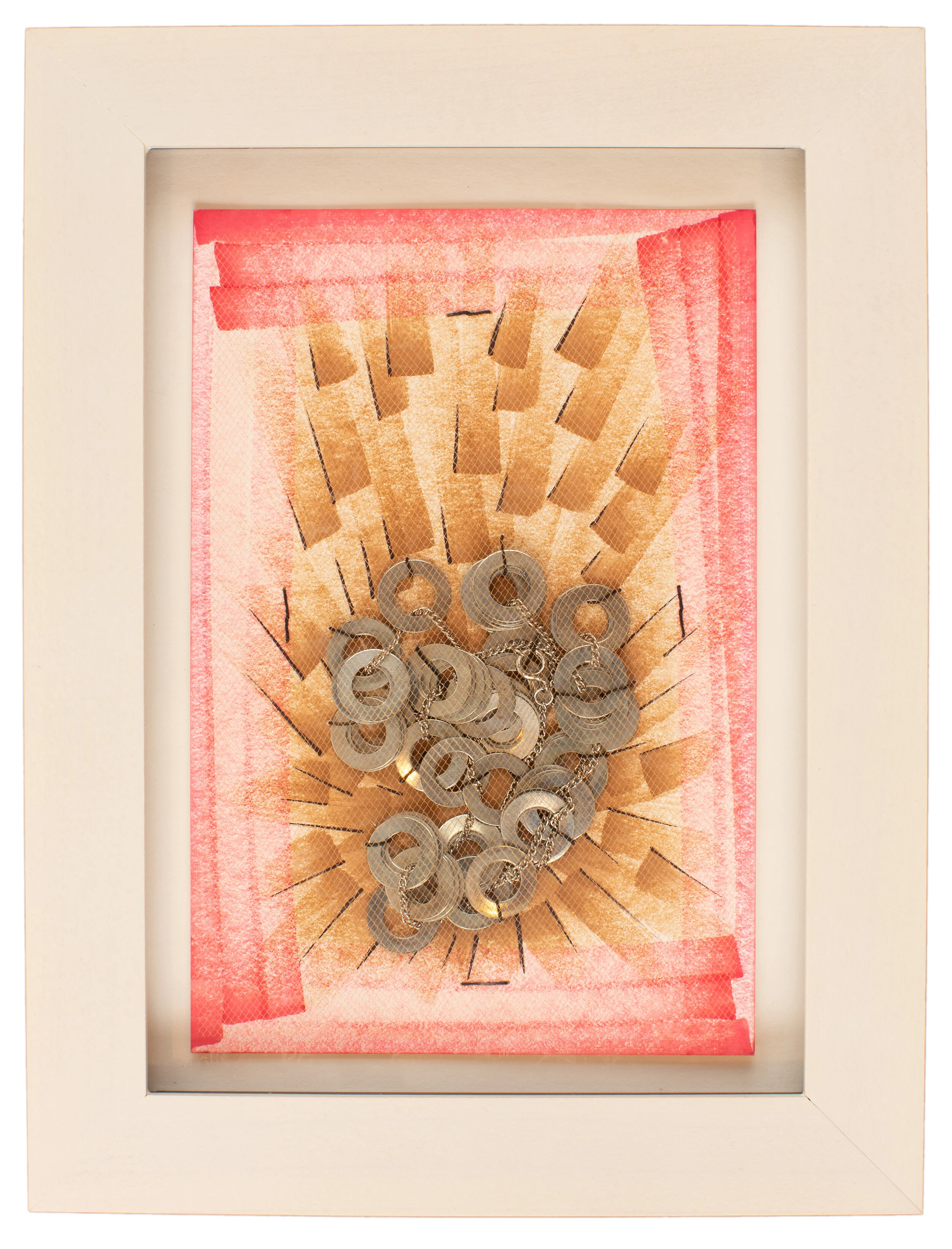
SHACKLES 1-12, 2020
Archival paper, fiber, metal, pencil, colored pencil, ink
(Each) LWD 8 ⅜ x 6 ⅜ x 1 ½ inches