Public Commissions
1960s TV Dinner
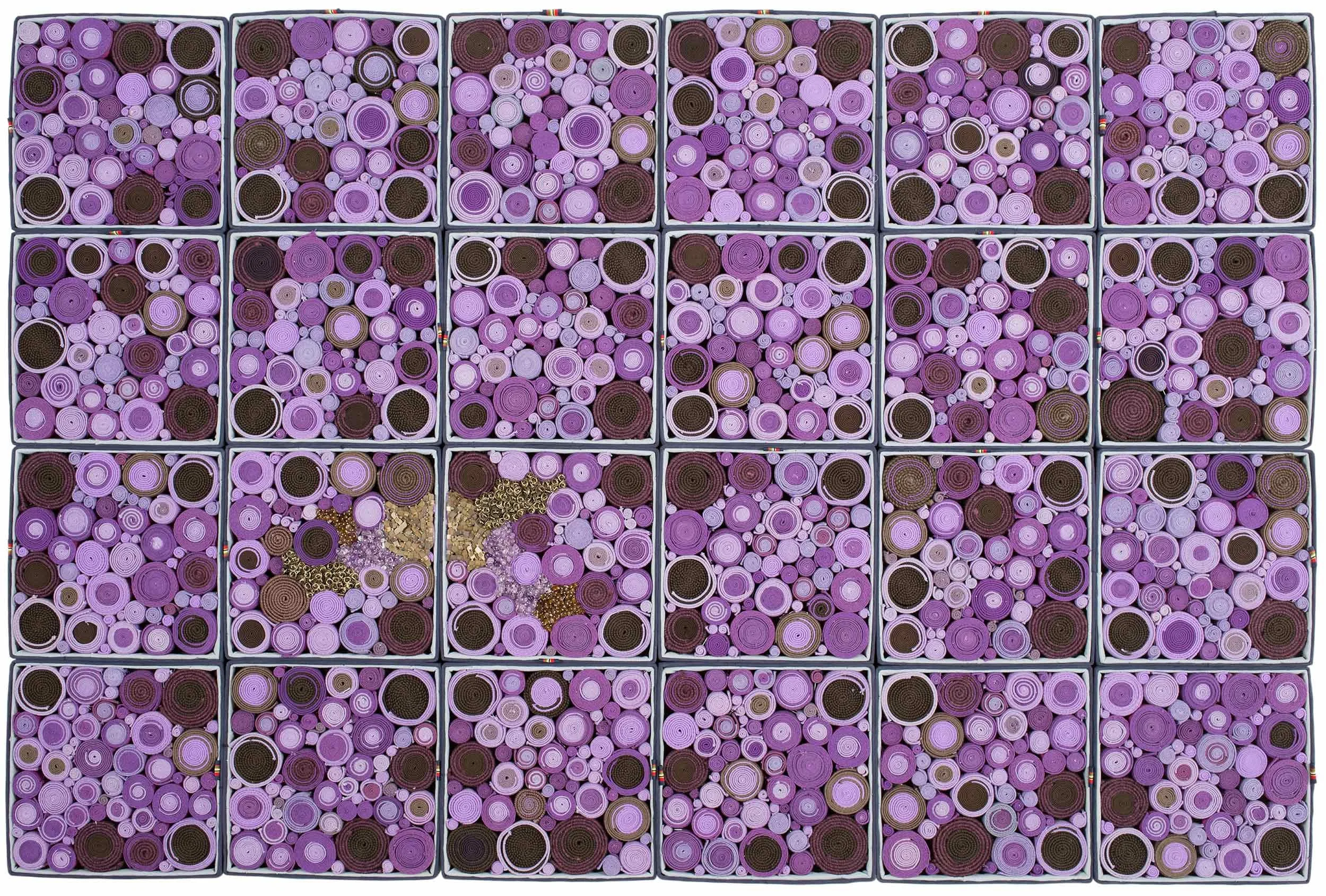
Scrollathon: Parrish Art Museum, Water Mill, New York
2014
Commissioned by: Parrish Art Museum, Water Mill, New York
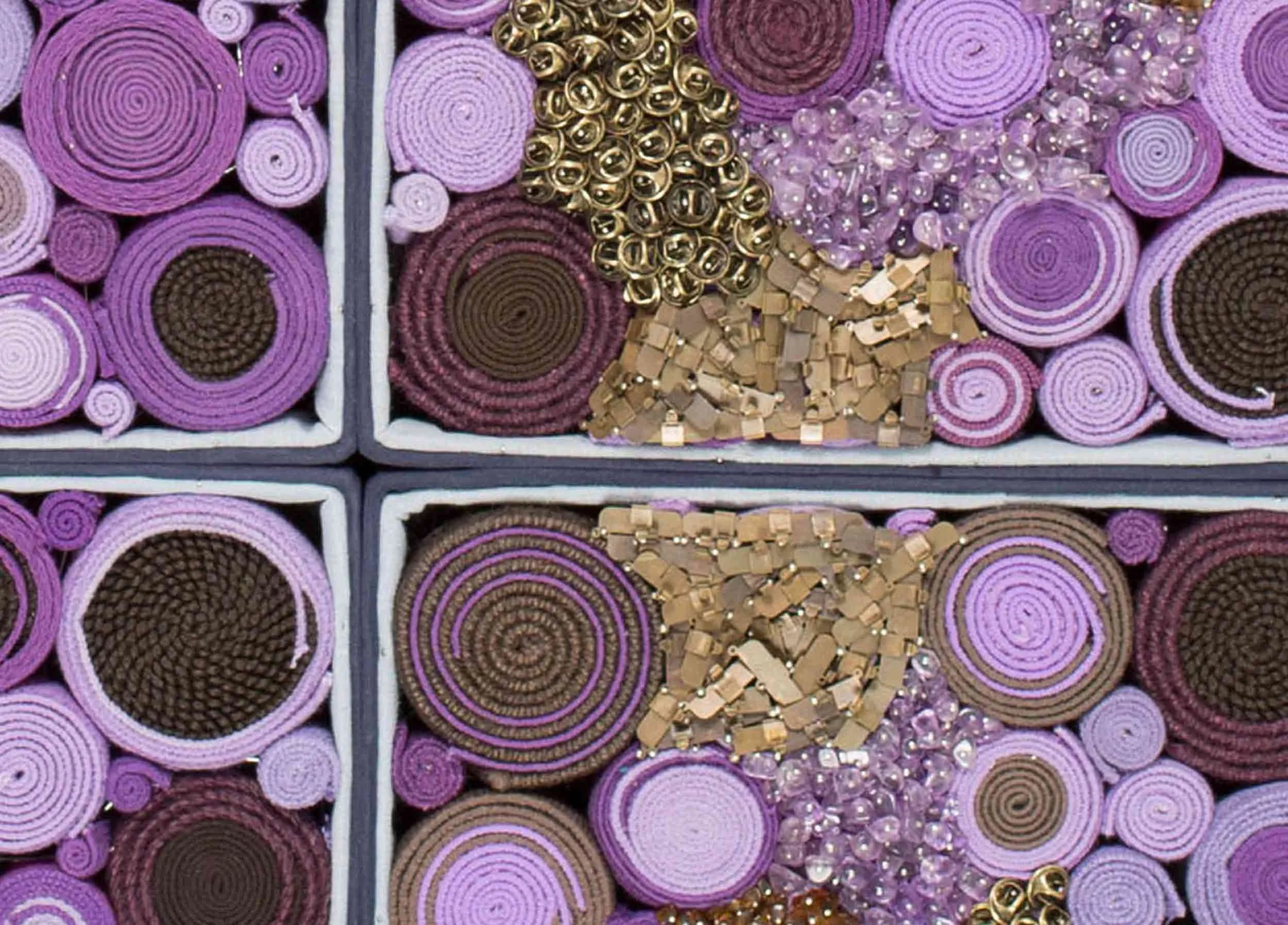
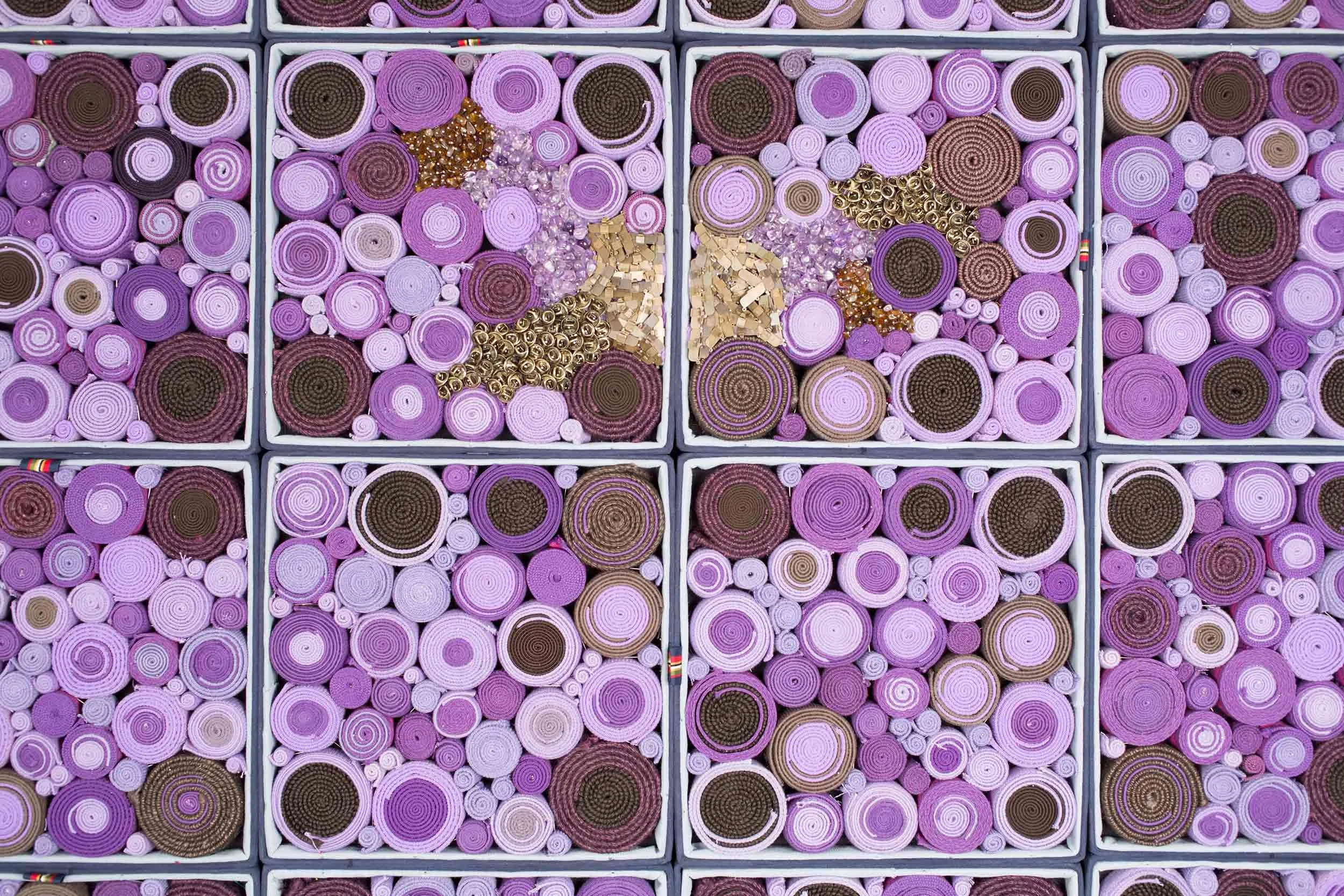
Medium: Fiber, ultrasuede, archival board, ink, thread
Dimensions: 61 × 41 × 3 inches
Photograph: Courtesy of the artists
Artists’ Registration Number: 2014.336.001
Exhibition History: Scrollathon, Parrish Art Museum, Water Mill, New York, 2015; in conjunction with Mary Queen of the Universe, Parrish Art Museum, Water Mill, New York, 2014. Curator: Terrie Sultan
Developed in conjunction with our 2014 exhibition Mary Queen of the Universe, the Parrish Scrollathon engaged 1,086 participants from 16 Long Island schools and community organizations. Over the course of the project, the museum became a site of sustained making, conversation, and shared authorship—establishing a foundation that would shape the program’s future iterations.
Commission Overview
The Parrish Art Museum Scrollathon marked a major turning point in the evolution of our Scrollathon program. Participation expanded dramatically—from a previous maximum of approximately 350 participants to more than 1,000—reshaping both the scale and logistics of the process. With support from the National Endowment for the Arts, Scrollathon received its first-ever federal funding, enabling us to formalize the program’s structure.
Artistic Approach
Participants began their experience with a guided tour of Mary Queen of the Universe, grounding their work in an understanding of our materials, processes, and conceptual framework. Each participant then created an individual scroll to keep—a personal artifact marking their singular experience—before gathering in small groups to share the stories behind their making.
At this early stage of Scrollathon, the labor of preparation was done by the participants themselves. Fabric trimmings were cut down by hand during the sessions for participant use, underscoring the physical commitment embedded in every aspect of the process.
The process culminated in the collective creation of 1960s TV Dinner, a unified landscape built through hundreds of hand-rolled scrolls. The title emerged organically from one participant, who named his own scroll 1960s TV Dinner. The phrase resonated immediately—simple, evocative, and deeply American—and became an exclamation point that encapsulated the spirit of the entire project: shared memory, intimacy, humor, and collective experience translated through handwork.
Engagement and Impact
For many participants, the Parrish Scrollathon was a first encounter with contemporary art as a collaborative and transformative act. The project emphasized connection, repetition, and shared labor, culminating in a strong sense of ownership and collective pride.
At this early stage of Scrollathon, the labor of preparation was done by the participants themselves. Fabric trimmings were cut down by hand during the sessions for participant use, underscoring the physical commitment embedded in every aspect of the process.
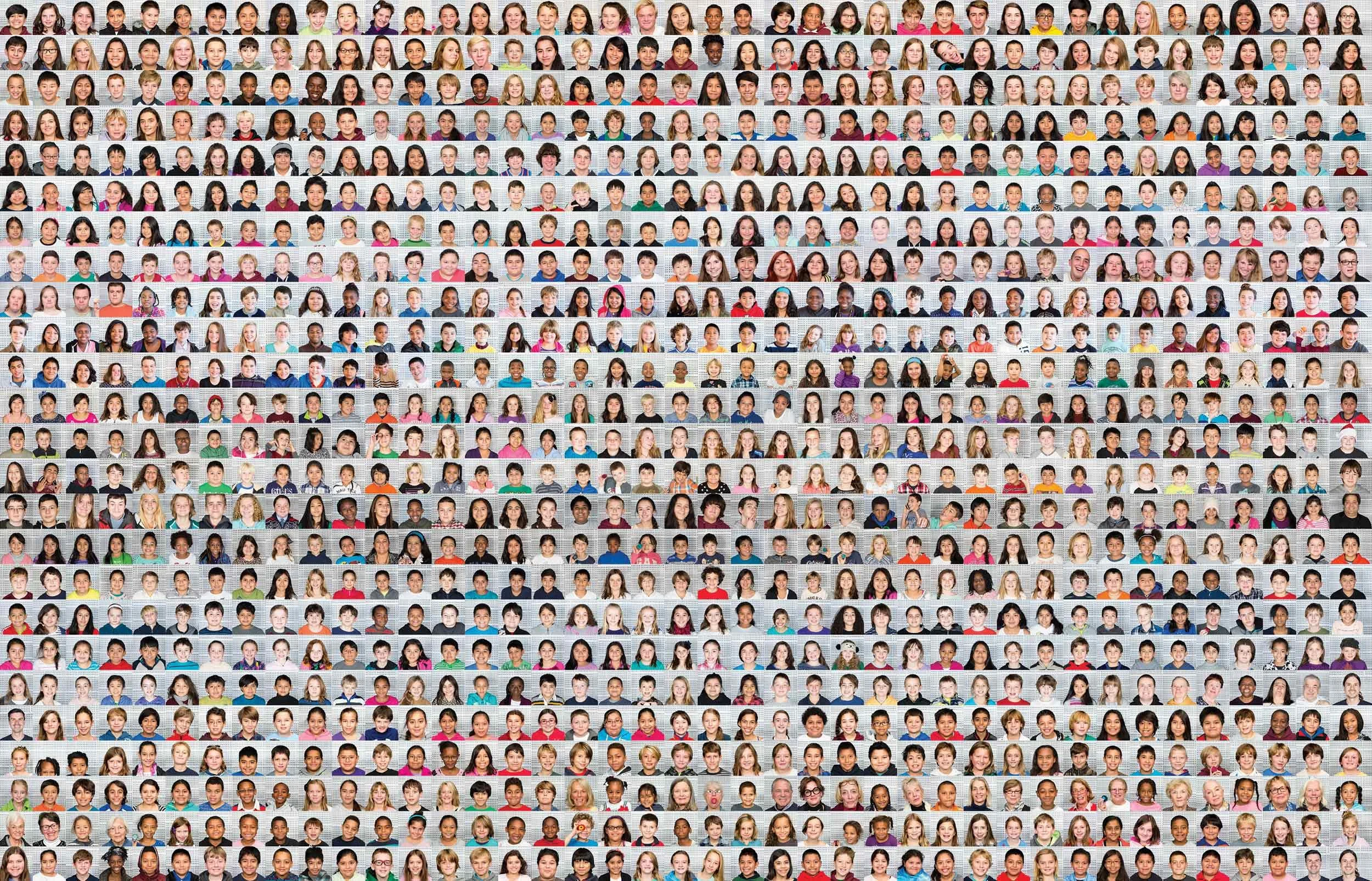
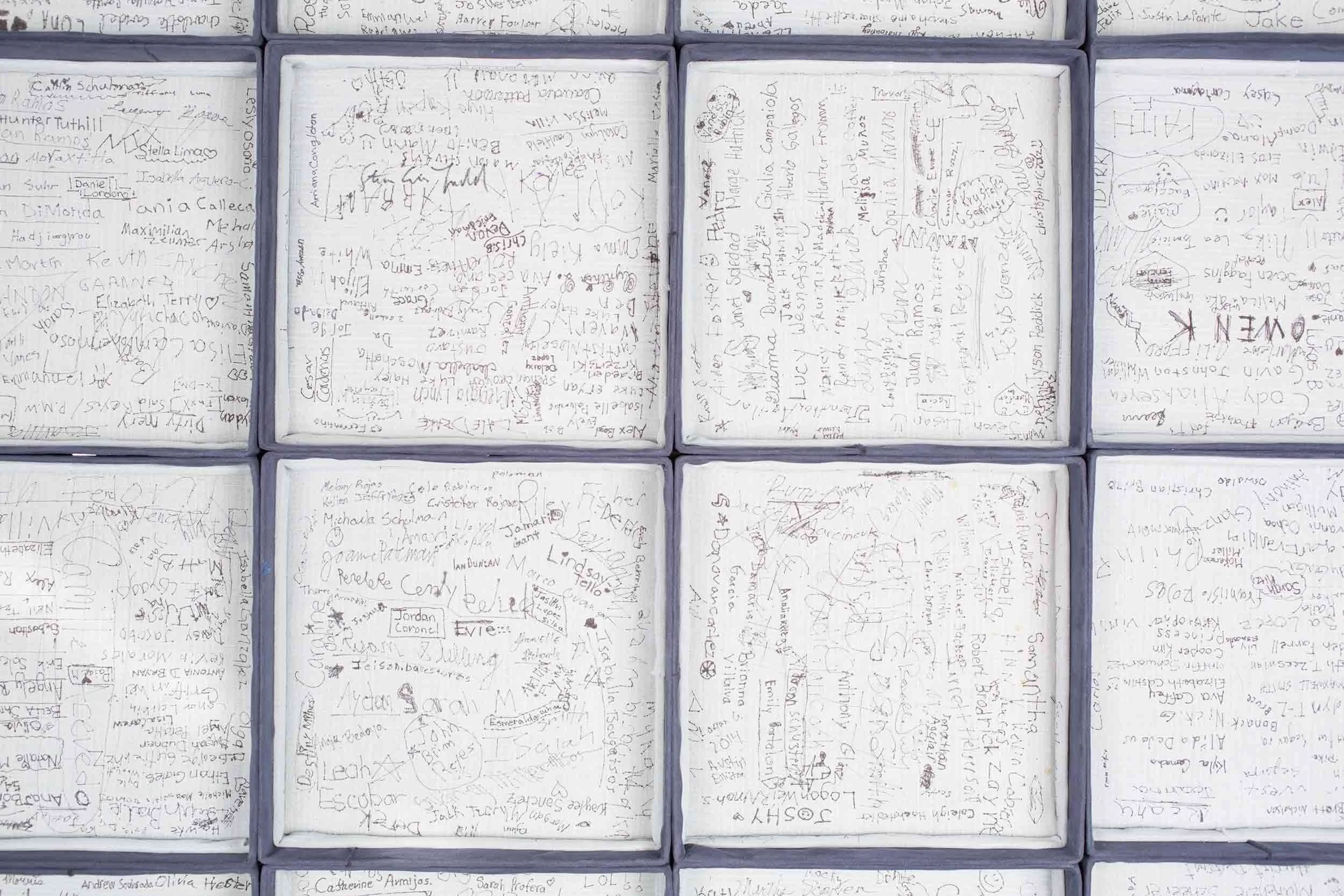
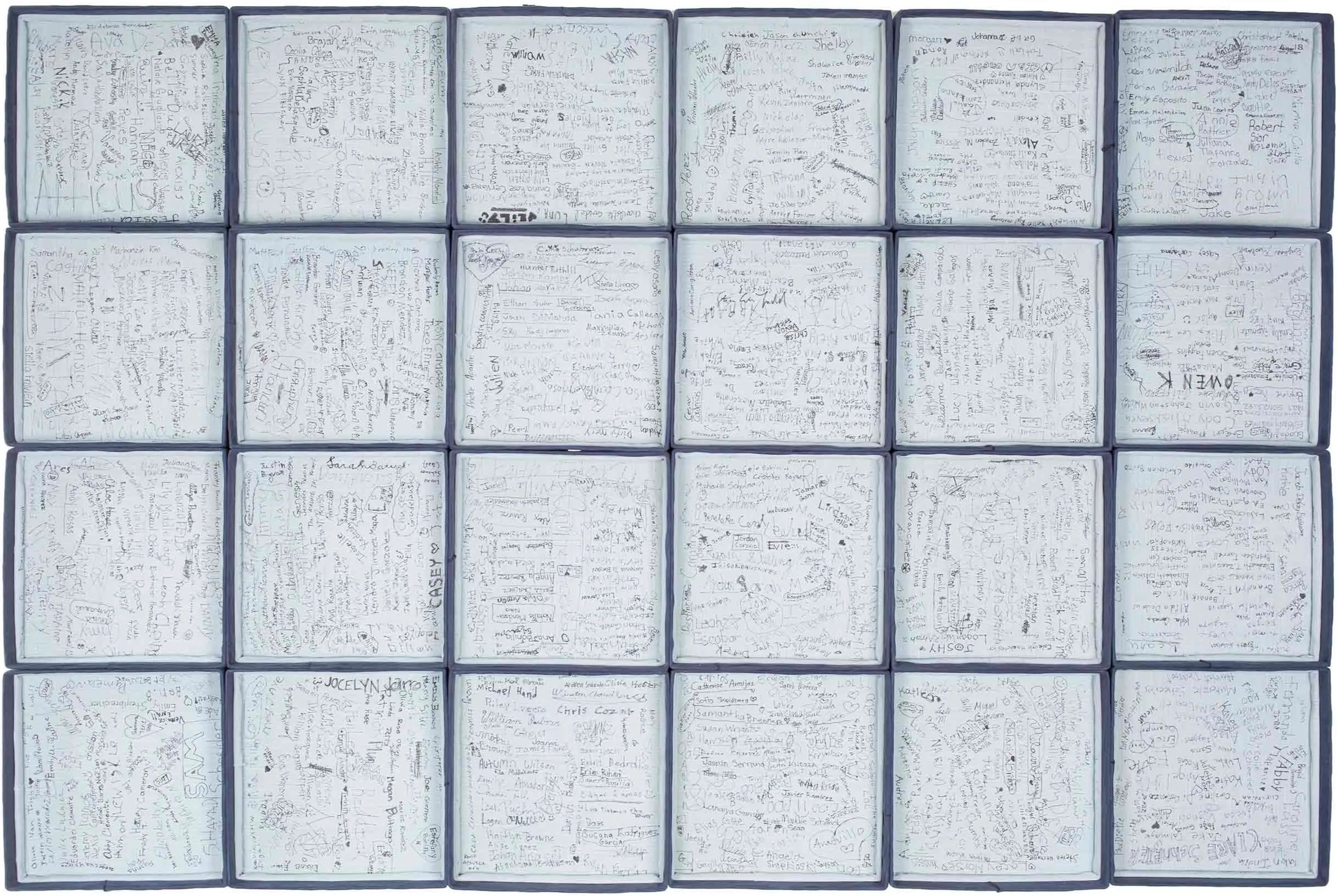
This project also marked the first-ever Scrollathon Souvenir Publication, a major development that would become a defining feature of the program going forward. In addition, every participant was photographed for a Portrait Mural, and all names were recorded on a Signature Plate. At Parrish, the Signature Plate was integrated directly into the interior lid of the handmade boxes housing the work—embedded within the object itself rather than presented as a separate element—reinforcing the idea that authorship lives inside the artwork.
Context and Legacy
1960s TV Dinner stands as a cornerstone in Scrollathon’s history. It established the large-scale participatory framework that would guide future projects and introduced key program elements—including Souvenir Publications, participant storytelling, and integrated authorship—that remain central today.
The project also solidified our relationship with the Parrish Art Museum and demonstrated the museum’s commitment to deep community engagement. The acquisition of 1960s TV Dinner into the Parrish Art Museum’s permanent collection marked an important moment of institutional recognition, affirming the value of collaborative making as both artistic practice and cultural record.
Community Groups
Bridgehampton Childcare and Recreation Center; Bridgehampton School; Child Development Center of the Hamptons; East End Special Players; East Hampton High School; Independent Group Home Living Program (IGHL); John M. Marshall Elementary School; Parrish Art Museum; Project MOST; Shinnecock Indian Education Program; Southampton Elementary School; Southampton High School; Southampton Intermediate School; Springs School; Tuckahoe Common School; Westhampton Beach Learning Center
Special Thanks
Terrie Sultan; Cara Conklin-Wingfield; Lucien Zayan and The Invisible Dog Art Center
Support
Supported by the National Endowment for the Arts; the New York State Council on the Arts with the support of Governor Andrew M. Cuomo and the New York State Legislature; The DeWitt Wallace Fund for Youth at the Long Island Community Foundation; The Henry Buhl Foundation; The Pollock-Krasner Foundation; The Joseph and Sylvia Slifka Foundation; The May and Samuel Rudin Family Foundation; The Mr. and Mrs. Raymond J. Horowitz Fund for Publications; William H. Wright II; Fred and Robin Seegal; and Cristina Grajales Gallery