0
Skip to Content
Steven and William Ladd
Biography
Artist Statement
Videos
Resume
Contact
Press
Exhibitions
Commissions
Artworks
Login Account
scrollathon®
Steven and William Ladd
Biography
Artist Statement
Videos
Resume
Contact
Press
Exhibitions
Commissions
Artworks
Login Account
scrollathon®
Folder: About
Back
Biography
Artist Statement
Videos
Resume
Contact
Press
Exhibitions
Commissions
Artworks
Login Account
scrollathon®
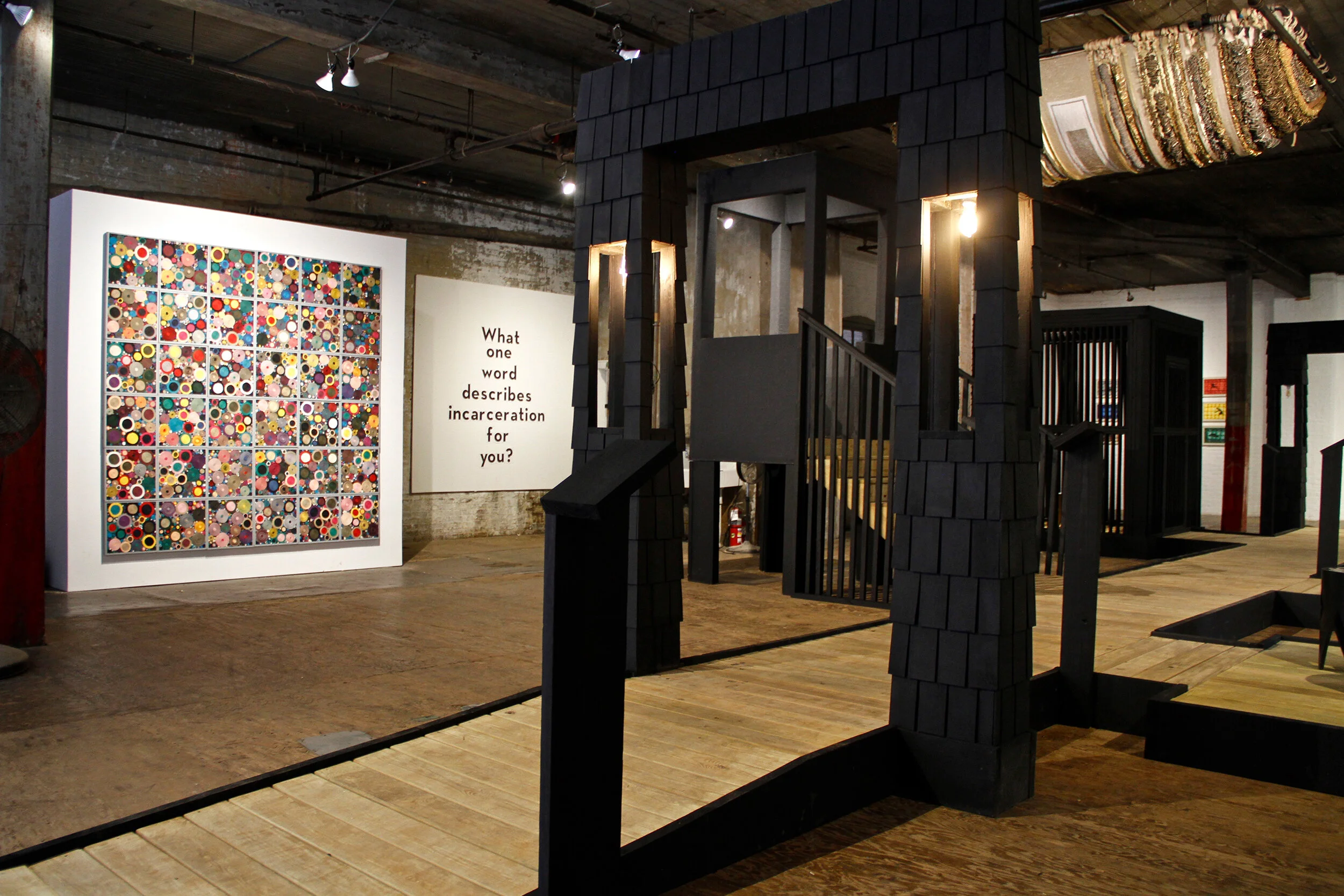
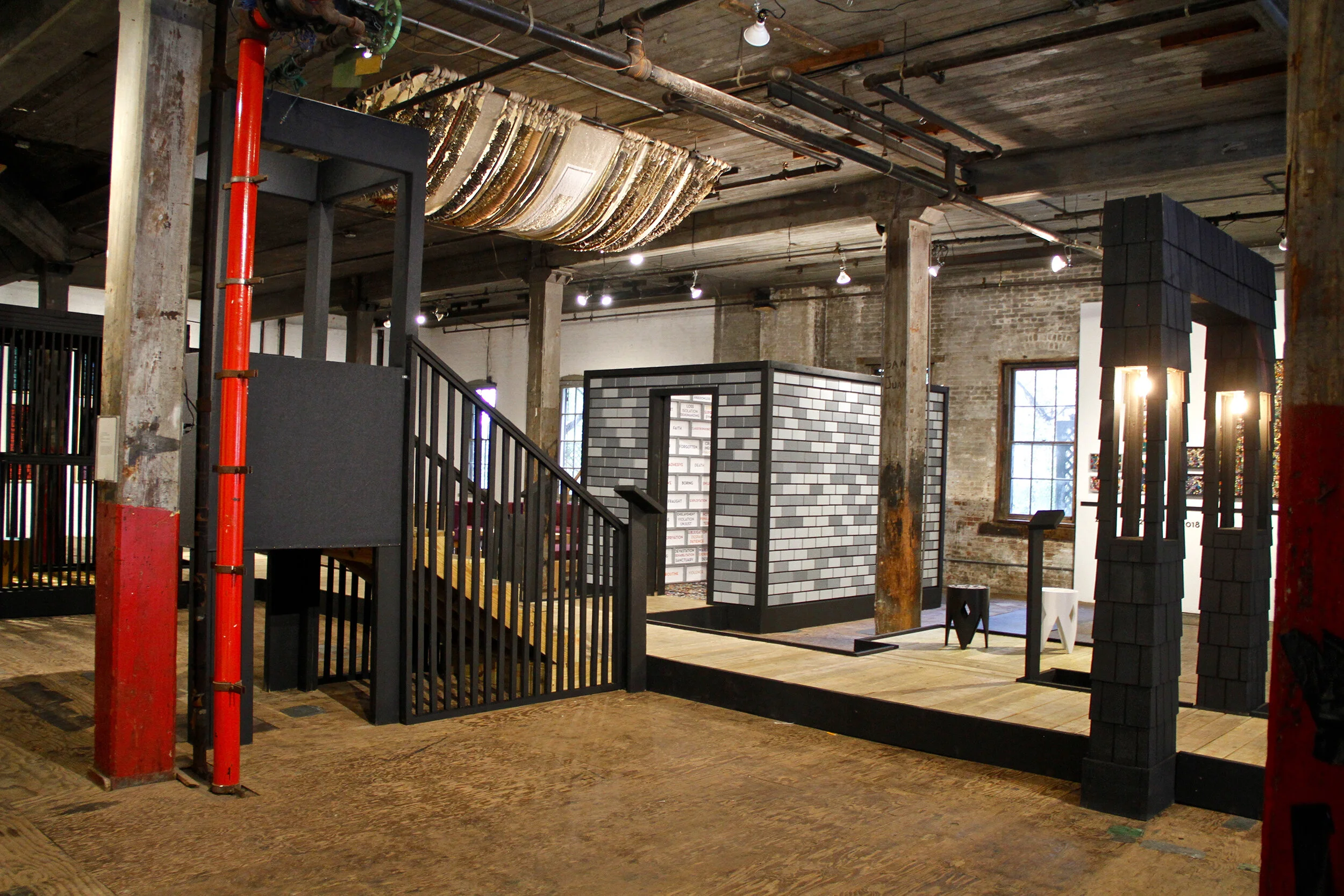
 The entrance to the exhibition brings the viewer onto a pathway that leads through a series of spaces representing the interior architecture of correctional facilities.  Metal Detector , with its illuminated columns, is the first structure you encou View fullsize
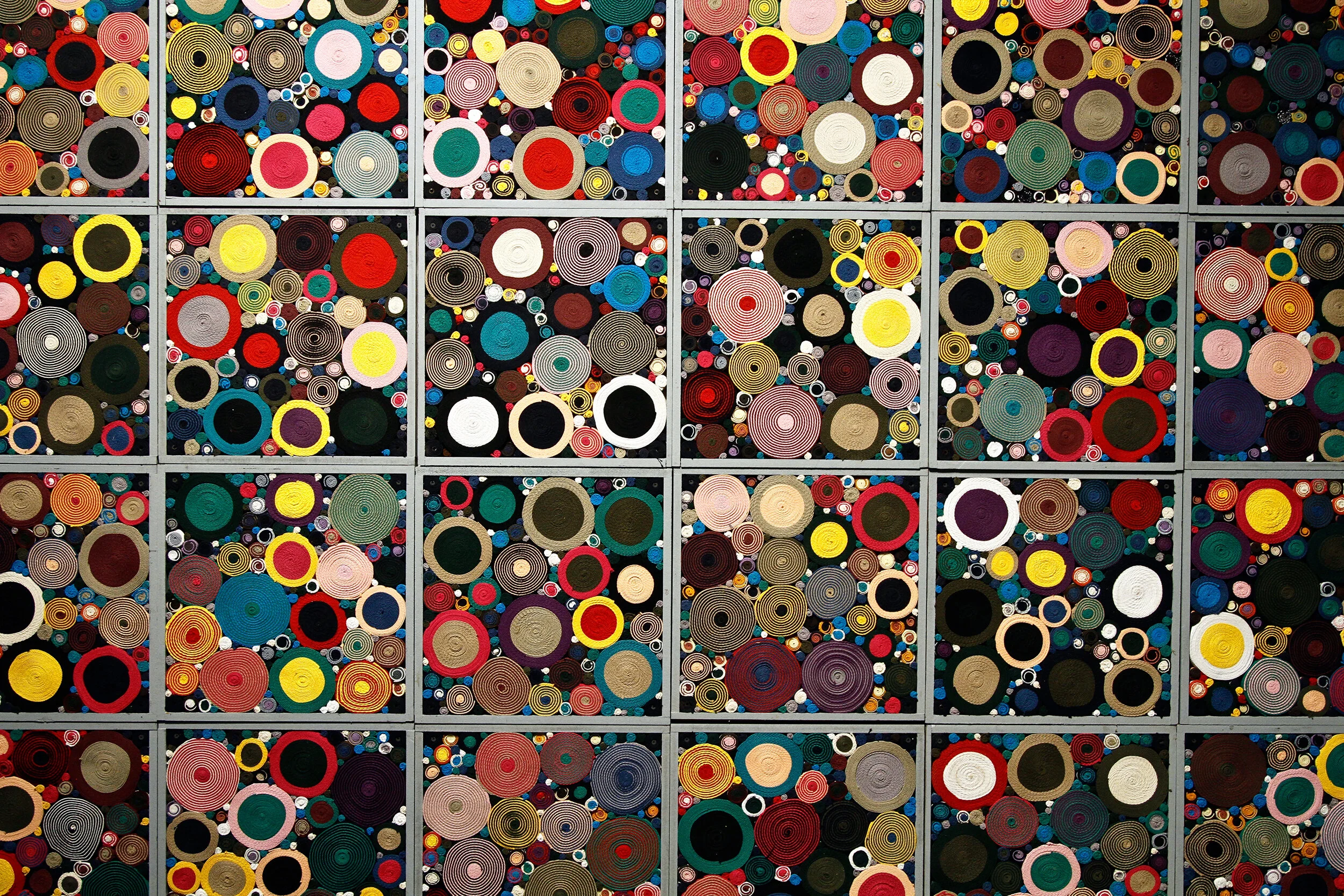
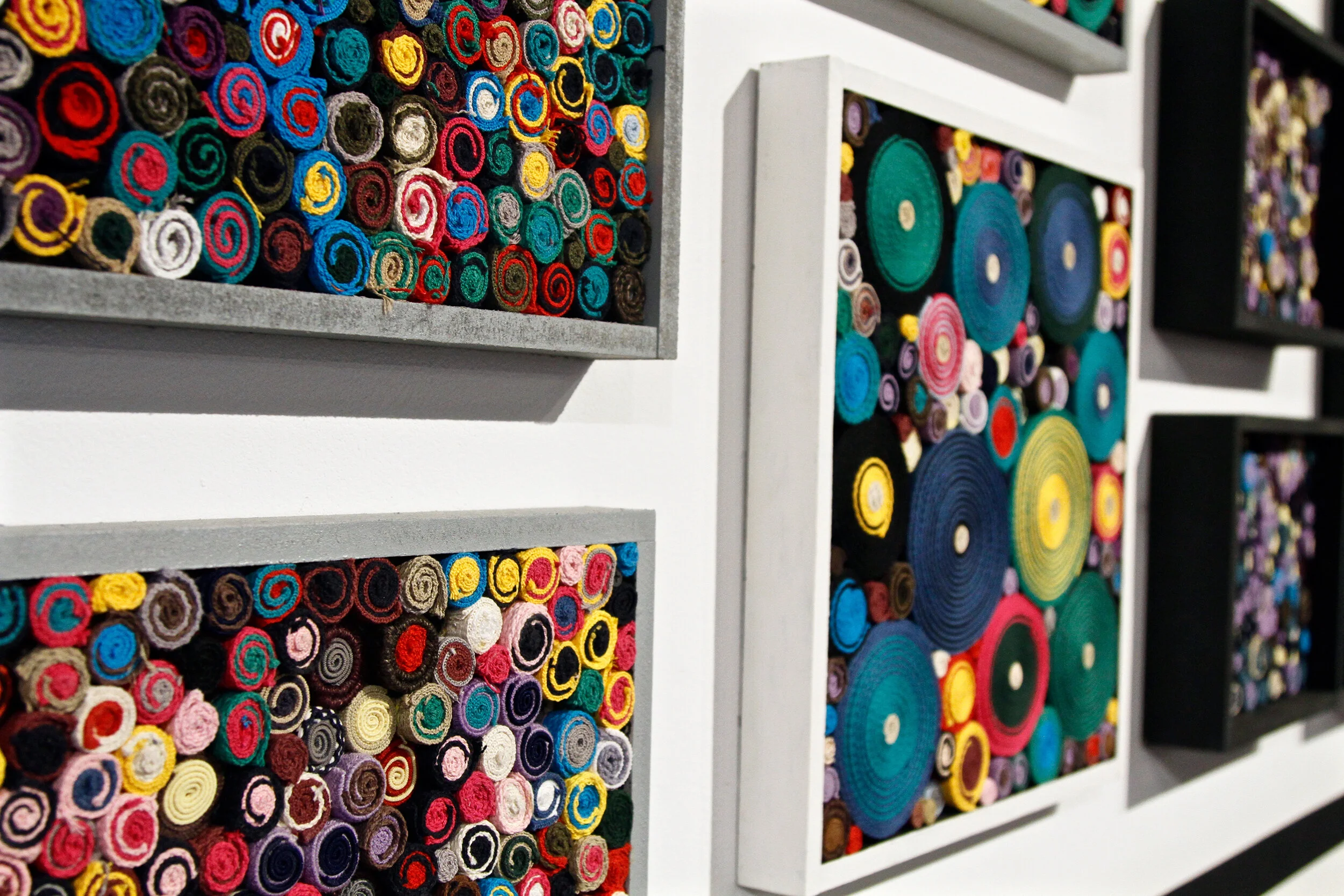
  The Other Side , 2020, is made of thousands of trimming rolled into tightly coiled scrolls. The Invisible Dog was a former belt and buckle factory filled with trimmings like these, and 12 years ago became a treasure trove of donated materials that View fullsize
  The Other Side  (detail), 2020, was made as a made after we had approval to bring long trimming into correctional facilities. In previous years we were required to cut them into short four-inch pieces so that they could not be used as a weapon. Thi View fullsize
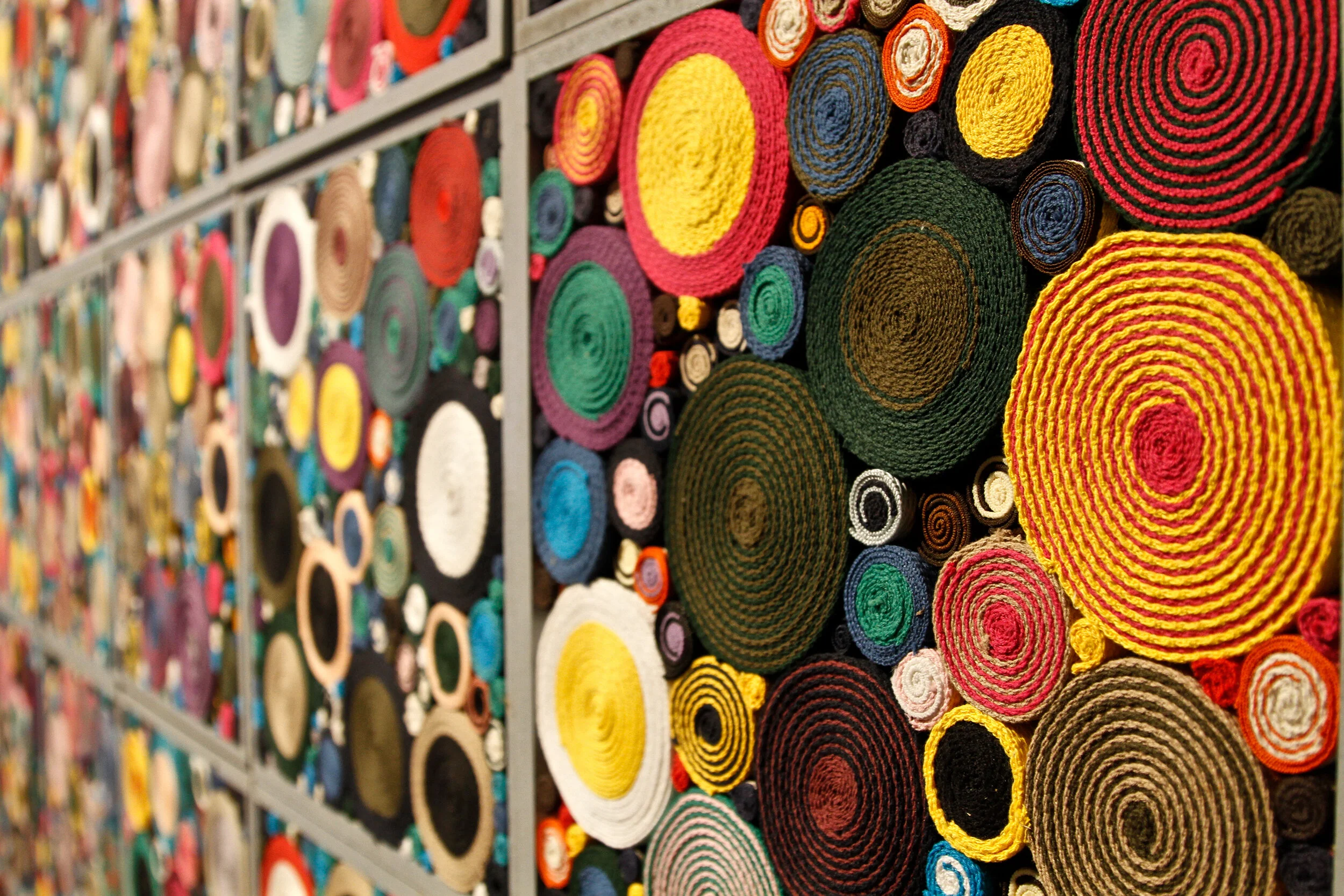
 The Other Side (detail), 2020, is made of trimmings that Steven and William roll into objects called scrolls. The scroll originated as a way of recycling textile material in their studio back in 2002. They didn’t want to waste anything! View fullsize
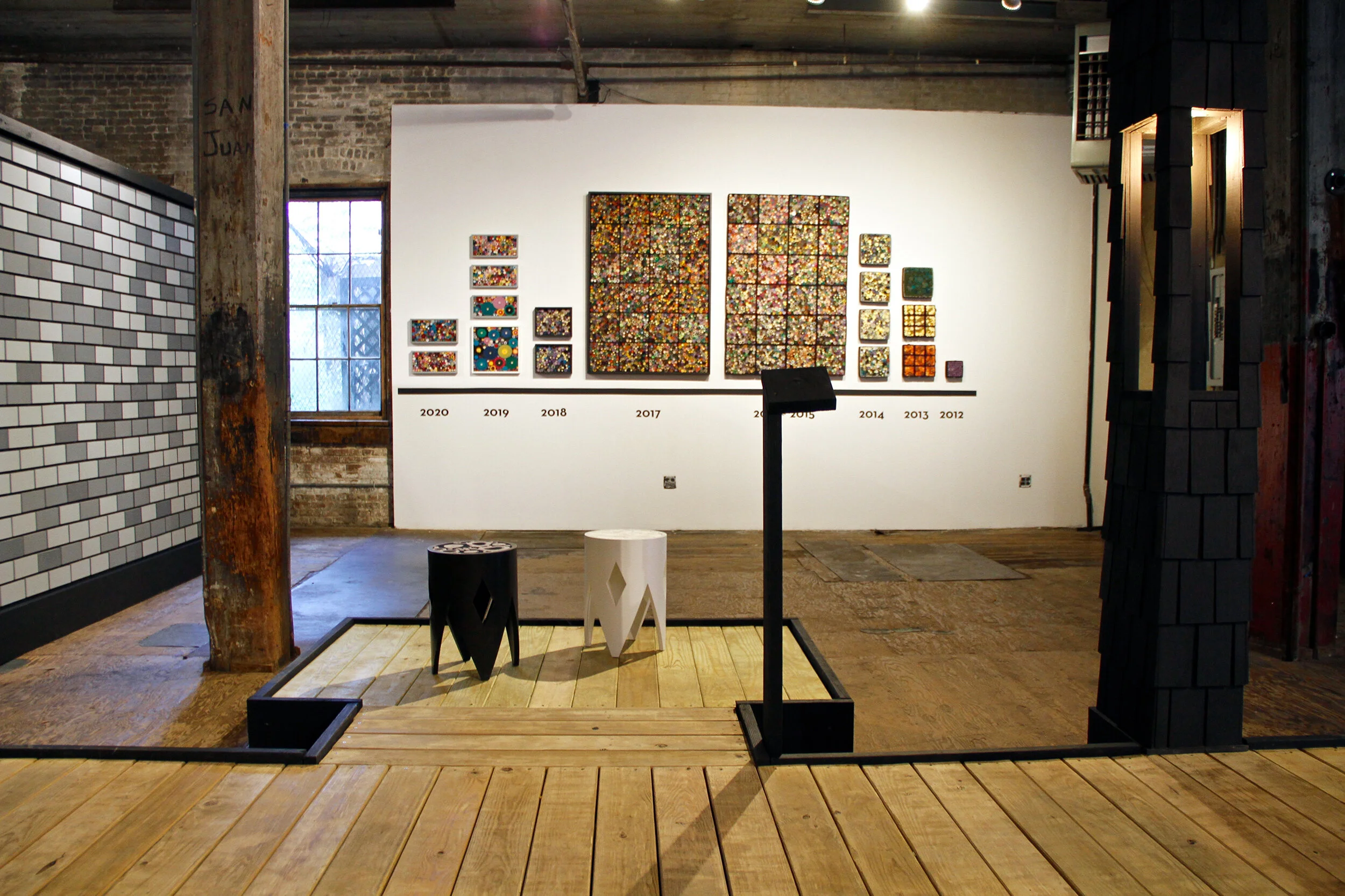
 Steven and William began their work inside the NYC Department of Corrections in 2012, work that continues today. This timeline represents the collaborative artworks made with inmates throughout the years. It is the first time this work has been brou View fullsize
 The timeline includes works made in 2019 and 2020 that began to flesh out ideas for the cinderblock structures that would fill the jail cell. At the time we created these we still thought they would be filled with scrolls. View fullsize
 In the foreground you see  Crown Stools Black and White , 2020. During the artists’ first time at GMDC, one of the ten jails on Rikers Island, they worked with 19 to 21 year-olds, who seemed like kids. In their housing unit, the inmates placed the c View fullsize
  Crown Stools Black and White , 2020, build on the artists use of scrolls and the cylindrical form to make stools. Earlier versions called  Scroll Stools  were made of simple cylinders with a single scroll on top. View fullsize
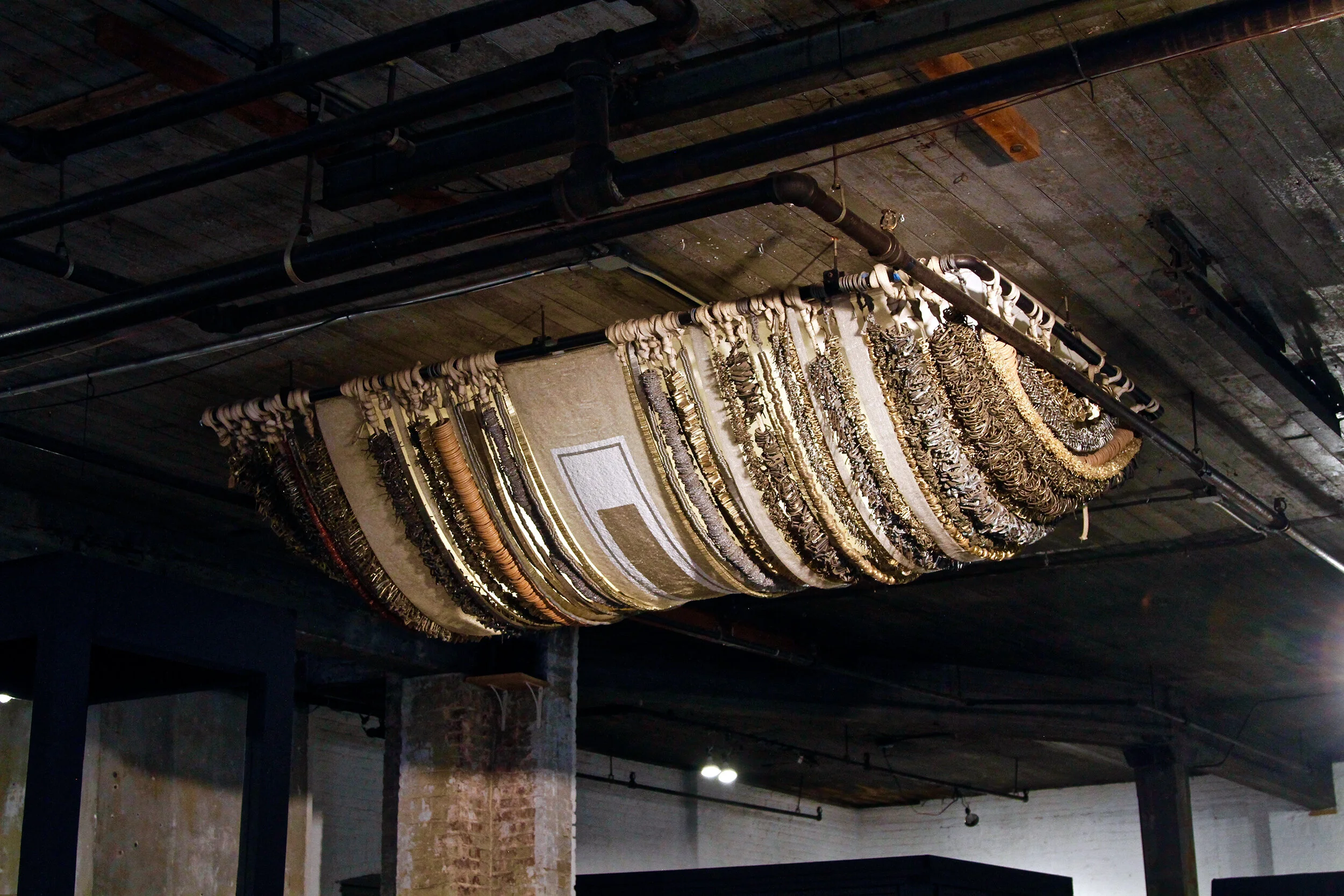
 Lucien Zayan founded The Invisible Dog Art Center in 2009 and invited Steven and William to build a chandelier from a huge cache of unused belts and buckles in the basement. They wired and installed the work themselves, one of only three permanent w View fullsize
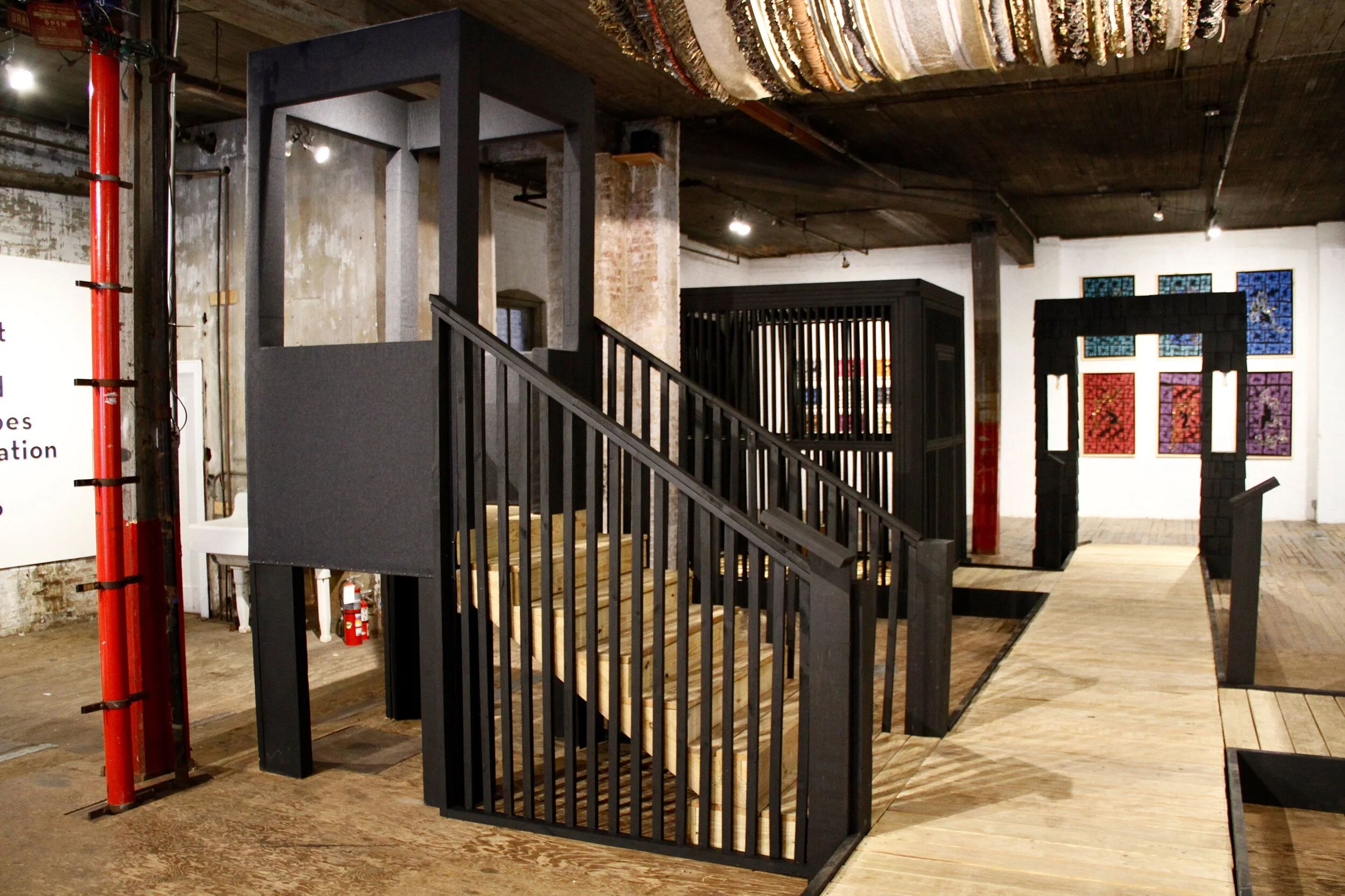
 View of the entrance from the left, you see  Watchtower , a towering structure representing the feeling of having your every move watched over. In the background is the brick exterior of  Jail Cell  with a hint of its interior to lure you inside. View fullsize
 In every housing unit is a secured surveillance area where corrections officers keep watch over the lives of inmates and anyone else inside the jail. You are constantly being watched and Steven and William are always trying to engage the officers wh View fullsize
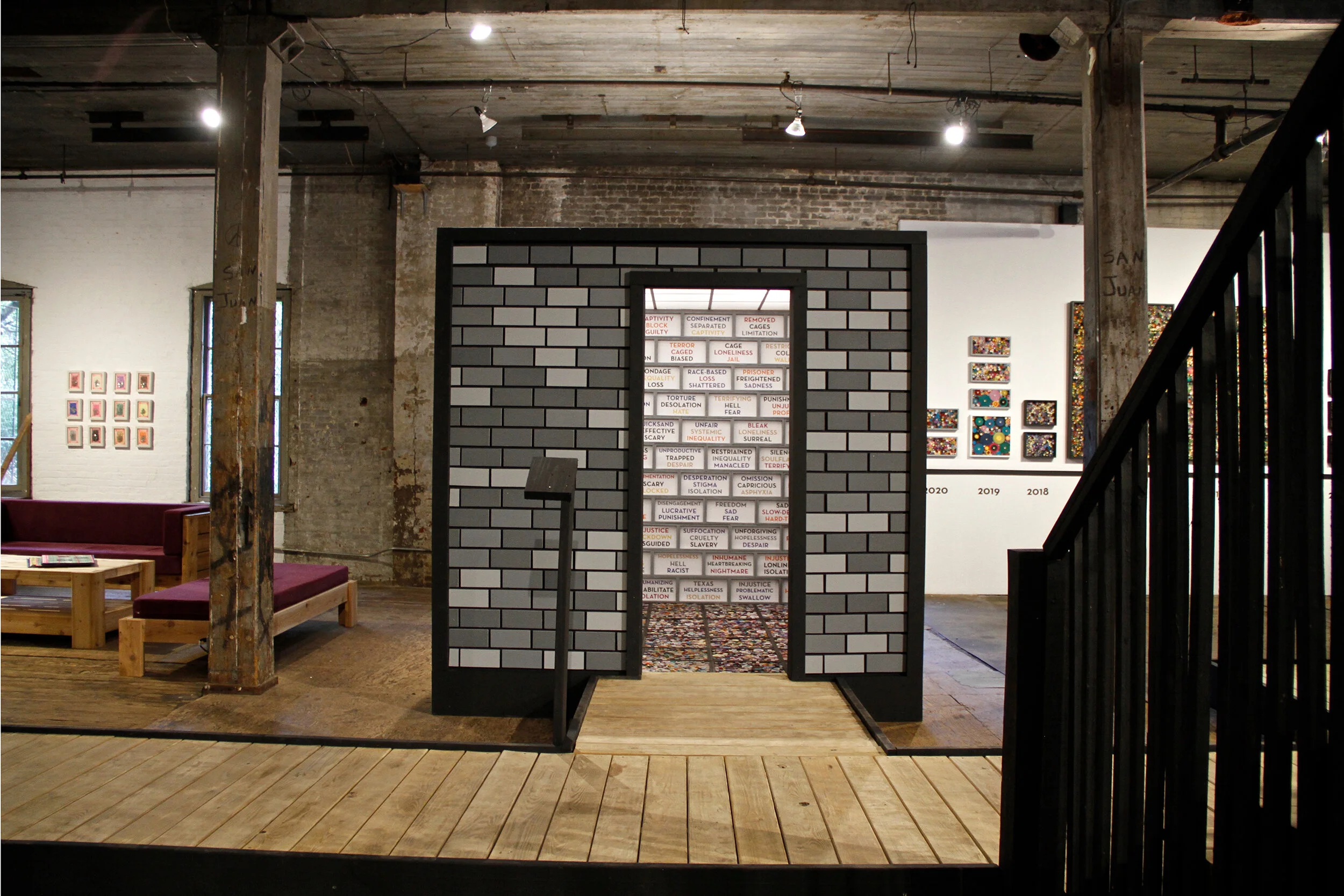
 Steven and William were inspired to create  Jail Cell  after telling some inmates about a recent project co-commissioned by The Dallas Museum of Art and High Museum of Art, where they created an installation space completely filled with scrolls. The View fullsize
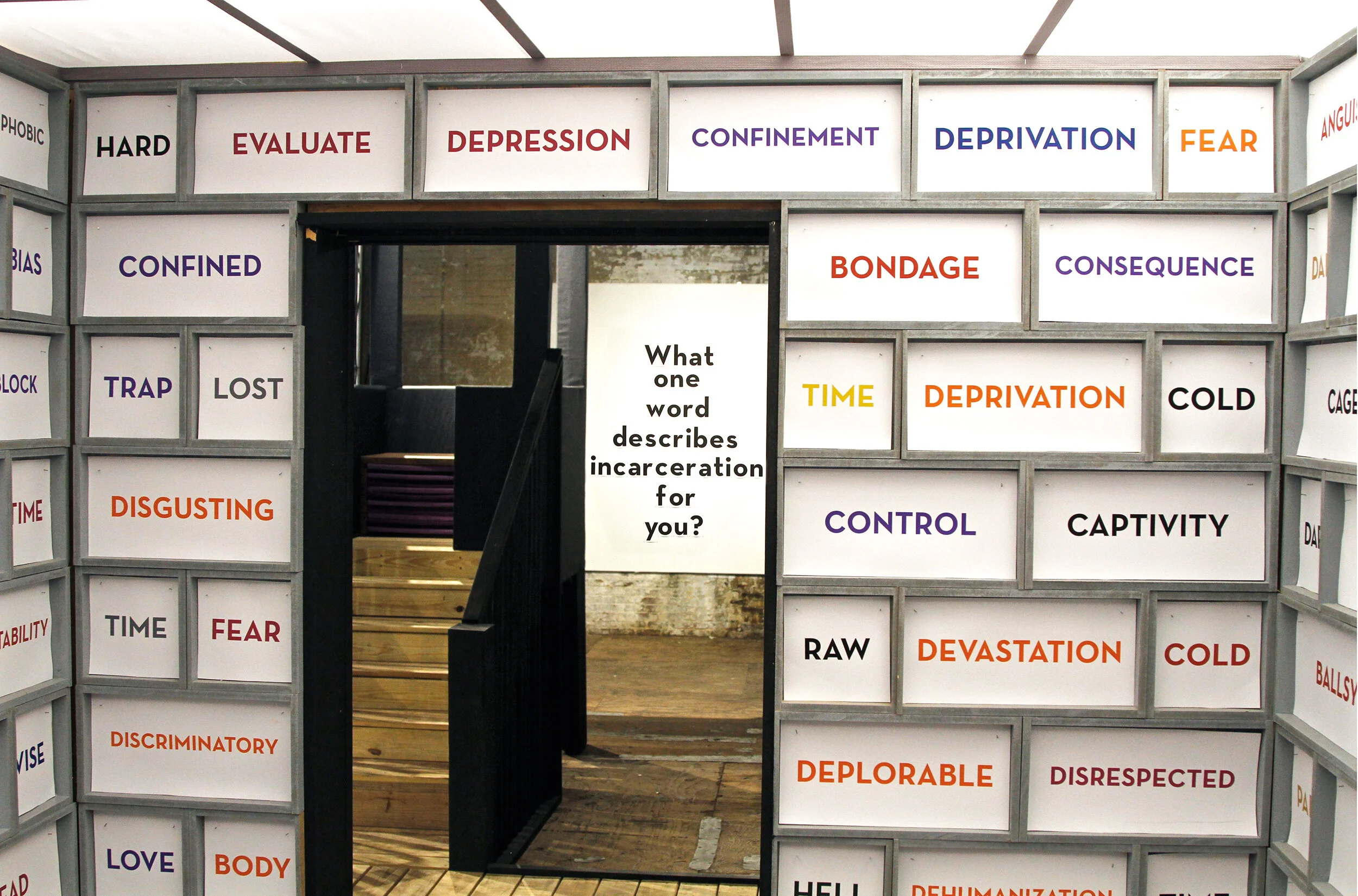
 Steven and William engaged with over 125 inmates in 5 jails (and hundreds more from the outside community) to build these word blocks. In a regular Scrollathon, each participant makes a colorful scroll to keep, and another as part of a collaborative View fullsize
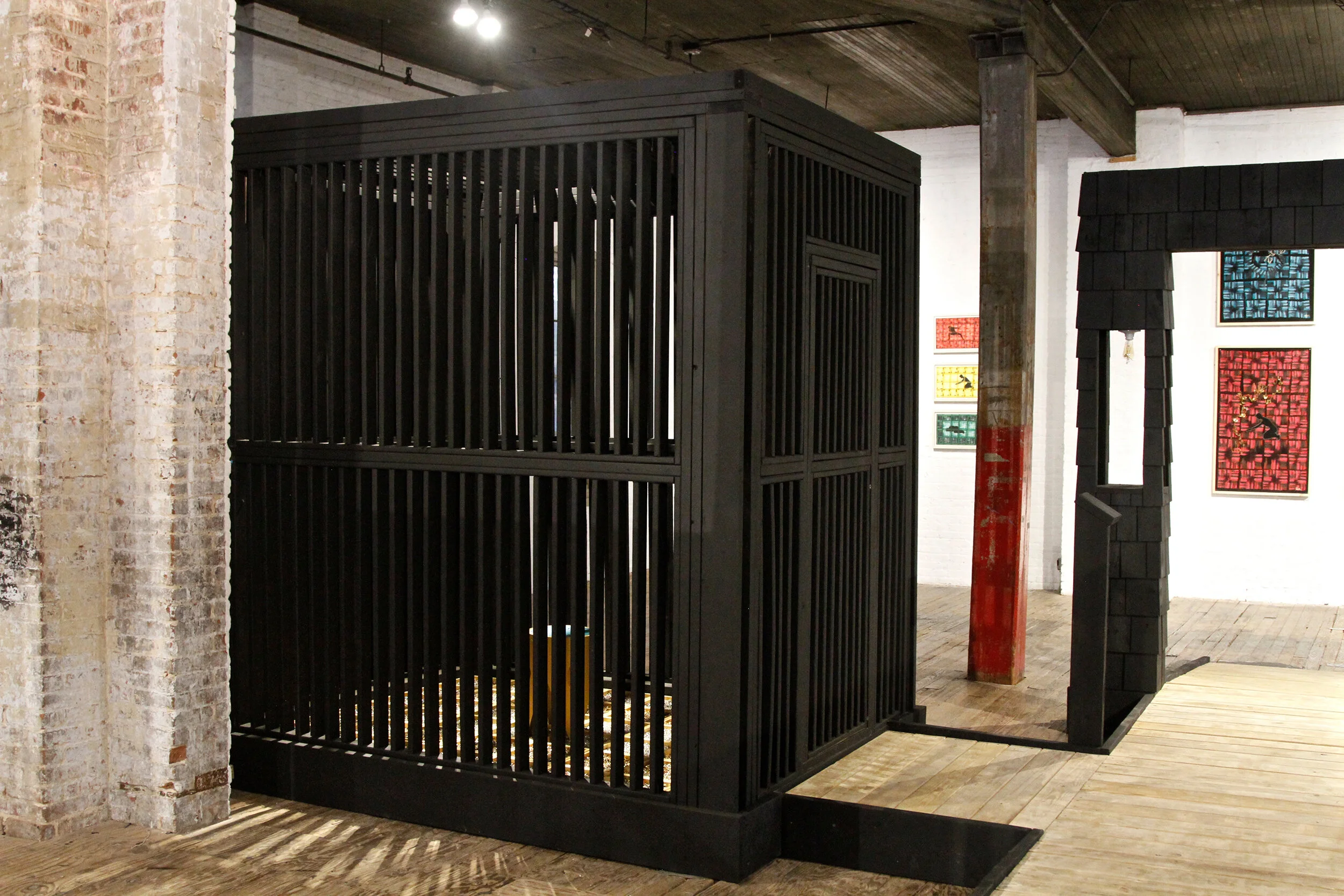
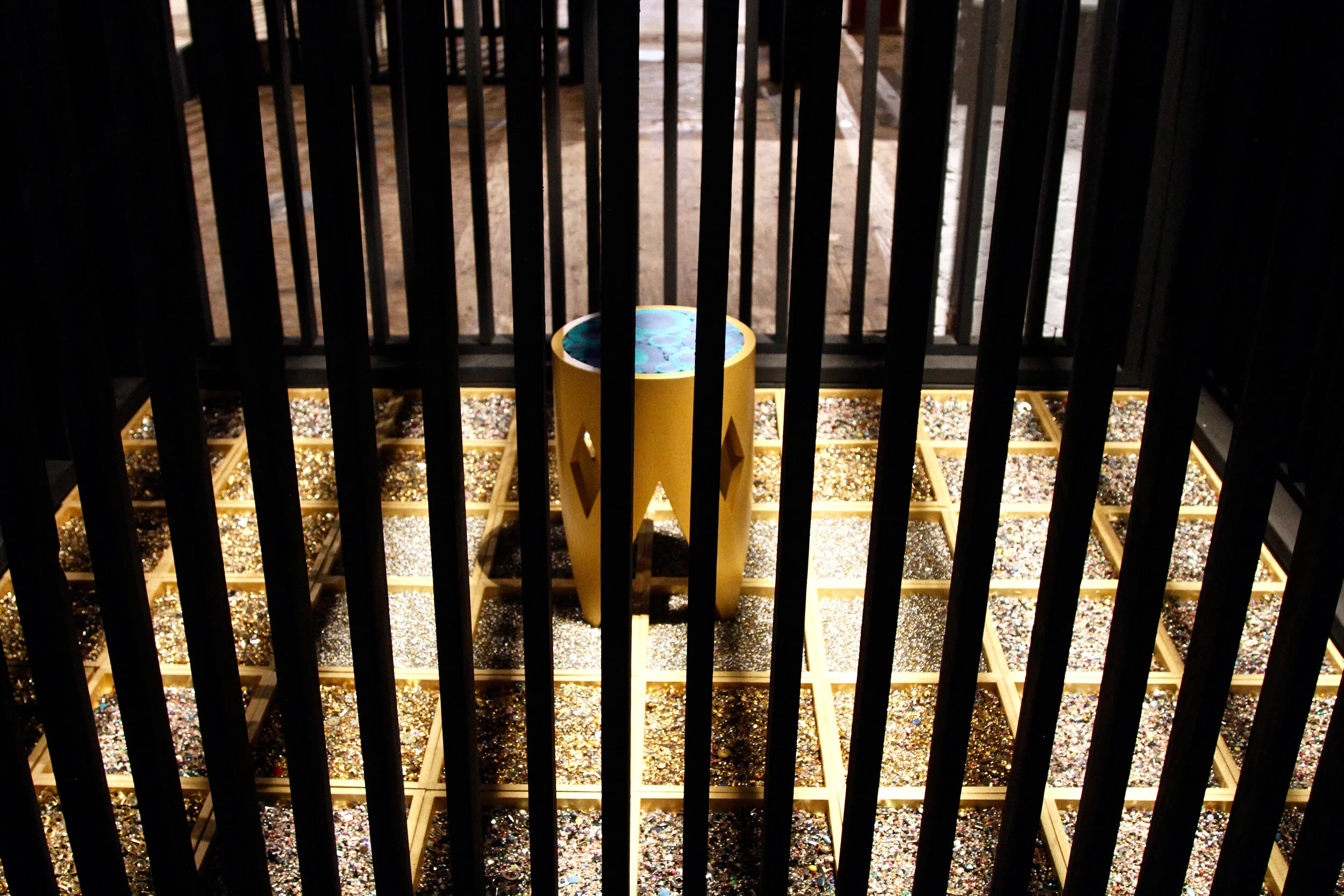
 A particularly jarring experience witnessing an adolescent inmate inside a six by six foot “cage” for causing a jail lockdown inspired  Isolation . The one stool represents its intended use to hold one person in solitary confinement. View fullsize
 The floor of  Isolation  is constructed of boxes and metal trinkets, signatures of Steven and William’s art practice. They are beautiful; but dangerously jagged. View fullsize
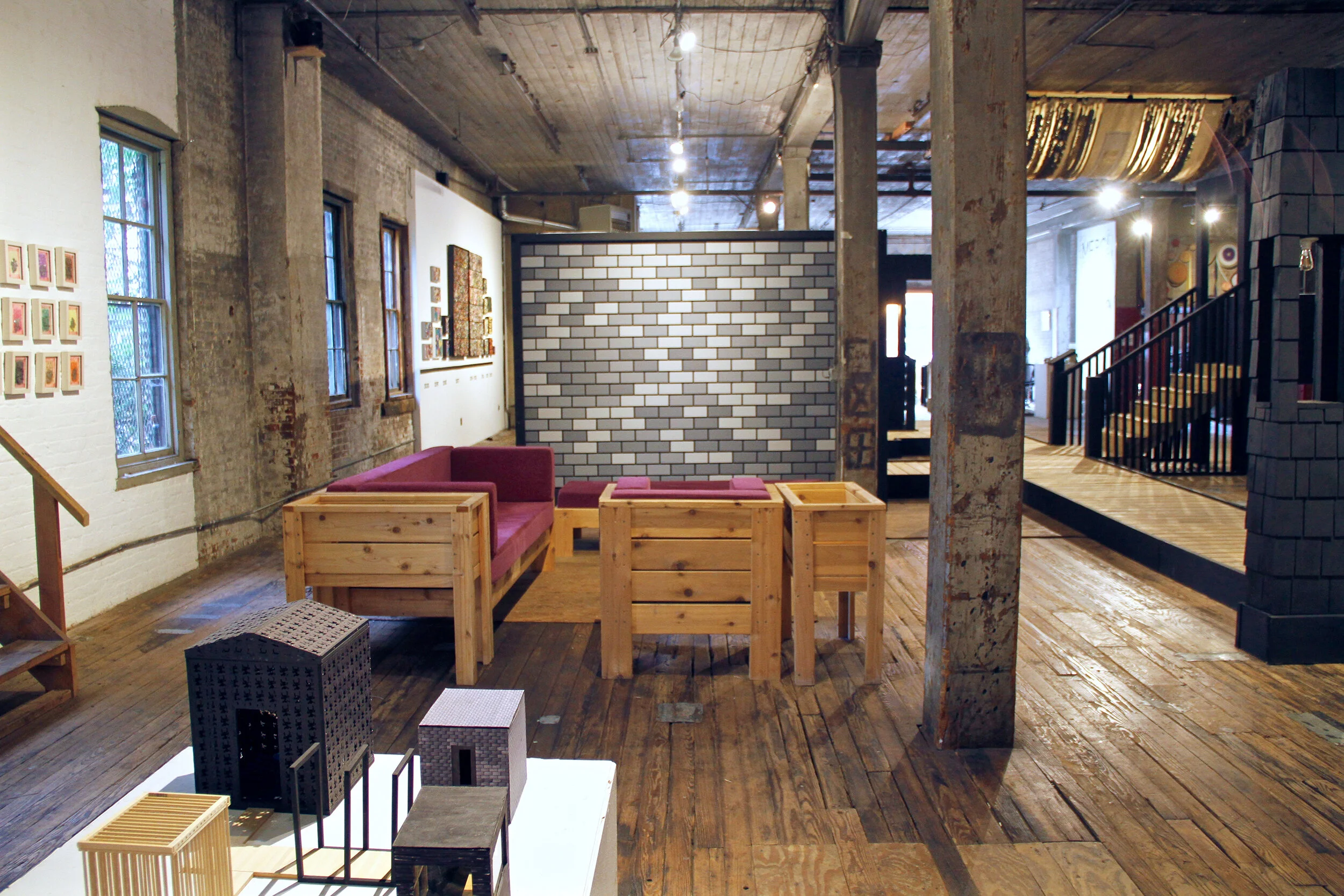
 A seating area handmade by the artists. They always create seating areas for exhibitions, but this one represents the house, or the common area in each of the jails they visit.  View fullsize
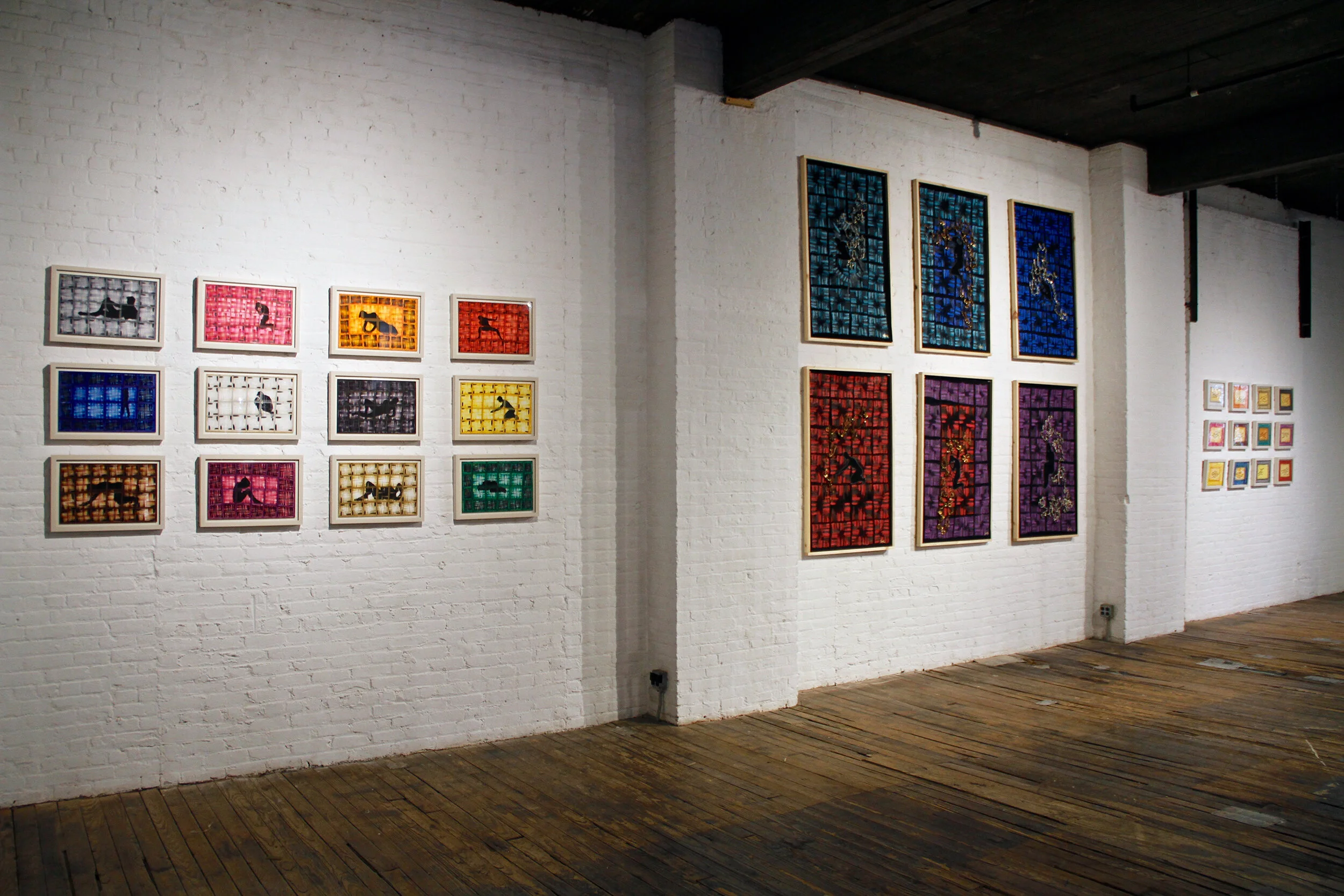
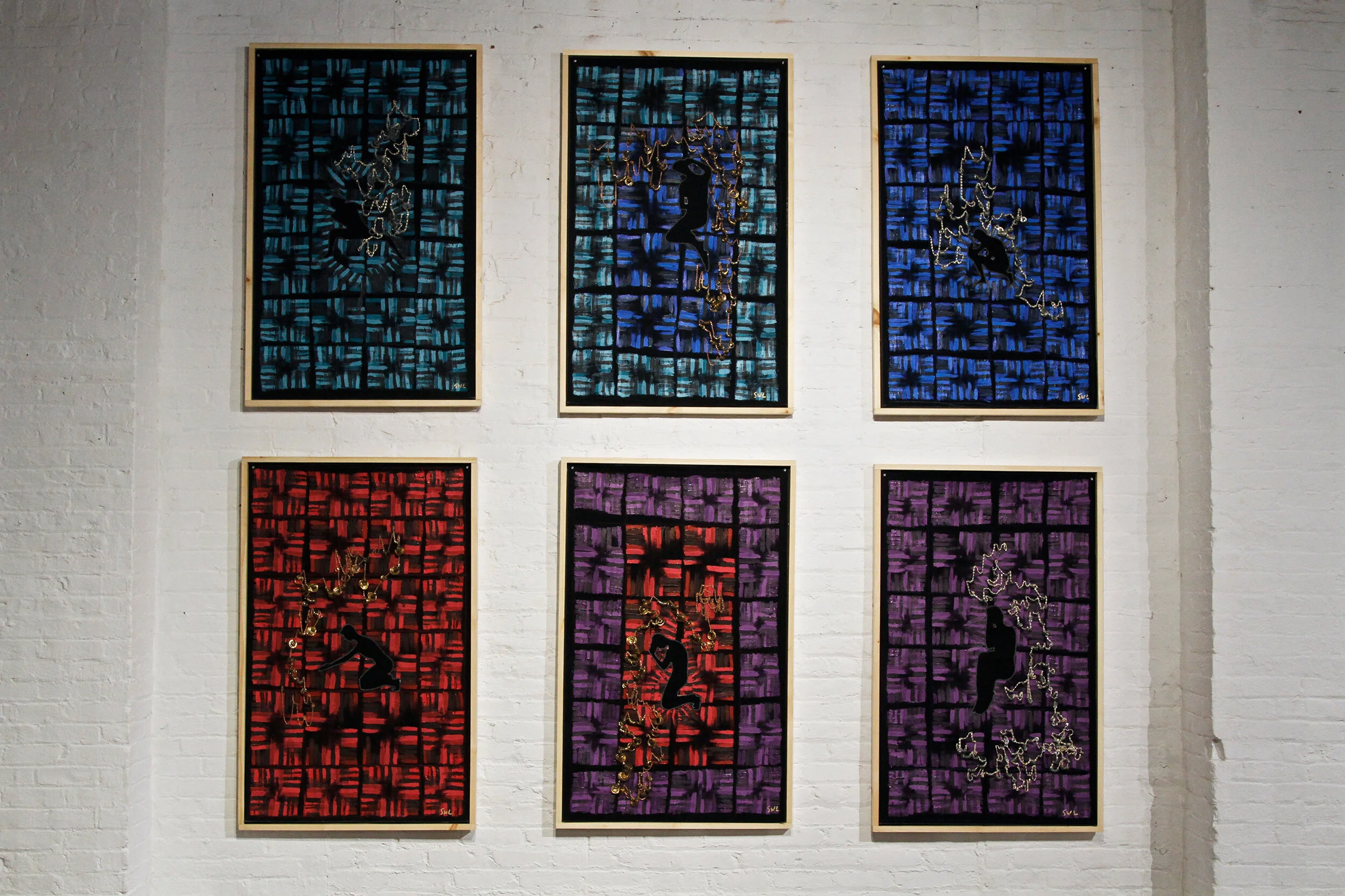
 New drawings and paintings inspired by the artists’ reflections on their work with inmates line the back wall of the space. It is a first for the brothers to make figurative work and to paint on canvas. View fullsize
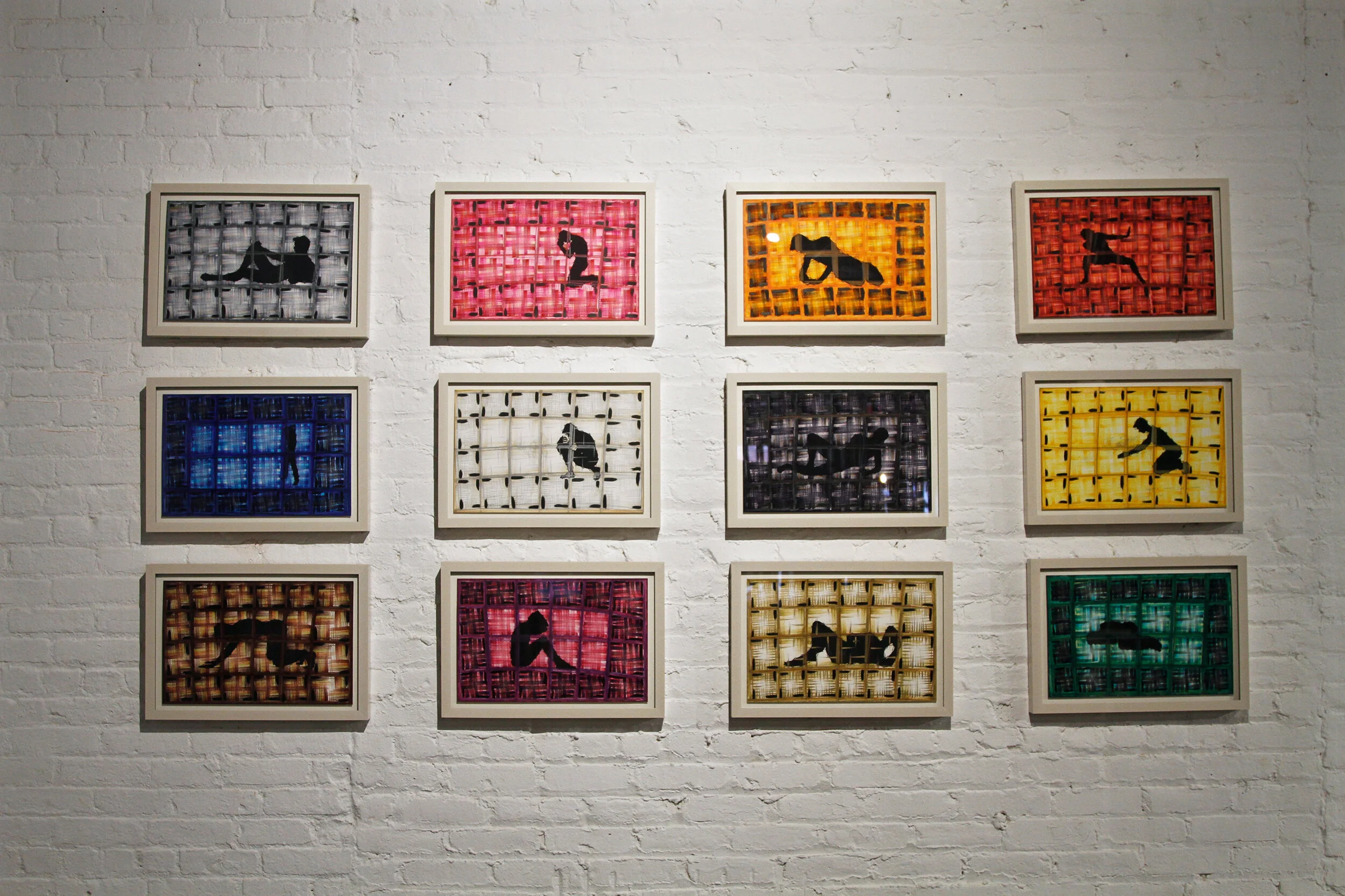
 Every inmate is identified by a number that they are given when they enter the system. This is the first time the artists used a figure in a series of drawings and they used the silhouette as a way to create anonymity. Steven and William defined 12 View fullsize
 This is the first time Steven and William used the figure in a series of drawings, using the silhouette as a way to create anonymity. They defined 12 specific memories they wanted to represent, distilled them to a single word and then evolved that i View fullsize
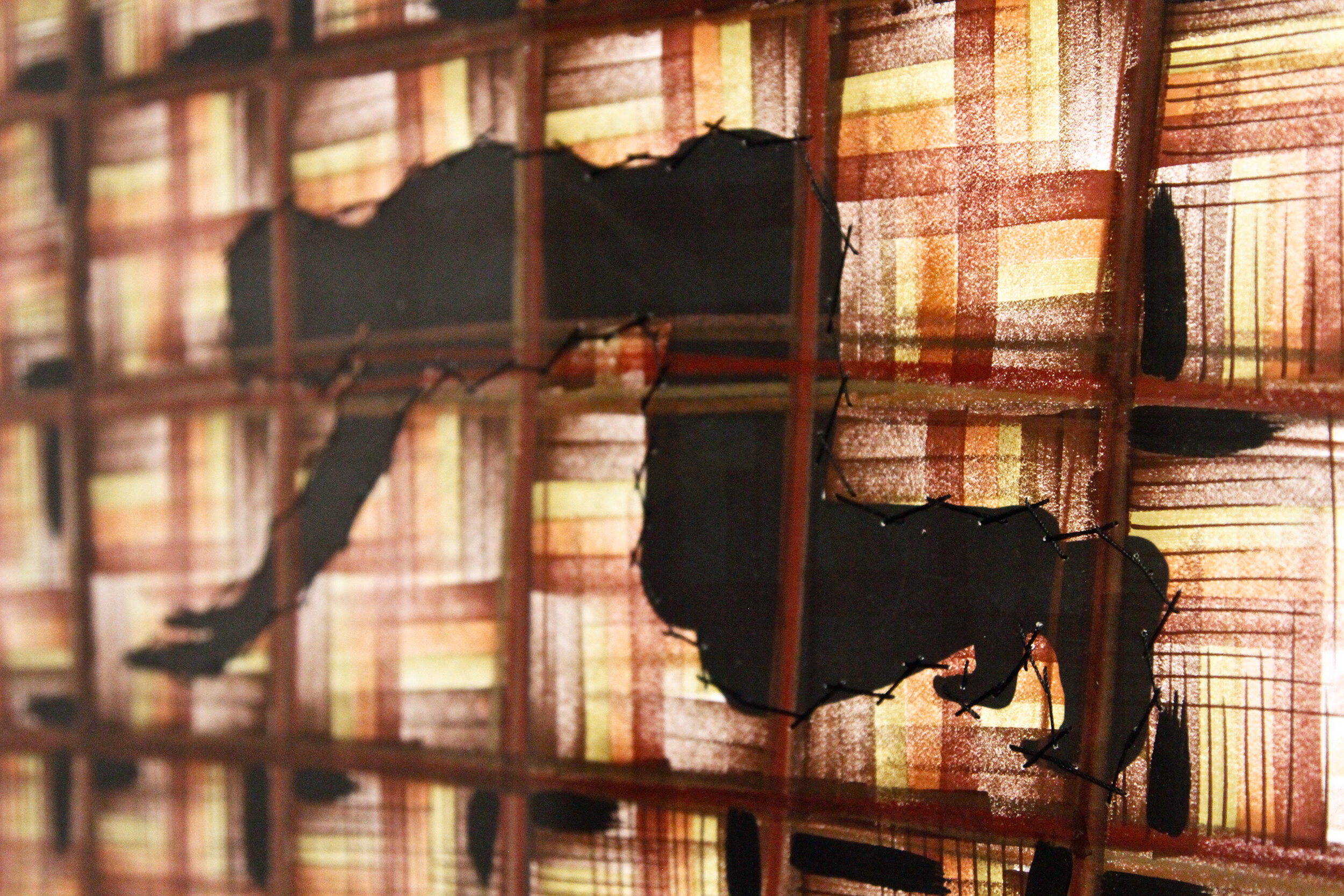
 Isolation can have a range of impacts and in the system it is often a result of infractions or used as a means of protection for a vulnerable inmate. This is the artists’ first time making paintings on canvas. They incorporated the figure, cut from View fullsize
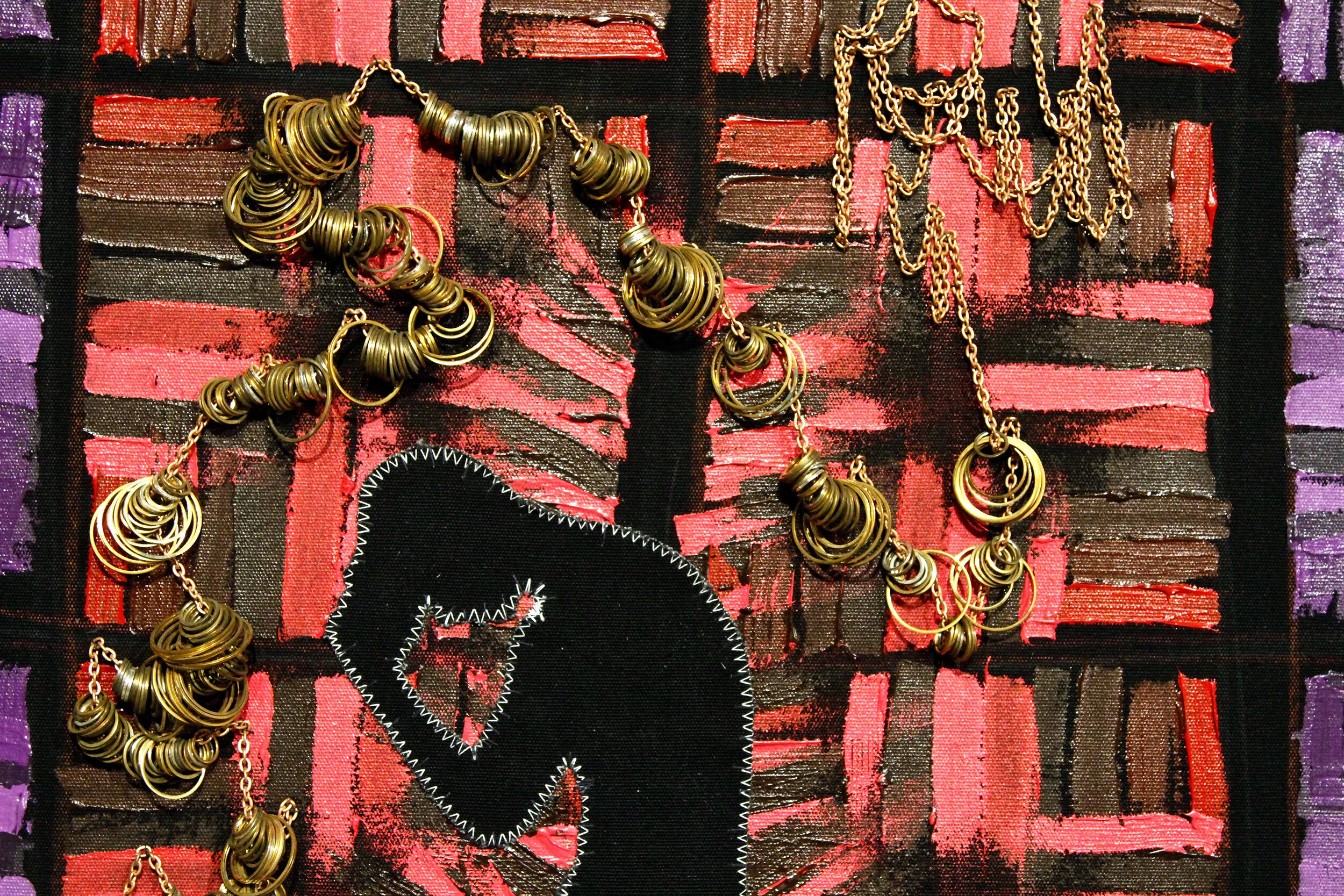
 Detail of Isolation 2, one of a series of six paintings on canvas exploring the figure. The figures are sewn onto the canvas and surrounded by metal chains and trinkets. View fullsize
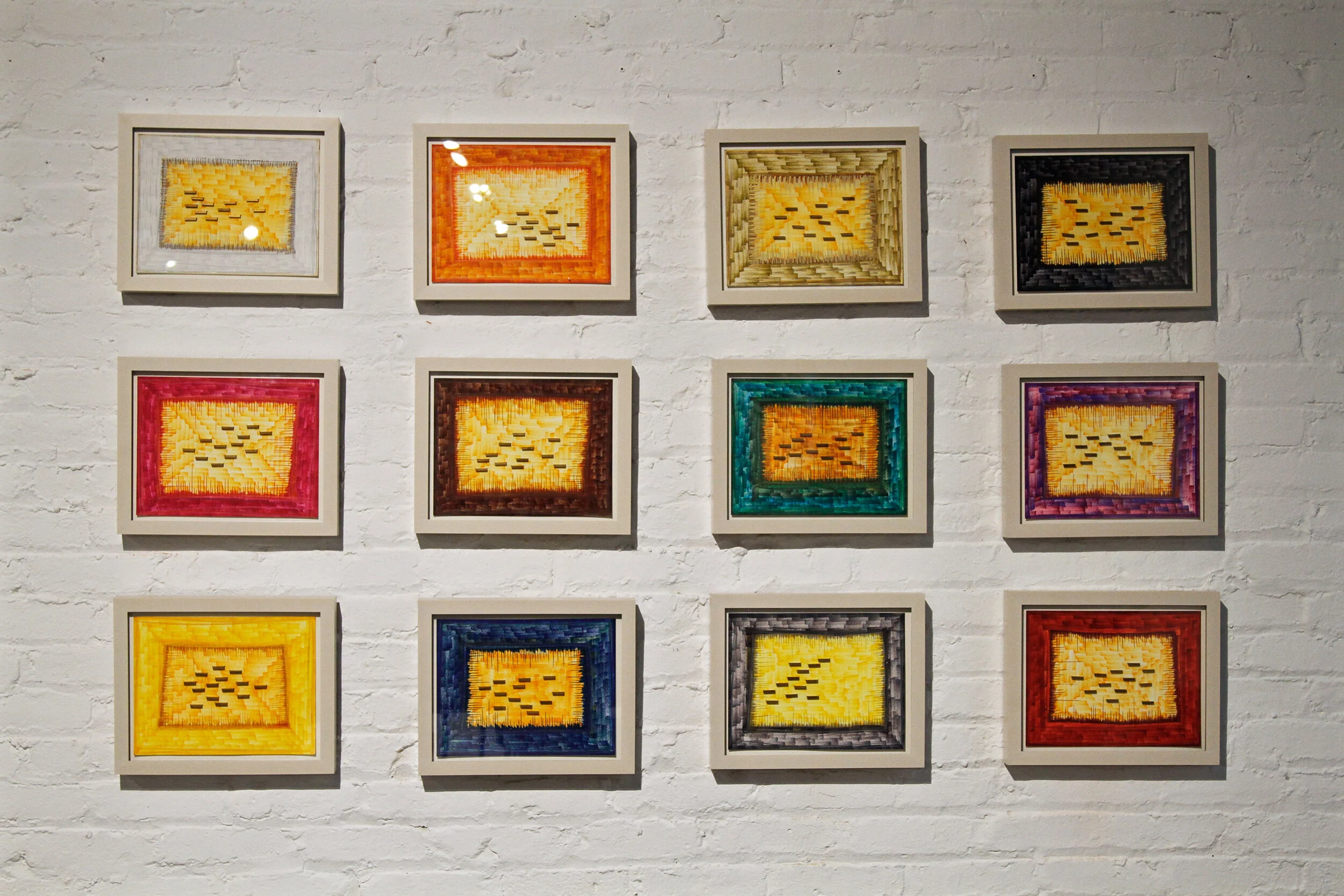
 Portals are an imposing doorway or gate and in the system you are constantly confronted with them. The more you pass through the closer you get to the inmates. That final moment when the door to their housing unit is opened and the artists are allow View fullsize
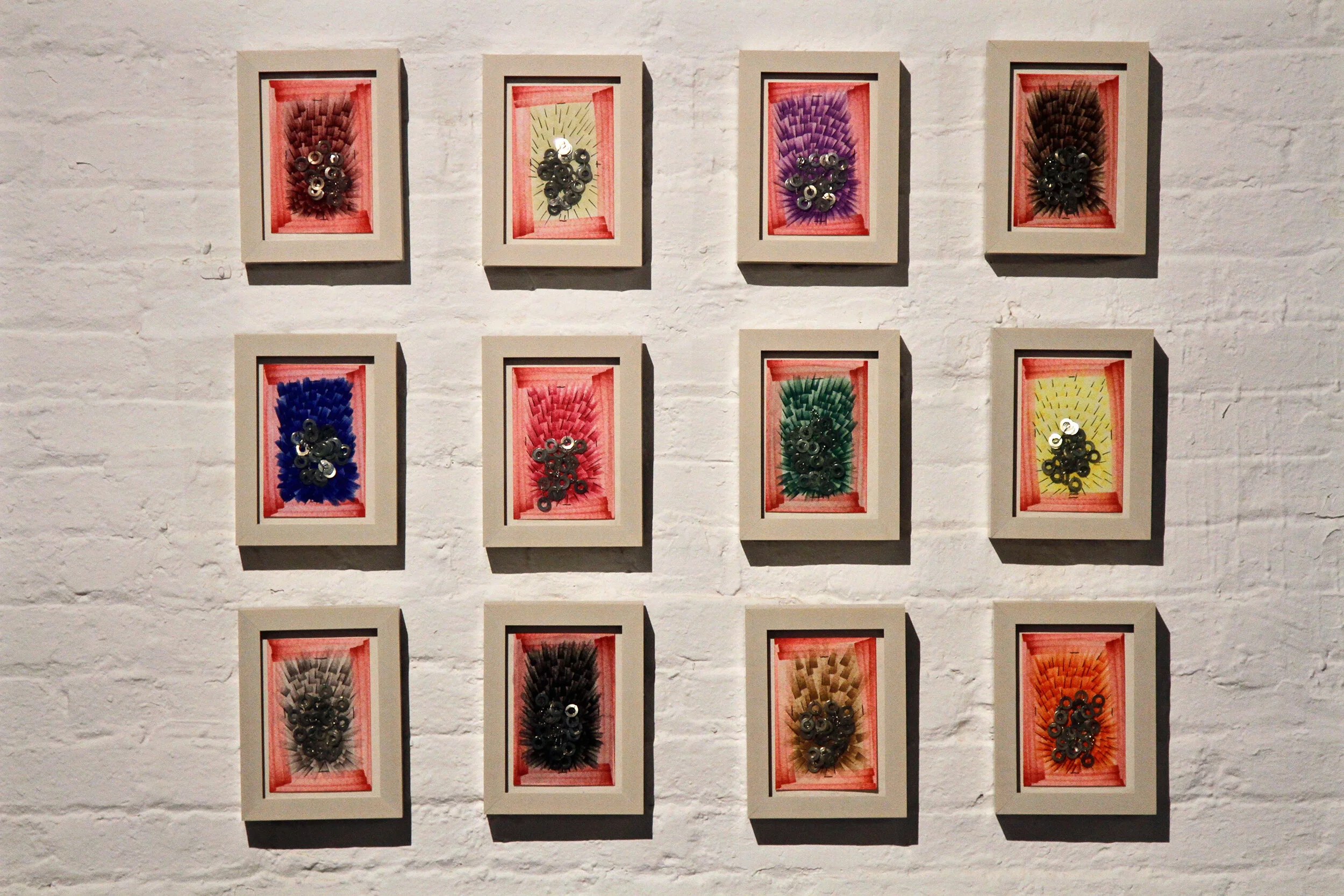
 The artists see this series of abstract drawings as portals between emotional states. View fullsize
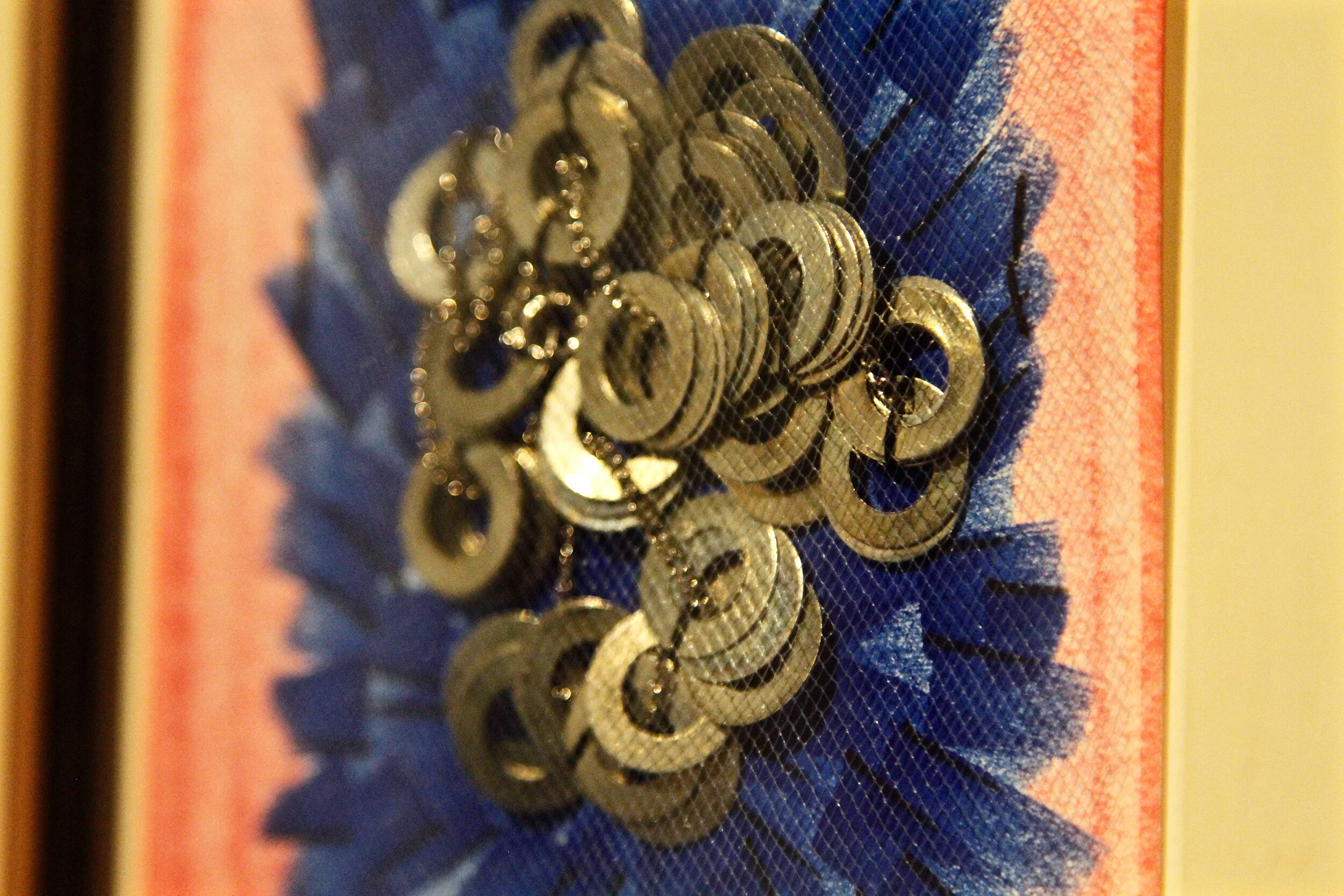
 In an area the artists had never been through before, they passed a girl and three guards. She had a mask over her mouth, her hands and feet were chained because she had used them as weapons. These drawings are masked with tulle and incorporate chai View fullsize
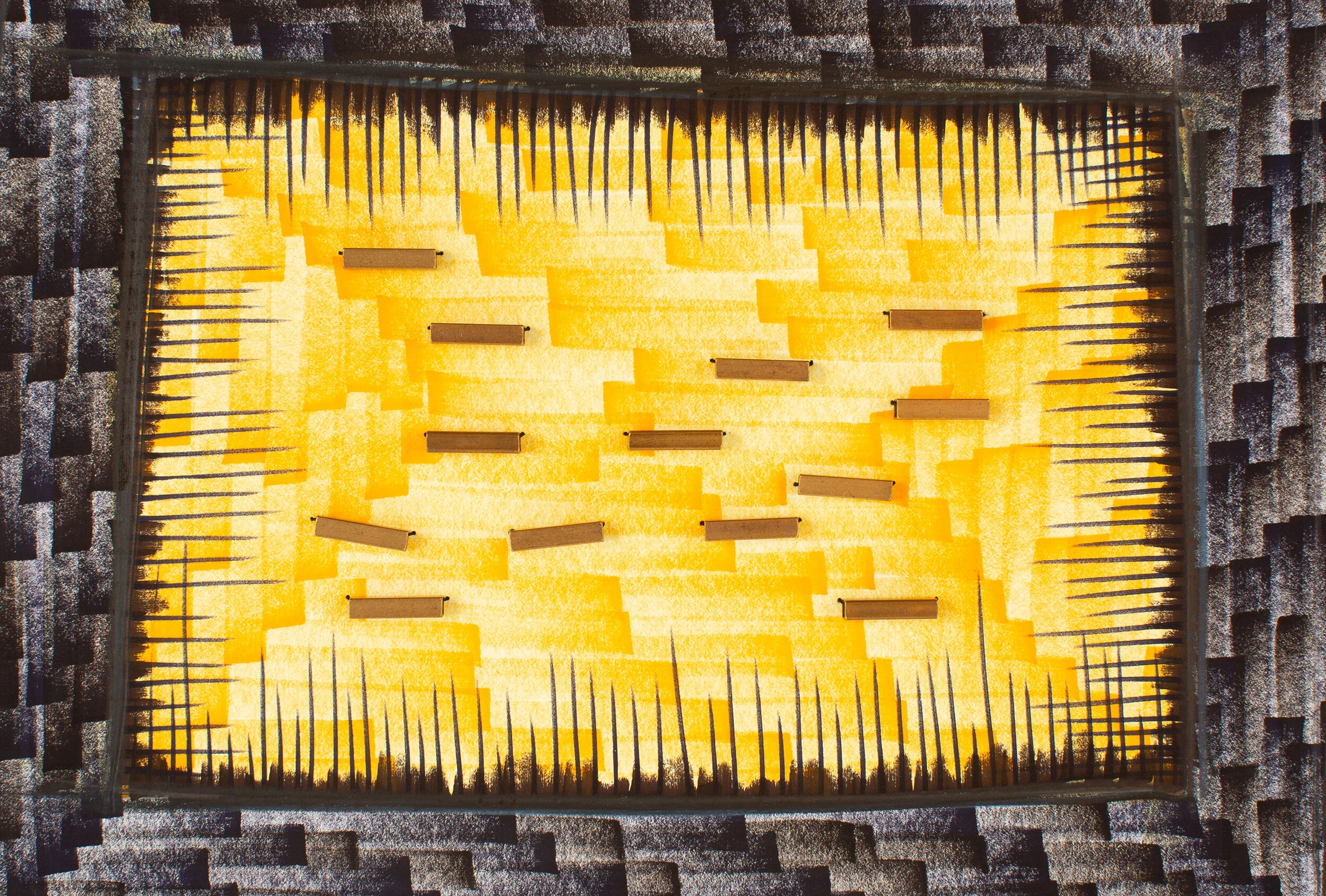
 The trinkets used in this series of drawings were reclaimed from the basement of the exhibition space from its former life as a belt and buckle factory. View fullsize
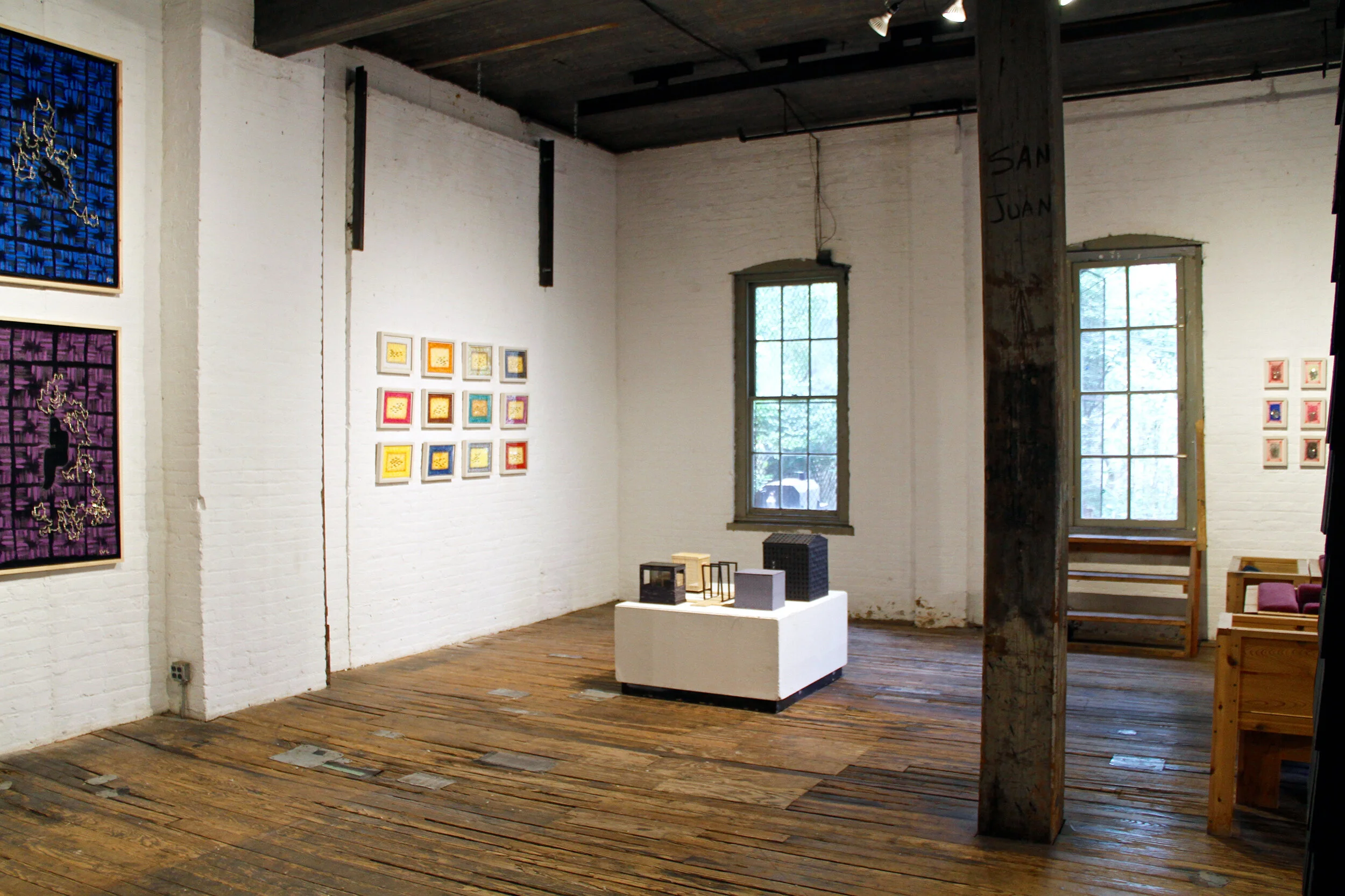
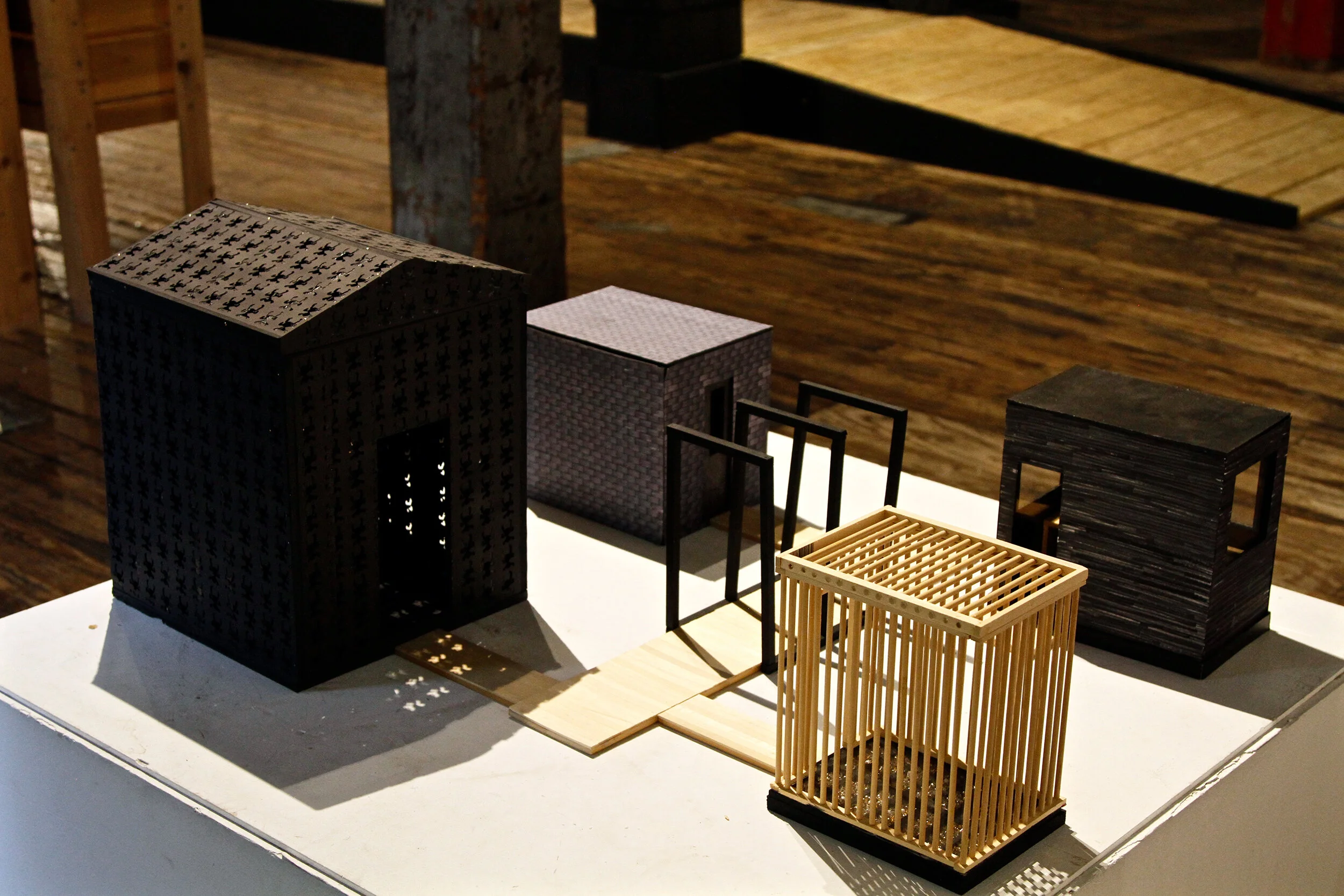
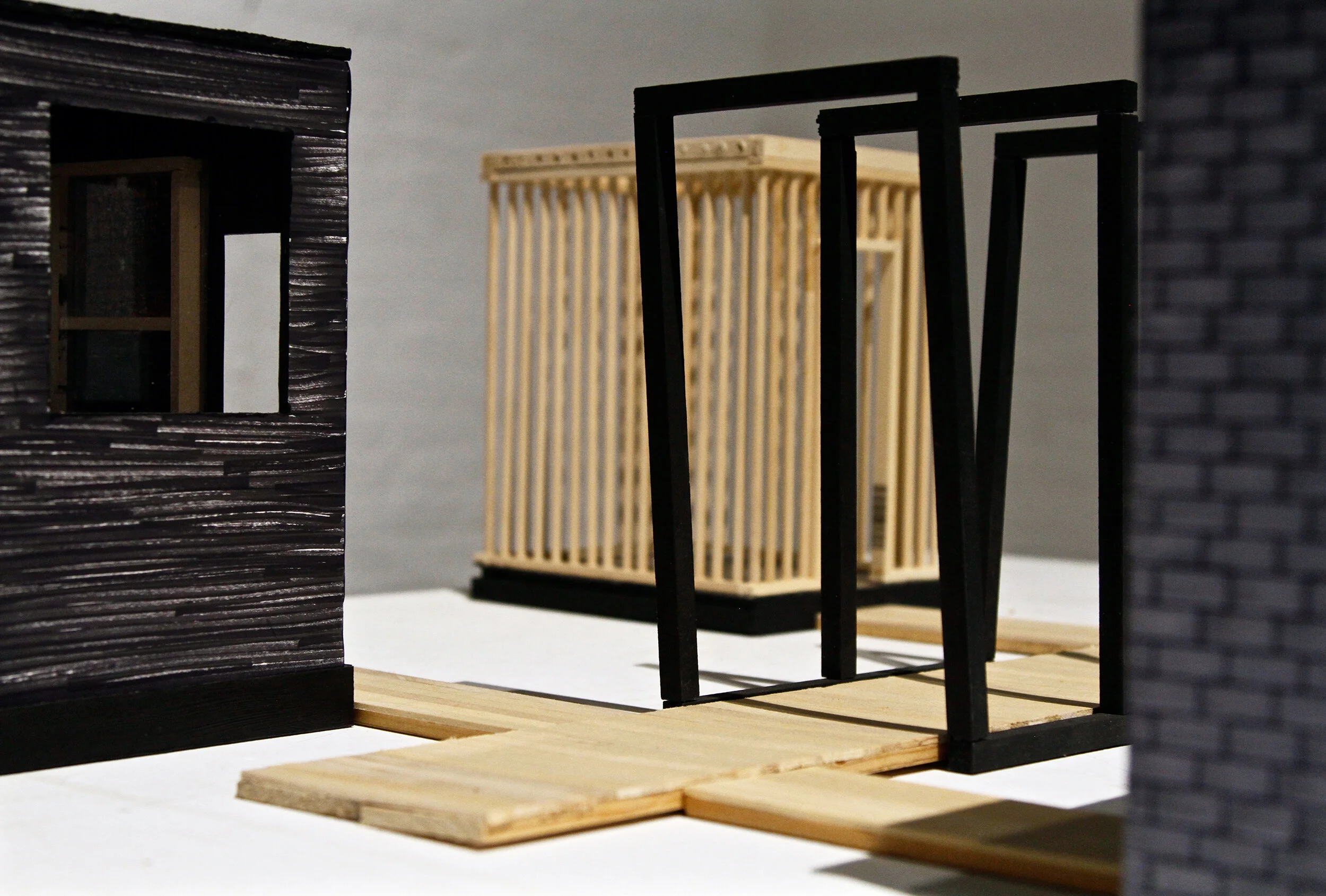
 The idea for this exhibition has been germinating for many years; but early in 2019 Steven and William secured this space at The Invisible Dog and began a formal planning process. That involved the creation of these maquettes that represent a jail c View fullsize
 Renderings of the evolution of the exhibition, in the making for nearly a decade. View fullsize
 Side close-up view of the early stages of the site-specific installation pieces, the early iteration of  Metal Detector  in center. View fullsize
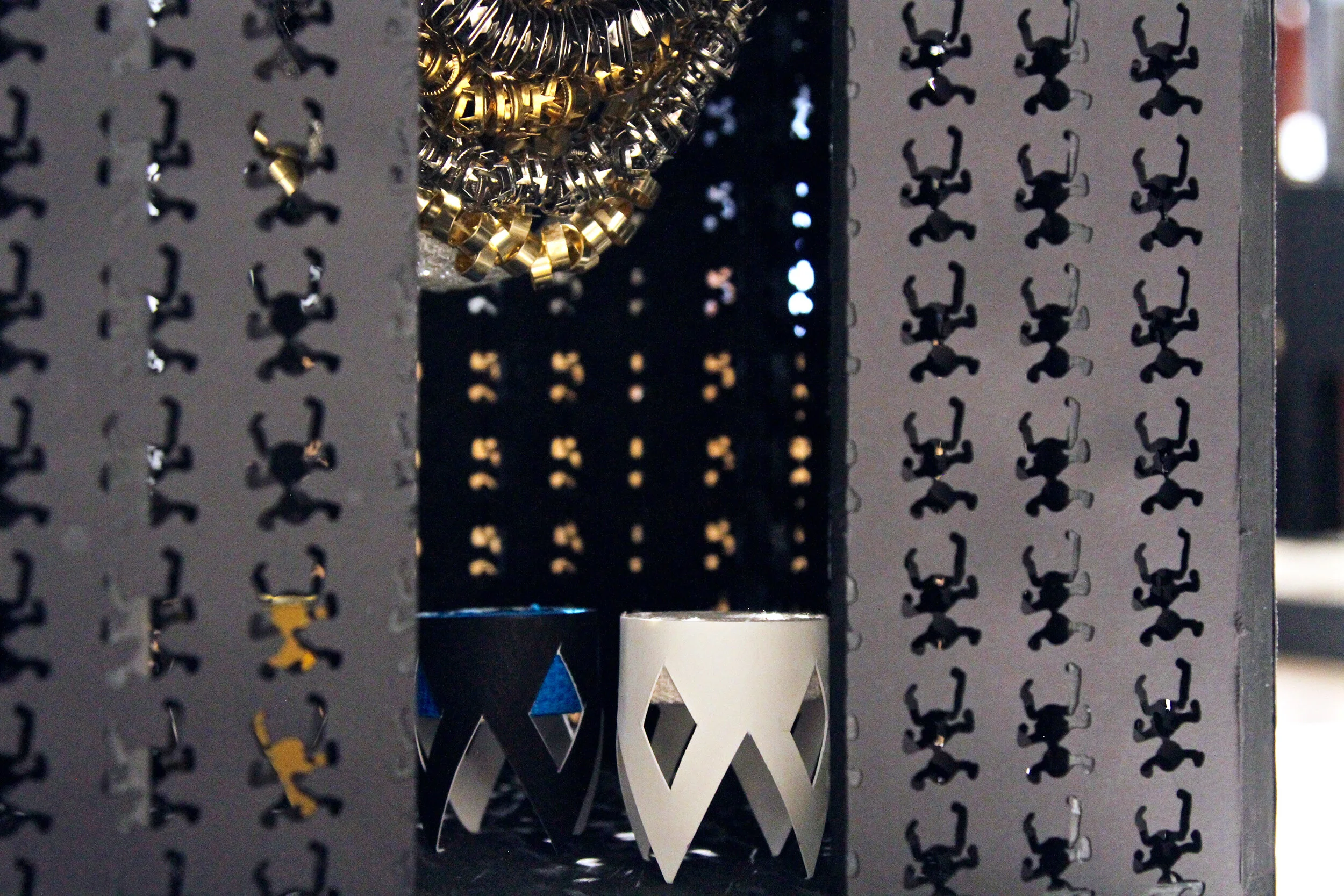
 Inside the  Jail House , 2019, you’ll see a chandelier like the one in the center of the exhibition space as well as little maquettes of the crown stools. View fullsize
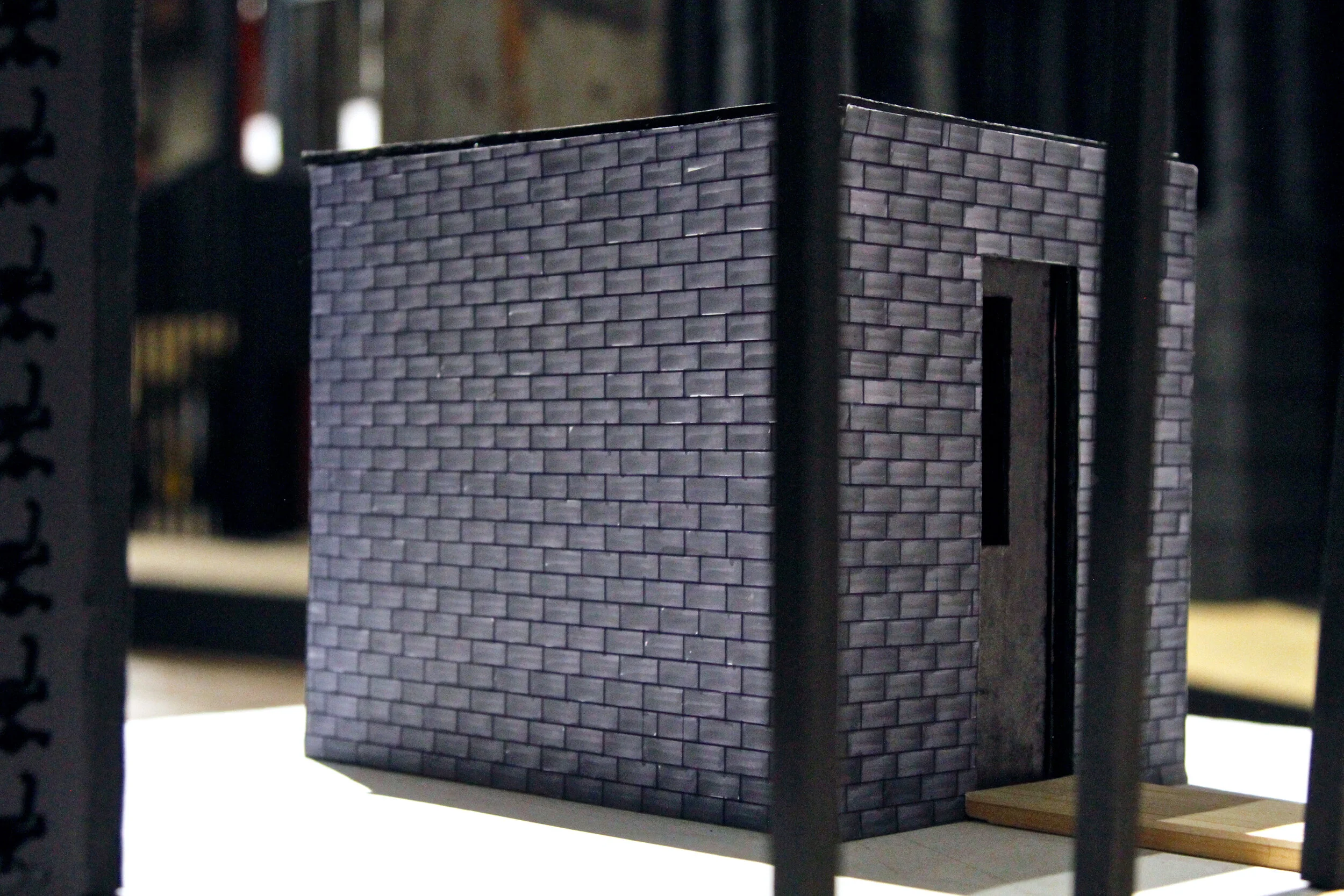
 Early versions of Jail Cell featured a door. The grey brick exterior is in great contrast from the colorful world inside. View fullsize
 The entrance to the exhibition brings the viewer onto a pathway that leads through a series of spaces representing the interior architecture of correctional facilities.  Metal Detector , with its illuminated columns, is the first structure you encou
  The Other Side , 2020, is made of thousands of trimming rolled into tightly coiled scrolls. The Invisible Dog was a former belt and buckle factory filled with trimmings like these, and 12 years ago became a treasure trove of donated materials that
  The Other Side  (detail), 2020, was made as a made after we had approval to bring long trimming into correctional facilities. In previous years we were required to cut them into short four-inch pieces so that they could not be used as a weapon. Thi
 The Other Side (detail), 2020, is made of trimmings that Steven and William roll into objects called scrolls. The scroll originated as a way of recycling textile material in their studio back in 2002. They didn’t want to waste anything!
 Steven and William began their work inside the NYC Department of Corrections in 2012, work that continues today. This timeline represents the collaborative artworks made with inmates throughout the years. It is the first time this work has been brou
 The timeline includes works made in 2019 and 2020 that began to flesh out ideas for the cinderblock structures that would fill the jail cell. At the time we created these we still thought they would be filled with scrolls.
 In the foreground you see  Crown Stools Black and White , 2020. During the artists’ first time at GMDC, one of the ten jails on Rikers Island, they worked with 19 to 21 year-olds, who seemed like kids. In their housing unit, the inmates placed the c
  Crown Stools Black and White , 2020, build on the artists use of scrolls and the cylindrical form to make stools. Earlier versions called  Scroll Stools  were made of simple cylinders with a single scroll on top.
 Lucien Zayan founded The Invisible Dog Art Center in 2009 and invited Steven and William to build a chandelier from a huge cache of unused belts and buckles in the basement. They wired and installed the work themselves, one of only three permanent w
 View of the entrance from the left, you see  Watchtower , a towering structure representing the feeling of having your every move watched over. In the background is the brick exterior of  Jail Cell  with a hint of its interior to lure you inside.
 In every housing unit is a secured surveillance area where corrections officers keep watch over the lives of inmates and anyone else inside the jail. You are constantly being watched and Steven and William are always trying to engage the officers wh
 Steven and William were inspired to create  Jail Cell  after telling some inmates about a recent project co-commissioned by The Dallas Museum of Art and High Museum of Art, where they created an installation space completely filled with scrolls. The
 Steven and William engaged with over 125 inmates in 5 jails (and hundreds more from the outside community) to build these word blocks. In a regular Scrollathon, each participant makes a colorful scroll to keep, and another as part of a collaborative
 A particularly jarring experience witnessing an adolescent inmate inside a six by six foot “cage” for causing a jail lockdown inspired  Isolation . The one stool represents its intended use to hold one person in solitary confinement.
 The floor of  Isolation  is constructed of boxes and metal trinkets, signatures of Steven and William’s art practice. They are beautiful; but dangerously jagged.
 A seating area handmade by the artists. They always create seating areas for exhibitions, but this one represents the house, or the common area in each of the jails they visit.
 New drawings and paintings inspired by the artists’ reflections on their work with inmates line the back wall of the space. It is a first for the brothers to make figurative work and to paint on canvas.
 Every inmate is identified by a number that they are given when they enter the system. This is the first time the artists used a figure in a series of drawings and they used the silhouette as a way to create anonymity. Steven and William defined 12
 This is the first time Steven and William used the figure in a series of drawings, using the silhouette as a way to create anonymity. They defined 12 specific memories they wanted to represent, distilled them to a single word and then evolved that i
 Isolation can have a range of impacts and in the system it is often a result of infractions or used as a means of protection for a vulnerable inmate. This is the artists’ first time making paintings on canvas. They incorporated the figure, cut from
 Detail of Isolation 2, one of a series of six paintings on canvas exploring the figure. The figures are sewn onto the canvas and surrounded by metal chains and trinkets.
 Portals are an imposing doorway or gate and in the system you are constantly confronted with them. The more you pass through the closer you get to the inmates. That final moment when the door to their housing unit is opened and the artists are allow
 The artists see this series of abstract drawings as portals between emotional states.
 In an area the artists had never been through before, they passed a girl and three guards. She had a mask over her mouth, her hands and feet were chained because she had used them as weapons. These drawings are masked with tulle and incorporate chai
 The trinkets used in this series of drawings were reclaimed from the basement of the exhibition space from its former life as a belt and buckle factory.
 The idea for this exhibition has been germinating for many years; but early in 2019 Steven and William secured this space at The Invisible Dog and began a formal planning process. That involved the creation of these maquettes that represent a jail c
 Renderings of the evolution of the exhibition, in the making for nearly a decade.
 Side close-up view of the early stages of the site-specific installation pieces, the early iteration of  Metal Detector  in center.
 Inside the  Jail House , 2019, you’ll see a chandelier like the one in the center of the exhibition space as well as little maquettes of the crown stools.
 Early versions of Jail Cell featured a door. The grey brick exterior is in great contrast from the colorful world inside.

Subscribe

Sign up with your email address to receive news and updates.

Thank you!

Powered by Squarespace