Public Commissions
Cowboys and Indians
2016
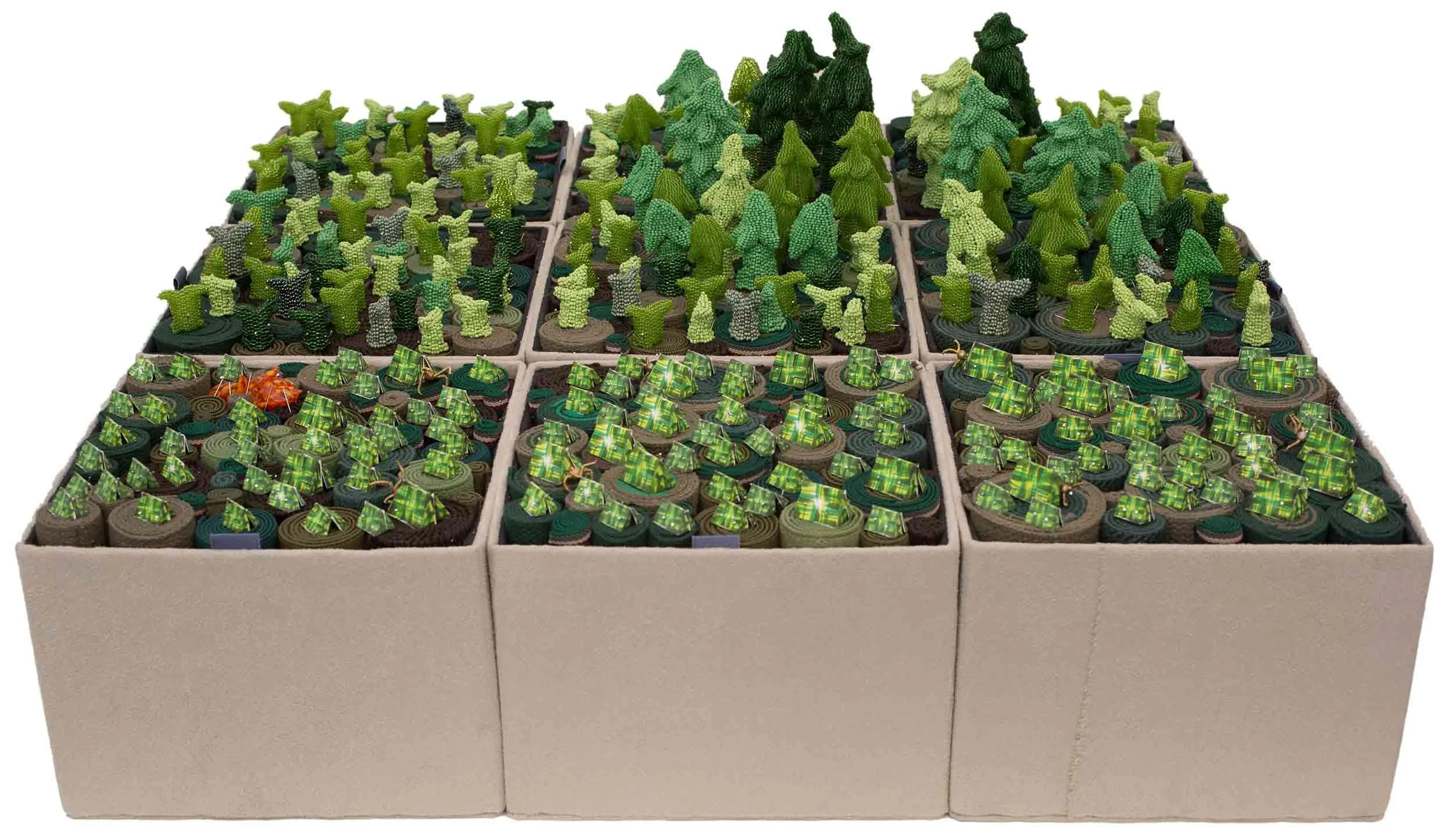
Commissioned by: The Rockwell Museum, Corning, New York
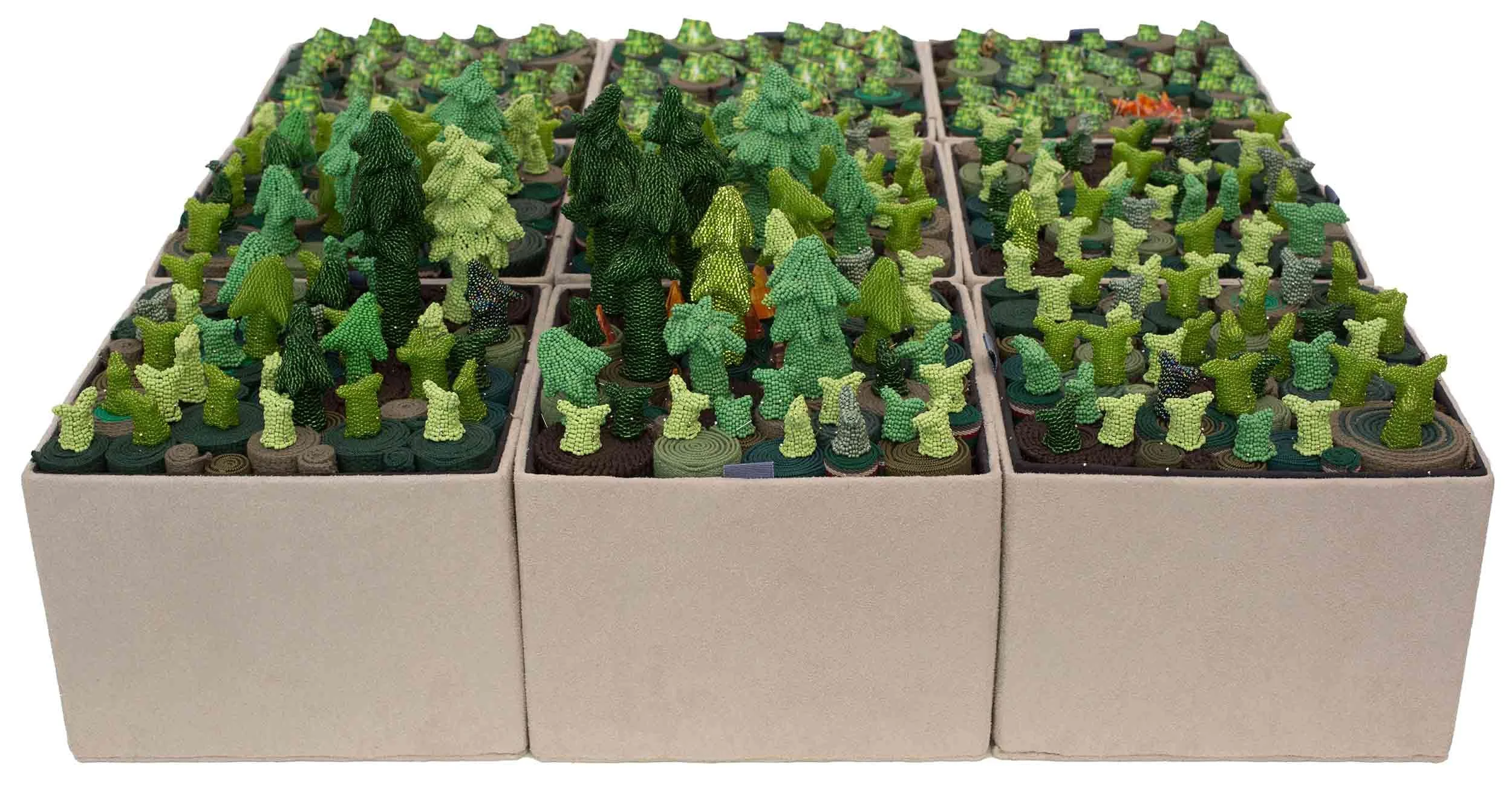
Medium: Archival board and paper, fiber, ink, metal, glass
Dimensions: Landscape: 27 ⅝ × 27 ⅝ × 12 inches; Tower: 19 ¾ × 27 ⅝ × 9 ½ inches
Photograph: Courtesy of the artists
Artists’ Registration Number: 2016.007.001
Created in: New York, New York
Exhibition History: 40 for 40: Anniversary Highlights from the Permanent Collection, The Rockwell Museum, Corning, New York, 2016–2017. Curator: Kirsty Buchanan
What began as a curatorial engagement with the museum’s permanent collection evolved into the creation of a new artwork. Rather than responding from a critical distance, we chose to enter the collection personally and materially, contributing a work that could exist in dialogue with the histories on view while reflecting on how those narratives intersect with memory, play, and imagination.
Commission Overview
Commissioned as part of the Rockwell Museum’s 40th anniversary, Cowboys and Indians emerged from an invitation to serve as guest curators for a commemorative exhibition examining identity, storytelling, and American mythology through the lens of Western art. The opportunity developed through our ongoing relationship with the Corning Museum of Glass and led to a collaboration with Rockwell curator Kirsty Buchanan.
Artistic Approach
Our process began with close study of the Rockwell’s holdings—works shaped by frontier mythology, popular culture, and inherited ideas of the American West. In conversations with Kirsty, we found ourselves returning to a shared childhood reference point: the playground game “Cowboys and Indians.”
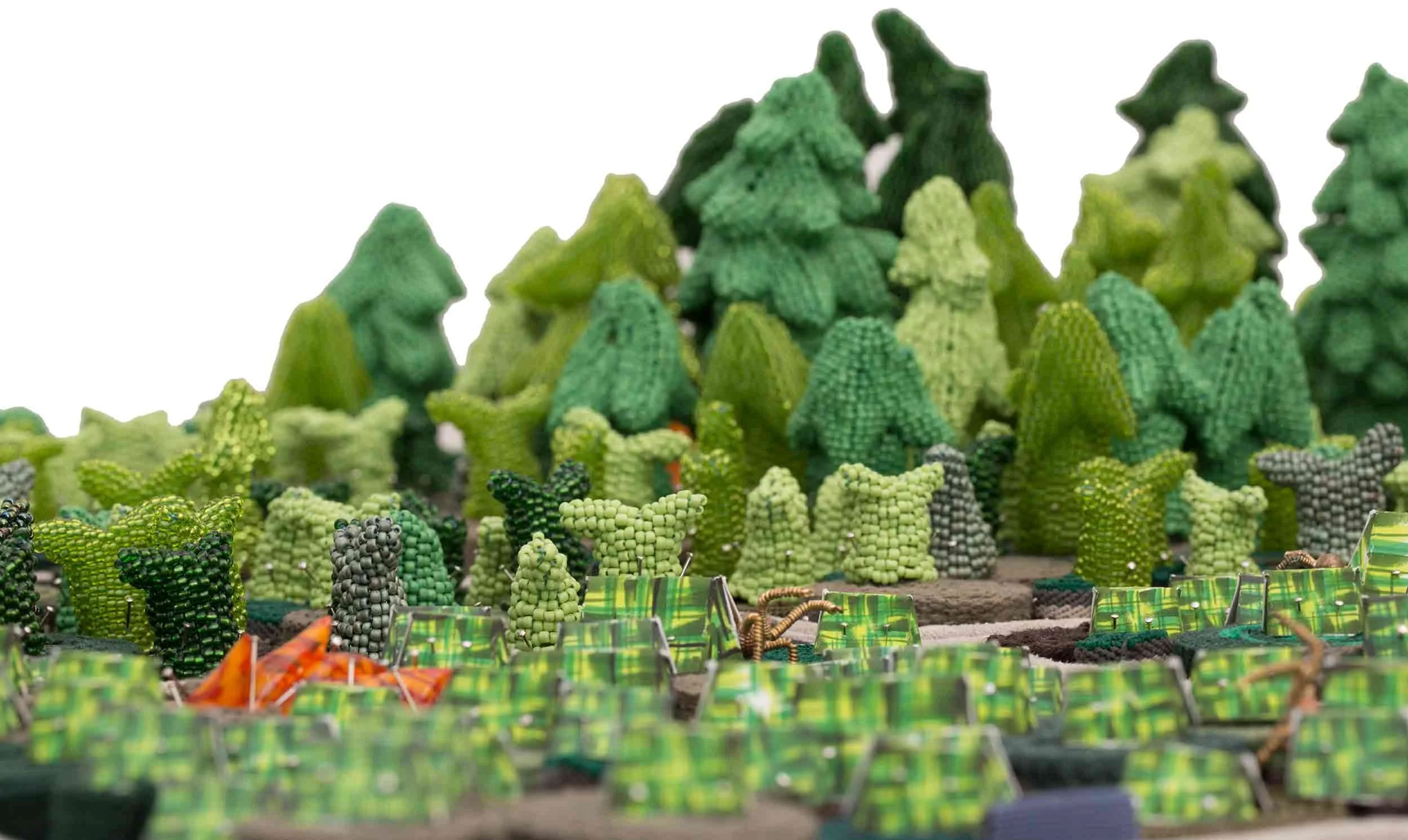
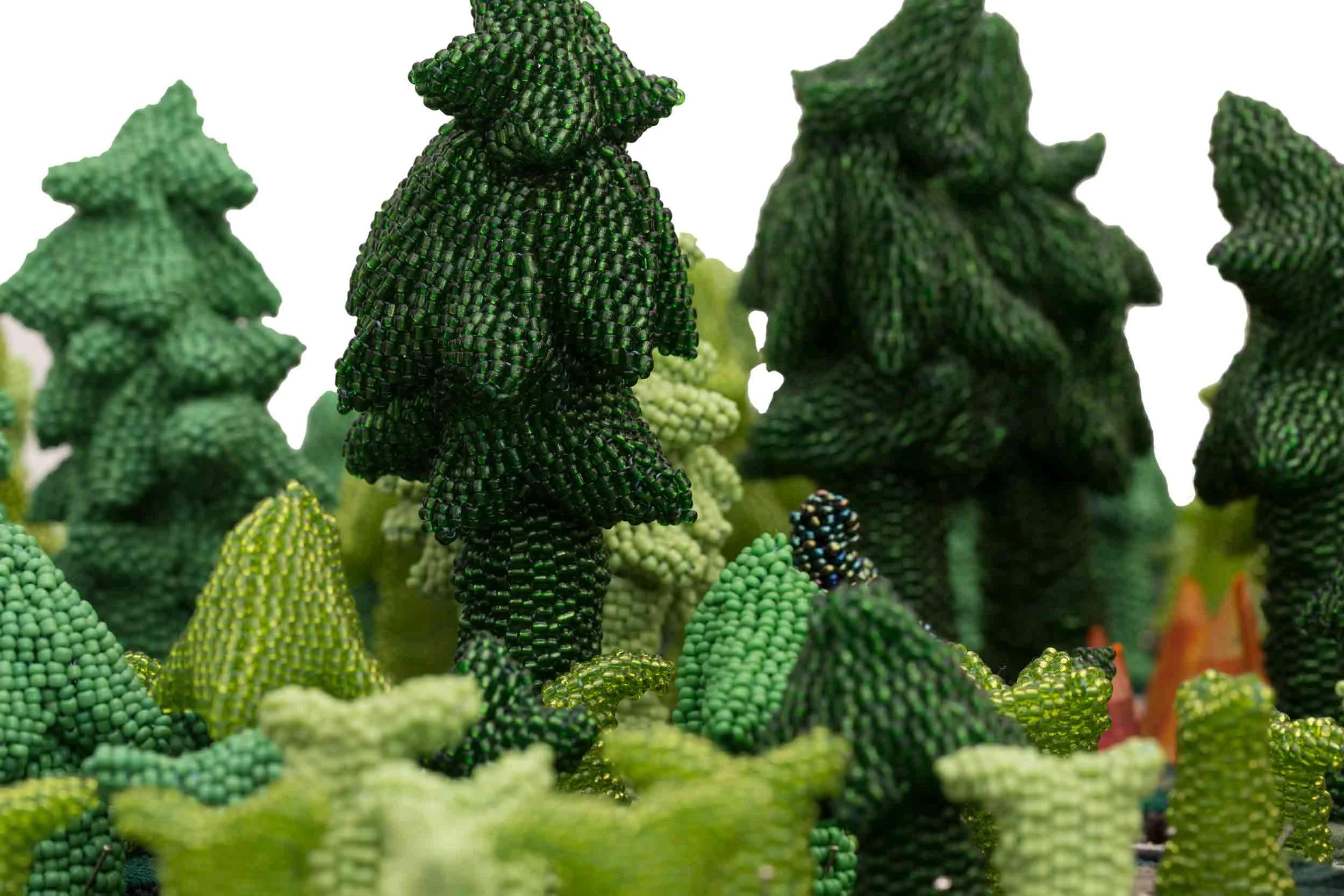
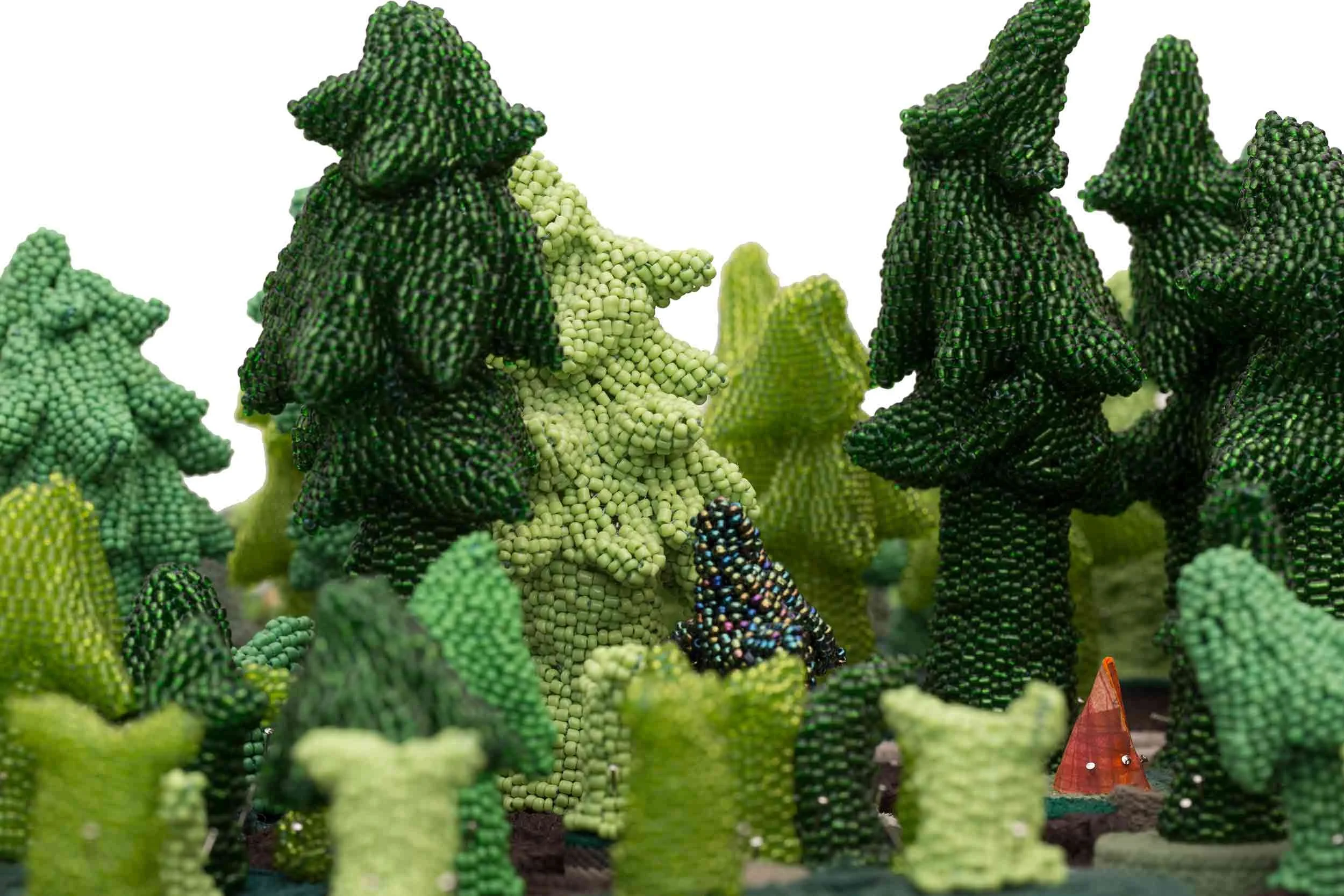
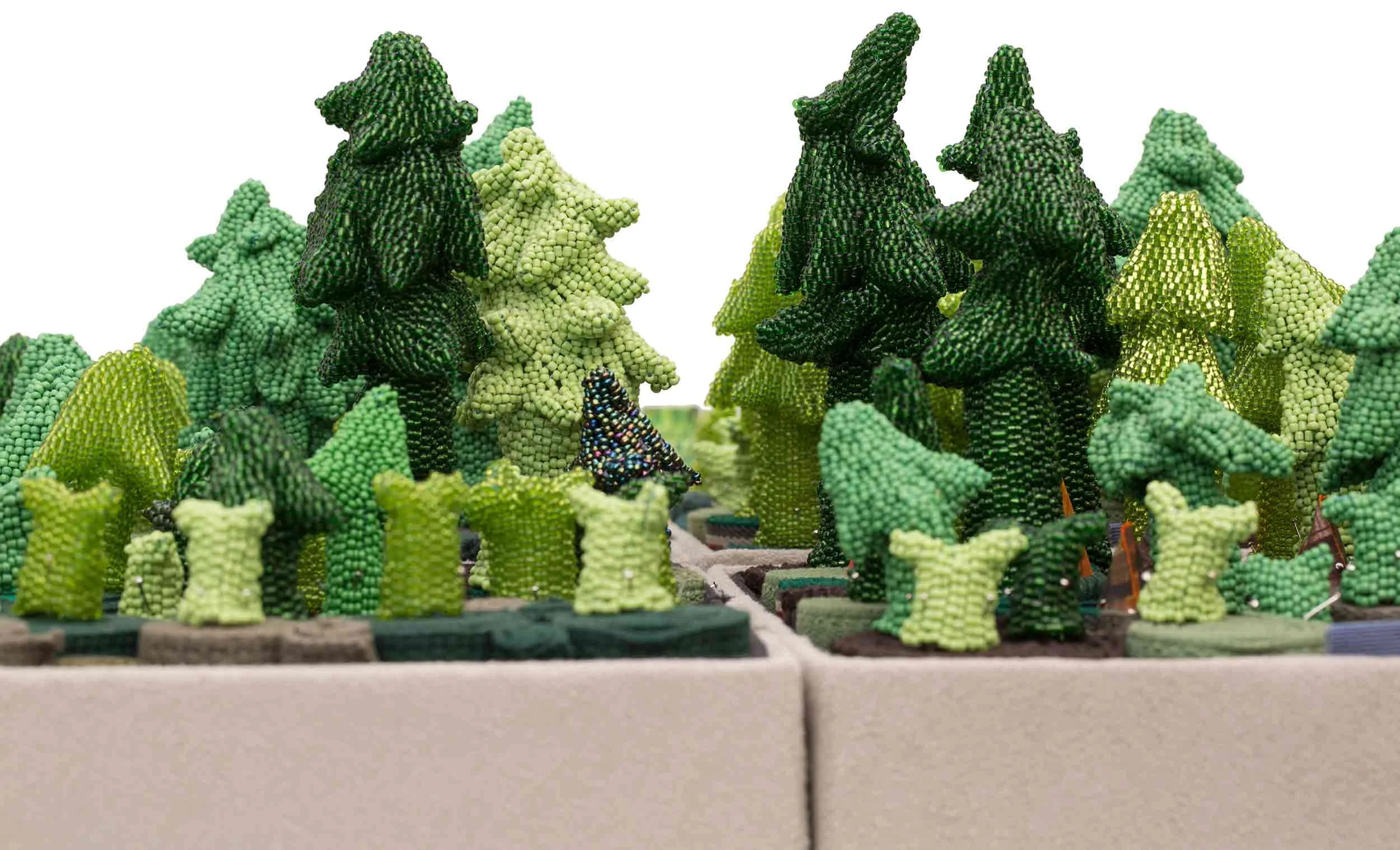
Rather than staging figures or narrative action, the landscape itself becomes the subject. The beaded trees function as markers of memory, growth, and accumulation—standing in for the imaginative spaces of childhood, where play unfolds without full awareness of its historical weight. Craft becomes a way of slowing down and mining those early memories, allowing innocence, curiosity, and later reflection to coexist within the same material field.
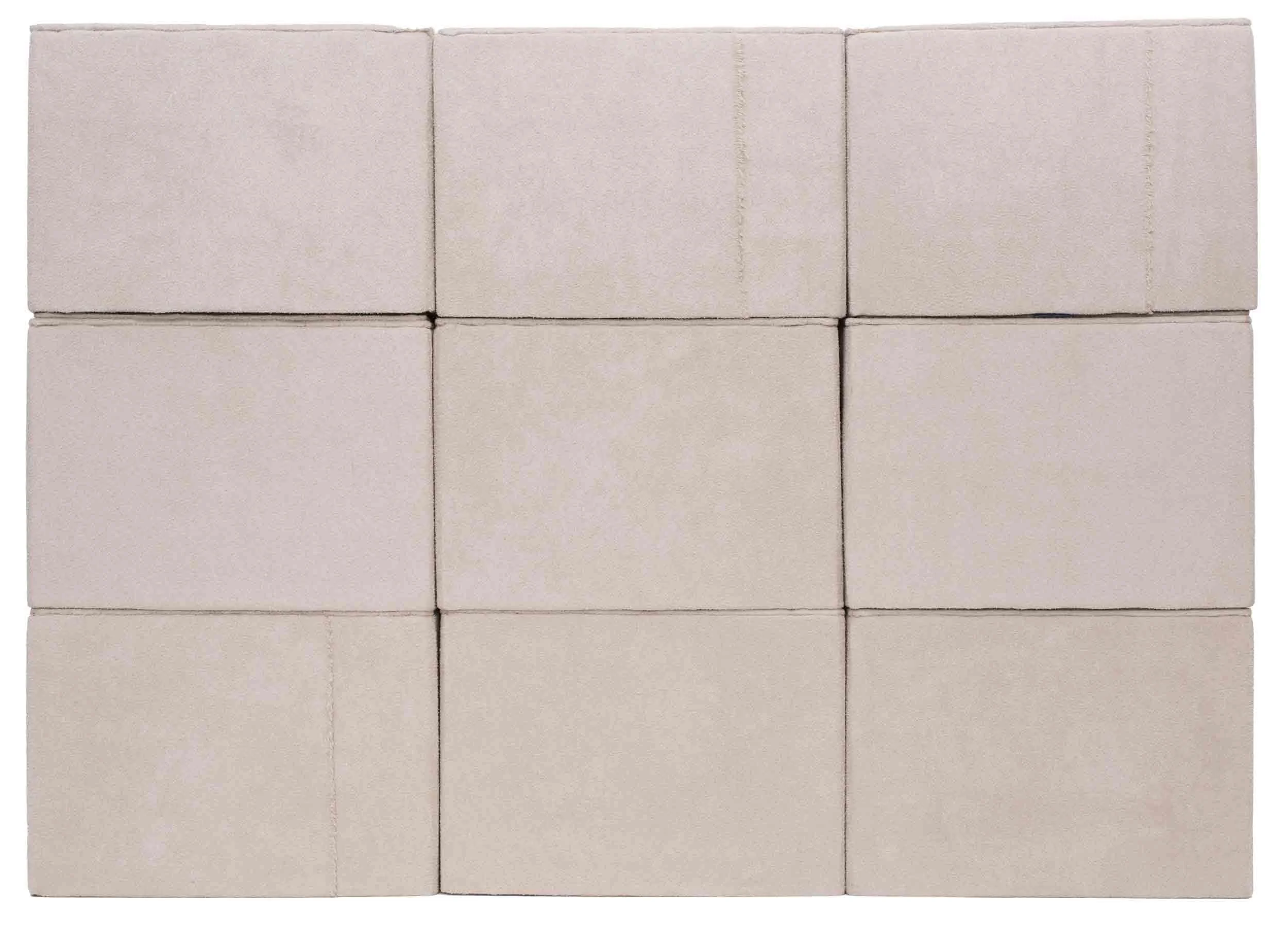
The work takes shape as a sculptural, grid-based installation composed of nine box-like chambers opening onto a miniature landscape. Within this environment, hand-folded paper tipis and tents are dispersed across a terrain built from layered process scrolls. Rising throughout the composition is a forest of intricately beaded trees—dense, tactile forms that transform the scene into something both familiar and abstract.