Private Commissions

Circle Bags

2003

Commissioned by Bee Ladd, Brooklyn, New York
Medium: Board, beads, fiber, metal, glass beads, thread
Dimensions: Each bag: 5 7/8 × 5 7/8 × 1 3/4 in.
Photograph: Courtesy of the artists
Commission Overview
In 2003, we set ourselves the challenge of designing circular handbags. By then, we had started working with ultrasuede, a material that allowed us to make nearly invisible stitches that seemed to fuse the seams together. The challenge was hinging a circle—without a straight bottom edge—so that it could open and close effectively.

We devised a clever interior gusset to solve the problem and used magnetic snaps for the closures, likely among the first times we experimented with that hardware. Bee, our sister, commissioned two Circle Bags—one purple and one white—to support our practice and help us cover rent and bills during those early years in Brooklyn.

Artistic Approach
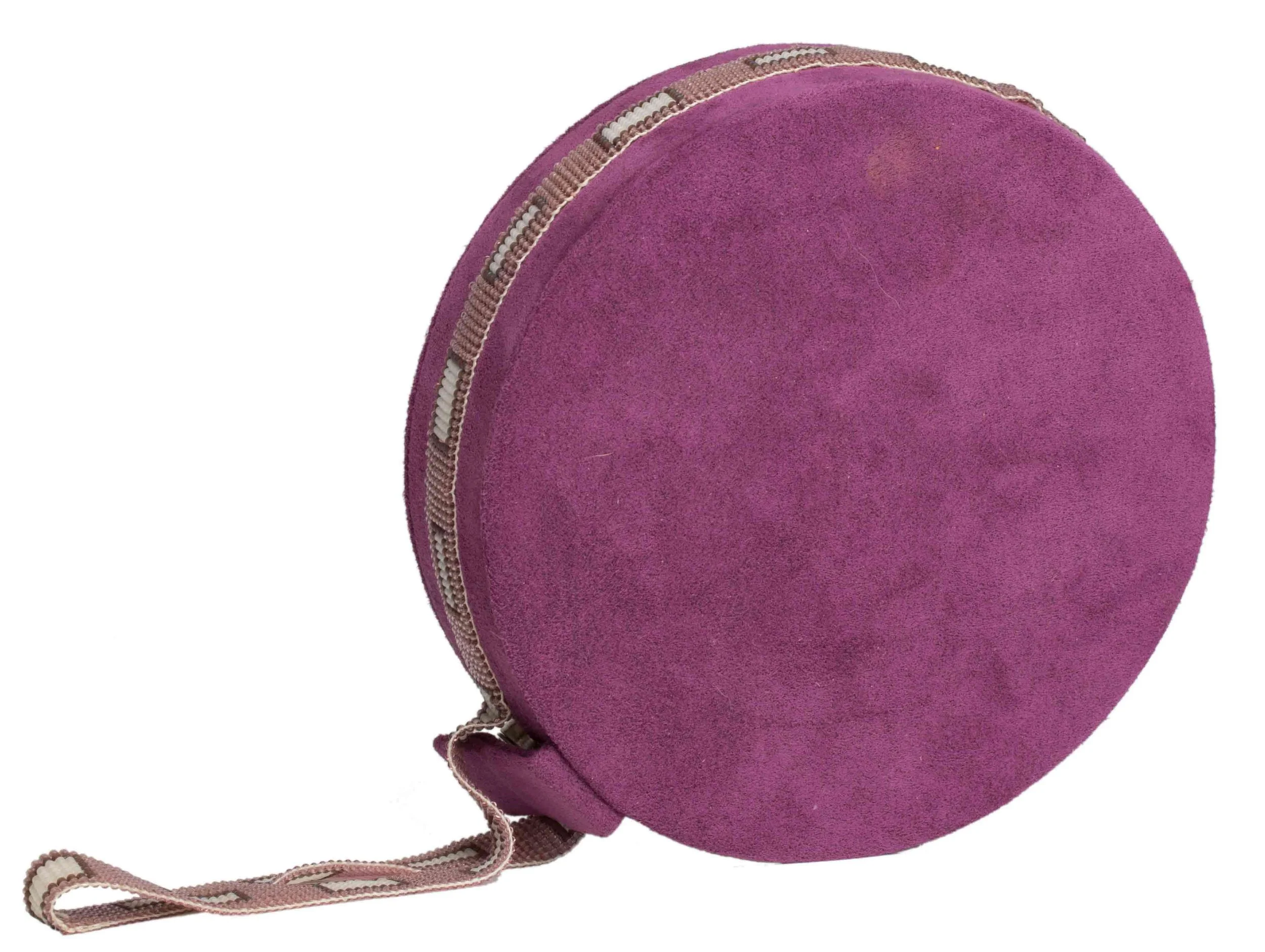
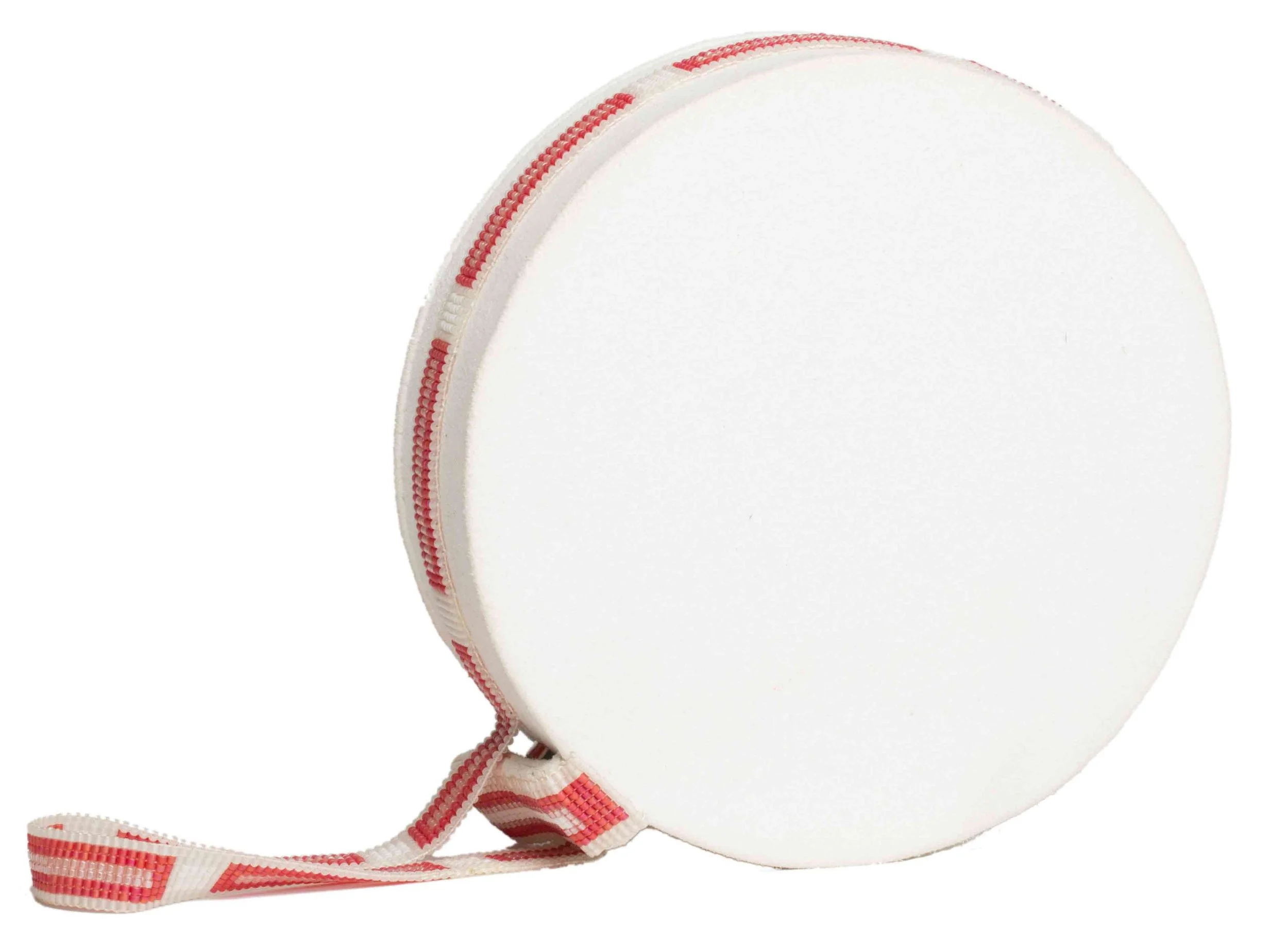
Each bag was crafted from a board structure wrapped in fabric and hand-finished with loom-beaded “tape” straps. These strips were woven with William’s early geometric motifs, then attached around the circular forms and they disconnect from the bag on wither side of the clasp at the top and extend to form a loop that serves as the handle.

The purple bag features a field of light purple beads with darker purple rectangles, each inset with white centers. The white bag has a ground of white beads punctuated by red rectangles. On the white bag, the tab supporting the magnetic clasp carries an additional beaded tape layered on top, adding another detail of ornament and labor.

Engagement and Impact
For Bee, the Circle Bags were both objects of use and a gesture of familial support. For us, they represented technical problem-solving, material innovation, and continued refinement of how structure and beadwork could merge in functional design.

Context and Legacy
The Circle Bags pushed us to engineer beyond standard forms, testing how far we could go in turning textile traditions into sculptural objects. They also marked an early exploration of magnetic closures, which became part of our evolving repertoire of hardware solutions. Just as importantly, they reflect the crucial role our sister played in sustaining our practice—her commissions and encouragement were part of the bedrock that allowed us to keep moving forward.