Private Commissions
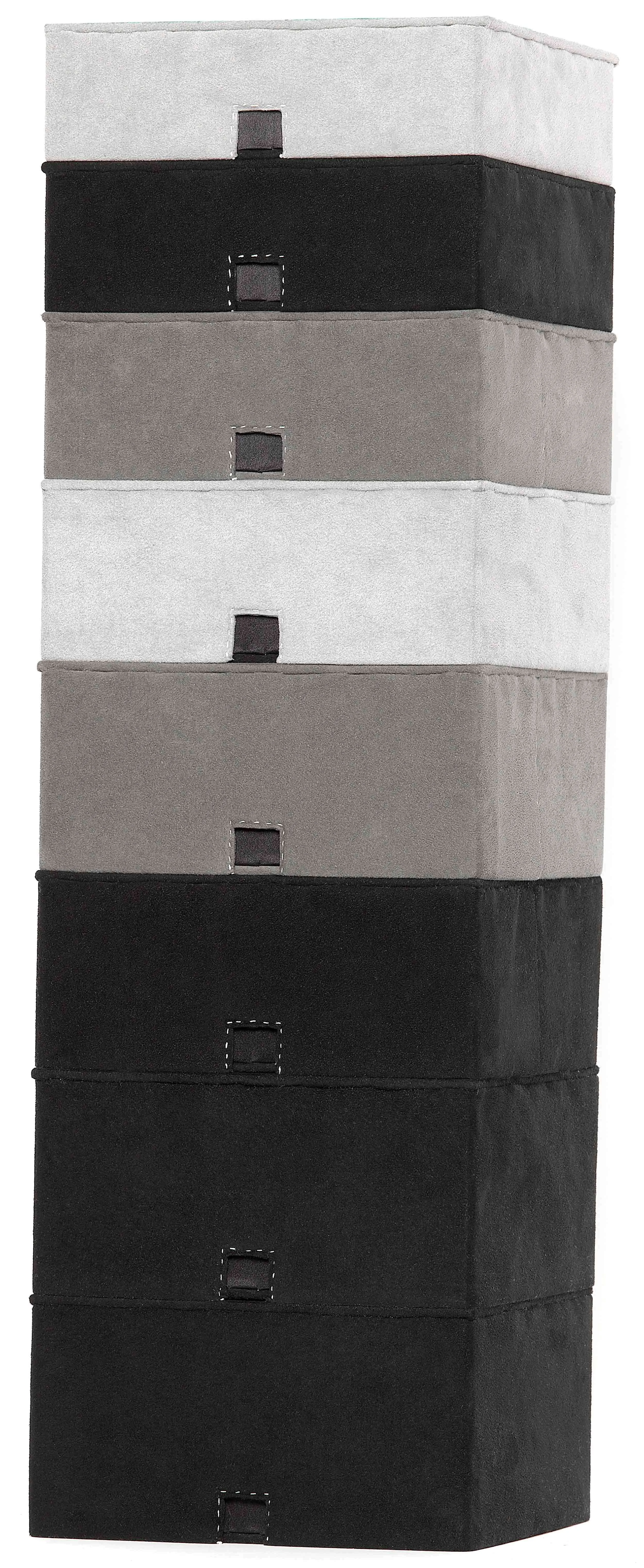
Library Tower
2007
Commissioned by Shelley Fox Aarons and Philip Aarons, New York, New York
Medium: Handmade boxes, ultrasuede, wool chiffon, scrolls, shredded fabric, hand-beaded jewelry, pins, thread, wood, handbound book
Dimensions: Tower stack 7 3/4 × 7 3/4 × 25 in.; landscape arrangement 31 1/4 × 15 1/5 × 6 in.
Photograph: Andrew Zuckerman
Artists’ Registration Number: 2007.001.001–009
Exhibition History: Function and Fantasy: Steven and William Ladd, Mingei International Museum, San Diego, California, 2014.
Curator: Christine Knoke
Commission Overview
Library Tower was one of our first major private commissions, created for Shelley and Philip Aarons after they saw our work in What’s Your Hobby?—curated by Beth Rudin DeWoody at The Fireplace Project in the Hamptons in 2007. They were drawn to our piece Volcano, but instead of acquiring an existing work, they invited us to create something entirely new.
Shortly after our first conversation, Shelley wrote:
“Phil and I really enjoyed our conversation too, and the chance to get to know you and your work. We wonder if you might be interested in meeting with us in NY sometime to discuss the possibility of you creating a work for us? We have in mind something less sculptural than the piece in the show—something more like a secret/private pseudodevotional object, which would contain a jewelry element (jewels being my thing) and a book element (books being Phil’s thing)—as envisioned by you, the artists, after visiting our NYC apartment to see our aesthetic. What do you think?”
That email set everything in motion. When we visited their New York City apartment, we were struck by their expansive library—walls of art books and objects layered with stories. Their request for a “secret/private pseudodevotional object” immediately resonated. Library Tower became our response: a sculptural stack of handmade boxes, each unfolding into its own microcosm of memory, material, and form.
Artistic Approach
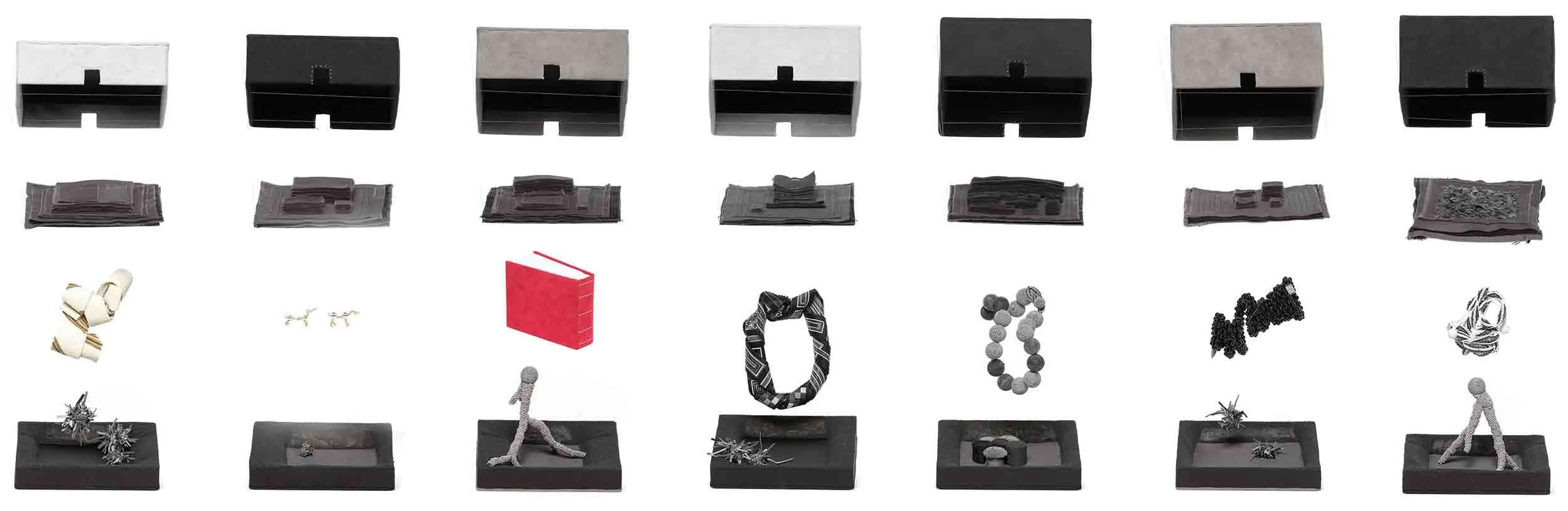
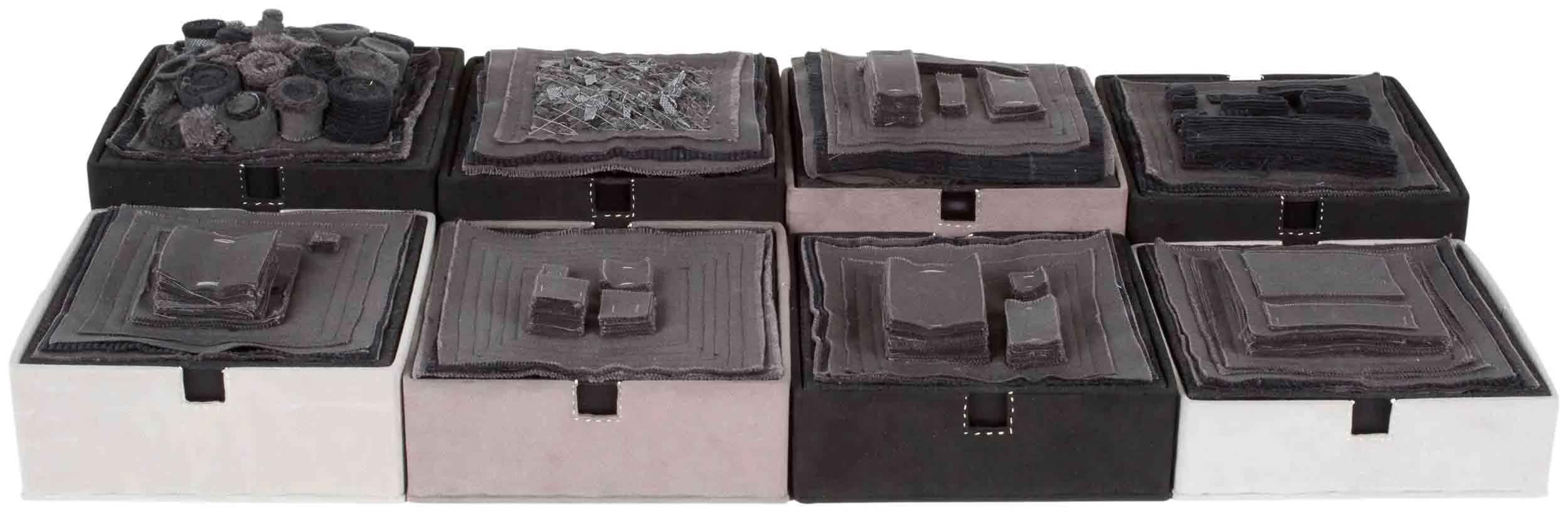
The work consists of eight handcrafted boxes, each covered in varying shades of black and gray ultrasuede. Stacked, they form a sleek vertical tower; unstacked, they can be arranged into a 2 × 4 grid—a landscape of process and memory. Each box opens by removing its lid, which can be flipped and slid beneath the base to serve as a display tray.
The first visible layer reveals the phases of our early textile recycling program: shredding, stacking, and scrolling. These processes began when we first moved to New York and had very little. The few possessions we owned—especially fabrics given to us by family—were deeply precious. Nothing was ever discarded.
Larger remnants became clothing or artworks; smaller pieces were rolled into scrolls, stacked into geometric stacks, or pulled apart into shreddings. Each act became a small ritual of preservation—transforming scarcity into devotion.
When we left Shelley and Philip’s apartment, we knew we wanted to create a kind of library of this process. Library Tower became that idea made physical: a collection of our textile memories.
When opened, each box first presents a removable layer of textiles. Beneath it lies a unique sublayer containing a combination of textiles, jewelry, sculptural elements, scrolls, a handbound book, and recurring motifs such as trees and ants. Together, these layers form a vertical archive of material experimentation and personal narrative.
Engagement and Impact
For Shelley and Philip, the work became a tactile and contemplative object—part reliquary, part jewelry chest, part secret archive. It was not about display alone, but about intimacy and discovery. Each box invites a slow, deliberate unveiling; each layer engages touch, memory, and meaning. The piece reflected the Aarons’ collecting philosophy: commissioning art that lives with them, quietly revealing new aspects over time.
When the work was later included in Function and Fantasy at the Mingei International Museum, we picked it up from Shelley and Philip ourselves. During that visit, Philip remarked that they had collected many emerging contemporary artists over the years, but not all had continued to create or achieve sustained success. Hearing him reflect on our growth meant a great deal—it was an unexpected affirmation of the path we had chosen and the persistence it required.
Context and Legacy
Library Tower marked a foundational moment in our practice. It was among our first major commissions and helped finance our first dedicated studio—a pivotal shift in our trajectory. It set the tone for future private commissions that would be deeply personal, materially rich, and emotionally specific.

Many of the fabrics incorporated into Library Tower came from our early years working in New York. Several originated from our time as set assistants with MAK, where we often worked with fabric on shoots and planned to repurpose materials afterward. Others were wools and cashmeres left over from garments we made for ourselves using fabrics gifted by family and friends. Some fabrics were remnants from one of our very first jobs in the city—at a high-end men’s suiting fabric store—where we saved even the smallest scraps.
Hidden beneath the sleek black and gray exteriors lies a more personal layer: vivid thread shreddings from our grandmother and from the grandmother of our dear friend Chris Finlay. These colorful fragments were pressed against the interior walls of each box and covered with black wool chiffon, allowing their colors to faintly glow through the surface—subtle hints of warmth and history beneath the restrained palette.
The work also encapsulated our philosophy of containment and revelation—minimalist exteriors concealing intricate interiors. Each tier unfolded like a chapter, revealing a world of textiles, jewelry, and sculptural forms. This dialogue between concealment and disclosure mirrored the Aarons’ own library—an archive of stories, objects, and meaning—and became a metaphor for how collections live and reveal their treasures over time.

Detailed Specs
-
Medium: Archival board, ultrasuede, fiber, thread; glass beads, thread
Dimensions:
Box (closed): 7 1/2 × 7 1/2 × 2 1/4 in.
Box (open): 7 1/2 × 7 1/2 × 3 in.
Necktie: 59 × 1 5/8 × 1/8 in.Artists’ Registration Number: 2007.001.002
Notes:
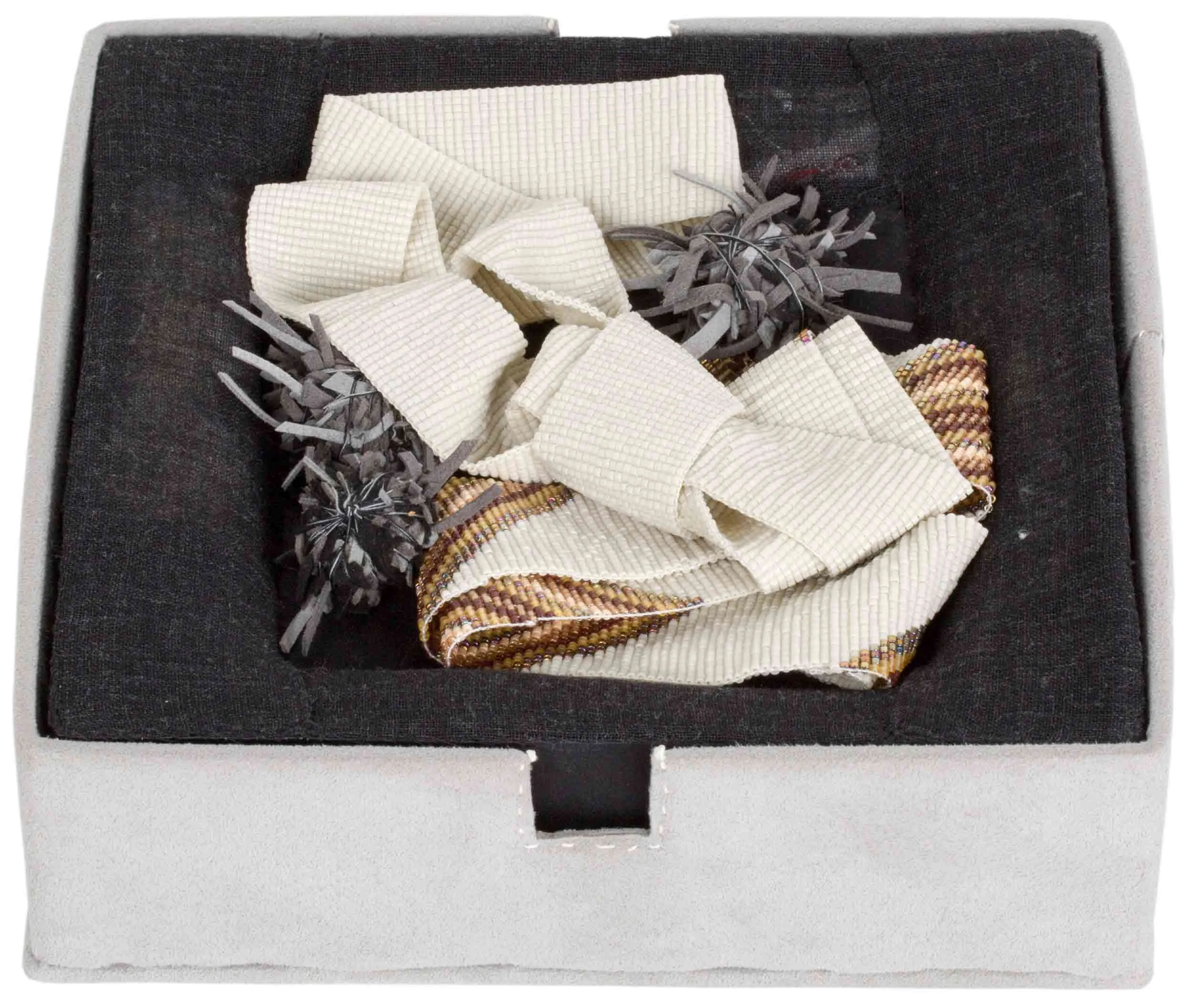
Pearl gray ultrasuede box lined in black silk charmeuse. The interior features a removable top layer of stacked fabric swatches revealing a sublayer beneath. The lower layer contains colorful thread shreddings pressed beneath a veil of black wool chiffon, allowing faint color to glow through the surface. The centerpiece is a hand-loomed glass-bead necktie in white, brown, tan, and gold, accompanied by three gray tac-a-poofs. -
Medium: Archival board, ultrasuede, thread, silver, fiber, glass beads
Dimensions:
Box (closed): 7 1/2 × 7 1/2 × 2 1/2 in.
Box (open): 7 1/2 × 7 1/2 × 3 1/2 in.
Each silver ant (approx.): 1 1/4 × 1/2 × 3/4 in.Artists’ Registration Number: 2007.001.003
Notes:
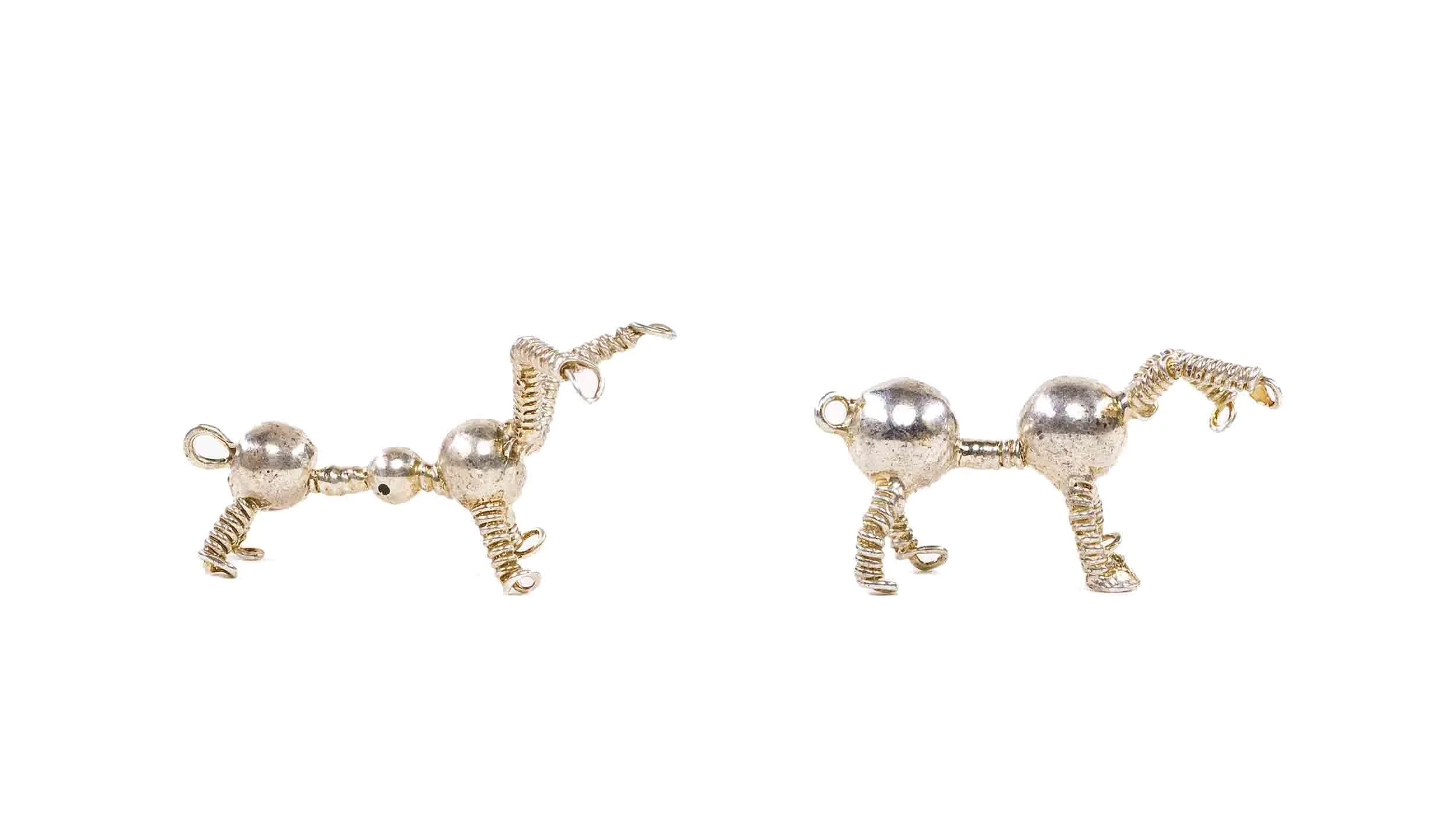
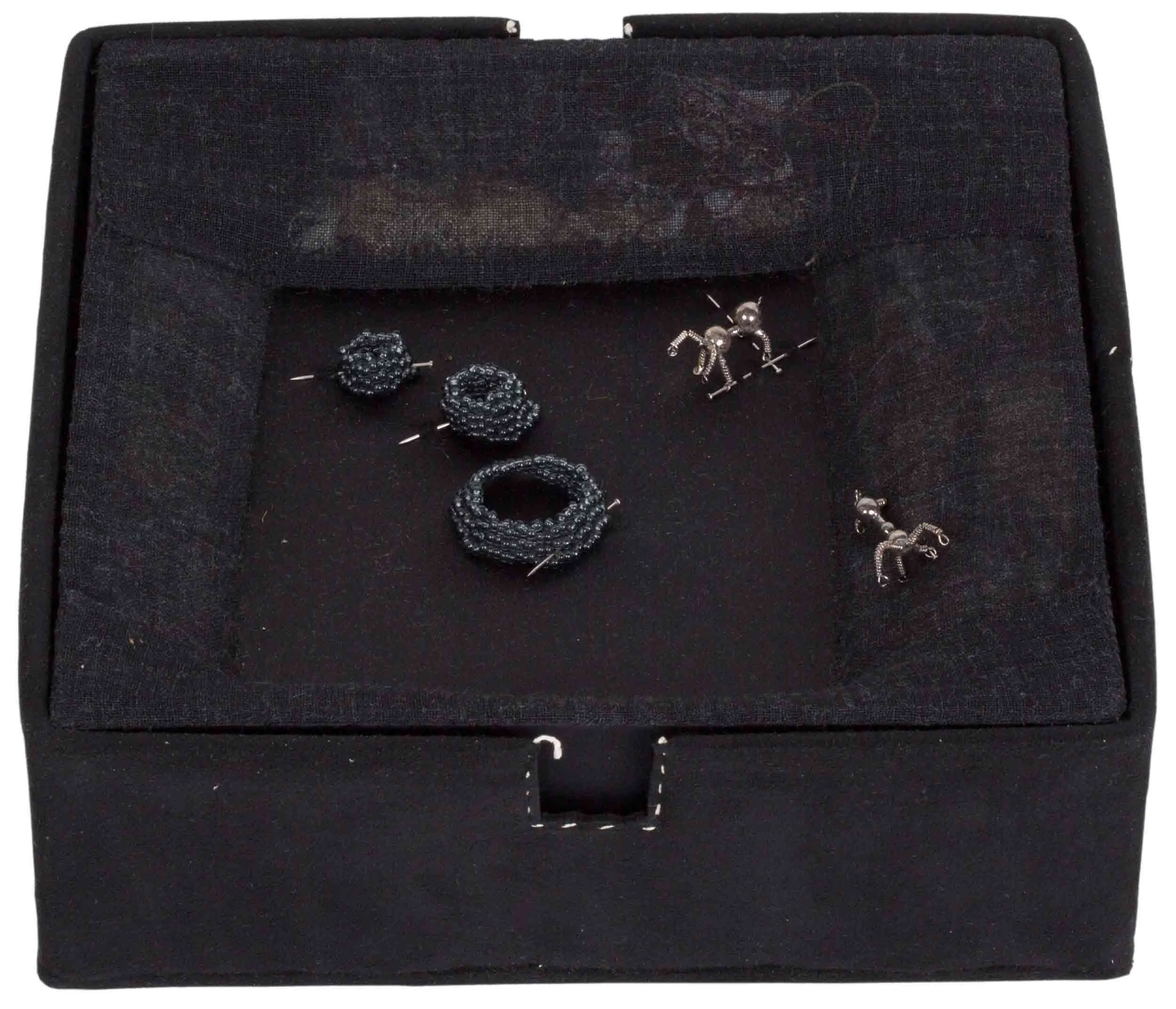
Black ultrasuede box lined in black silk chiffon with a removable upper layer of stacked black and dark gray fabric swatches. The lower layer reveals two small silver ants, each originally made using bead and wire-wrapping techniques and later cast in silver. The ants are carefully pinned in place, resting above a single tac-a-pouf at the base of the box. Beneath the interior lining are colorful thread shreddings from our grandmother and close friends, pressed behind the chiffon so faint traces of color softly emerge through the black surface. -
Medium: Archival board, ultrasuede, fiber, thread; gemstones, glass beads, silver SW clasp
Dimensions:
Box (closed): 7 1/2 × 7 1/2 × 2 3/4 in.
Box (open): 7 1/2 × 7 1/2 × 3 3/4 in.
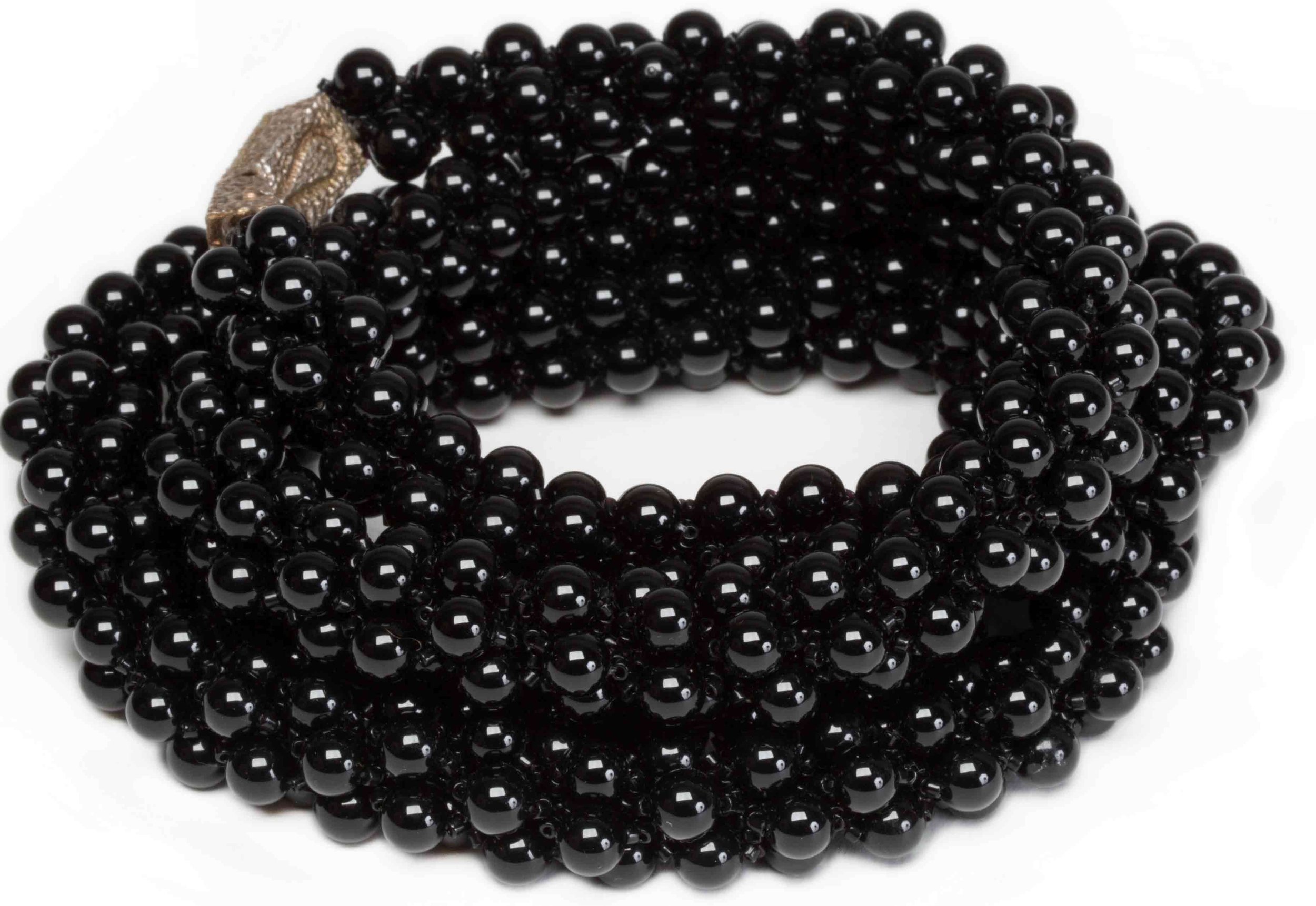
Necklace: 43 × 1/2 × 1/2 in.Artists’ Registration Number: 2007.001.004
Notes:
Dark gray ultrasuede box lined in black silk charmeuse with an upper layer of stacked black and gray fabric swatches that lift to reveal a sublayer containing a black gemstone necklace with a silver SW clasp. The necklace alternates between faceted gemstones and hand-beaded glass elements, designed to drape with quiet weight and luster. Beneath the inner lining, colorful thread shreddings are embedded and upholstered under a layer of black wool chiffon, allowing only the faintest color to emerge through the surface. -
Medium: Archival board, ultrasuede, fiber, thread; glass beads, thread
Dimensions:
Box (closed): 7 5/8 × 7 5/8 × 3 in.
Box (open): 7 5/8 × 7 5/8 × 4 1/4 in.
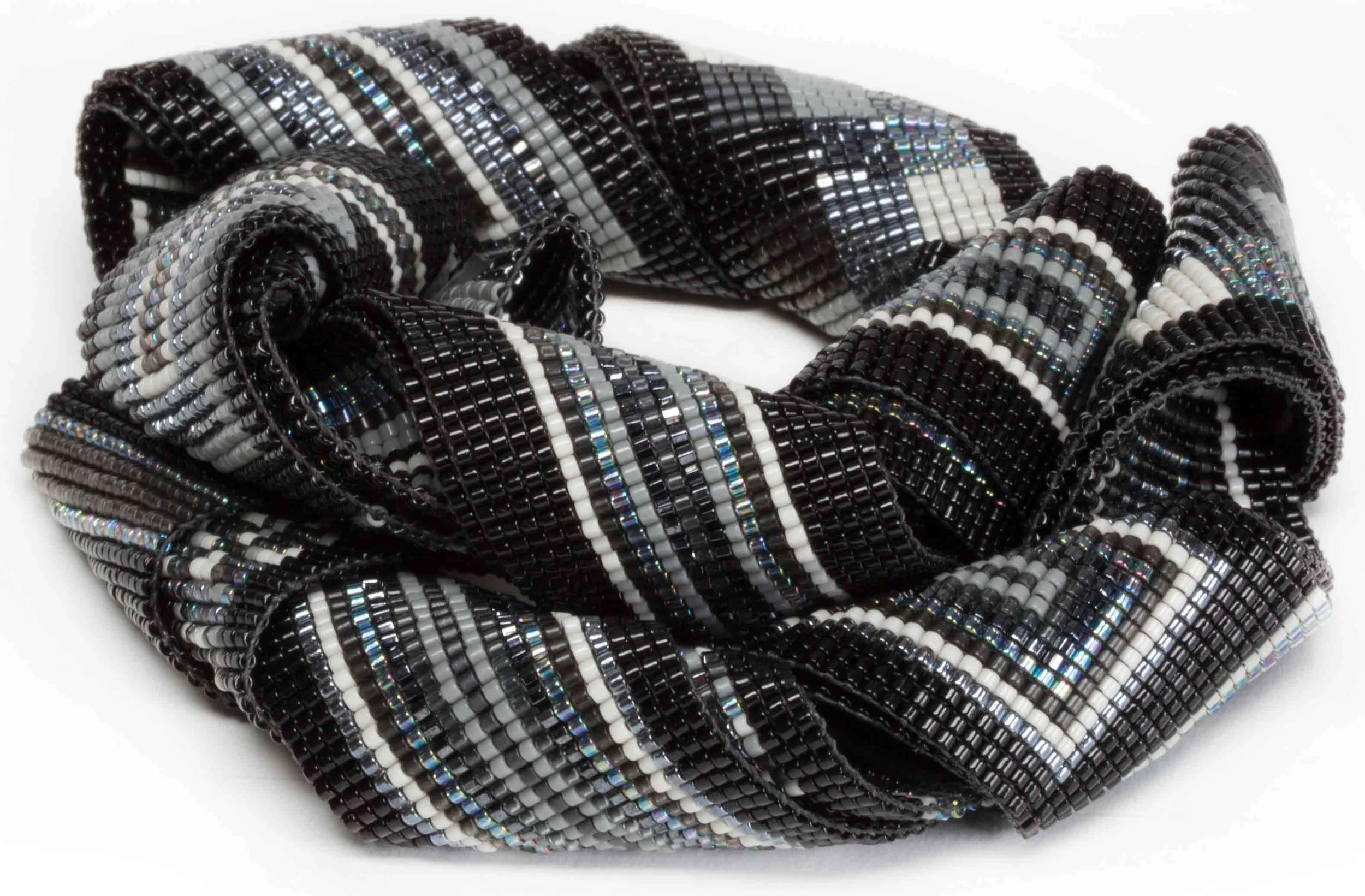
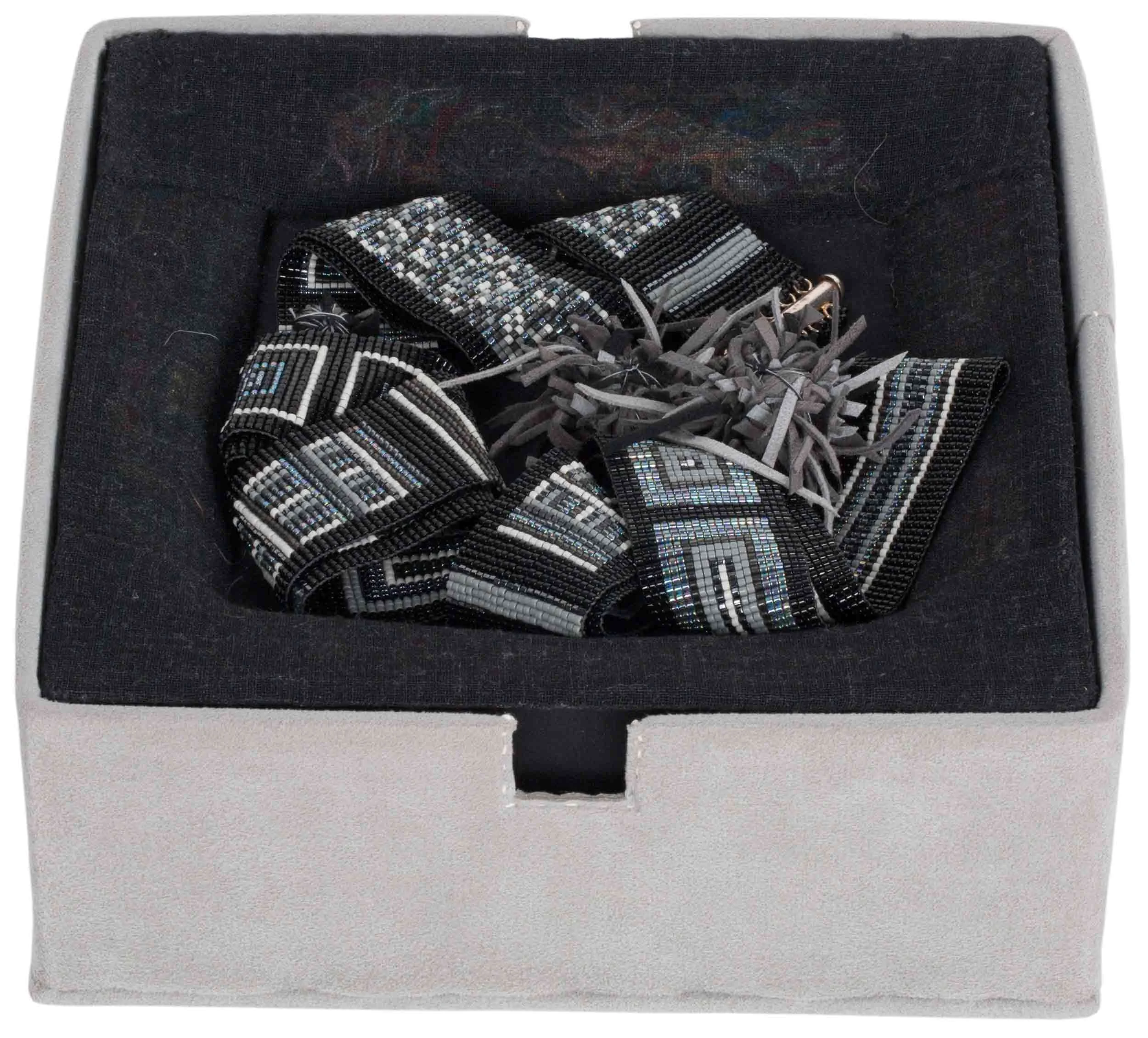
Necklace: 51 × 1 1/4 × 1/4 in.Artists’ Registration Number: 2007.001.005
Notes:
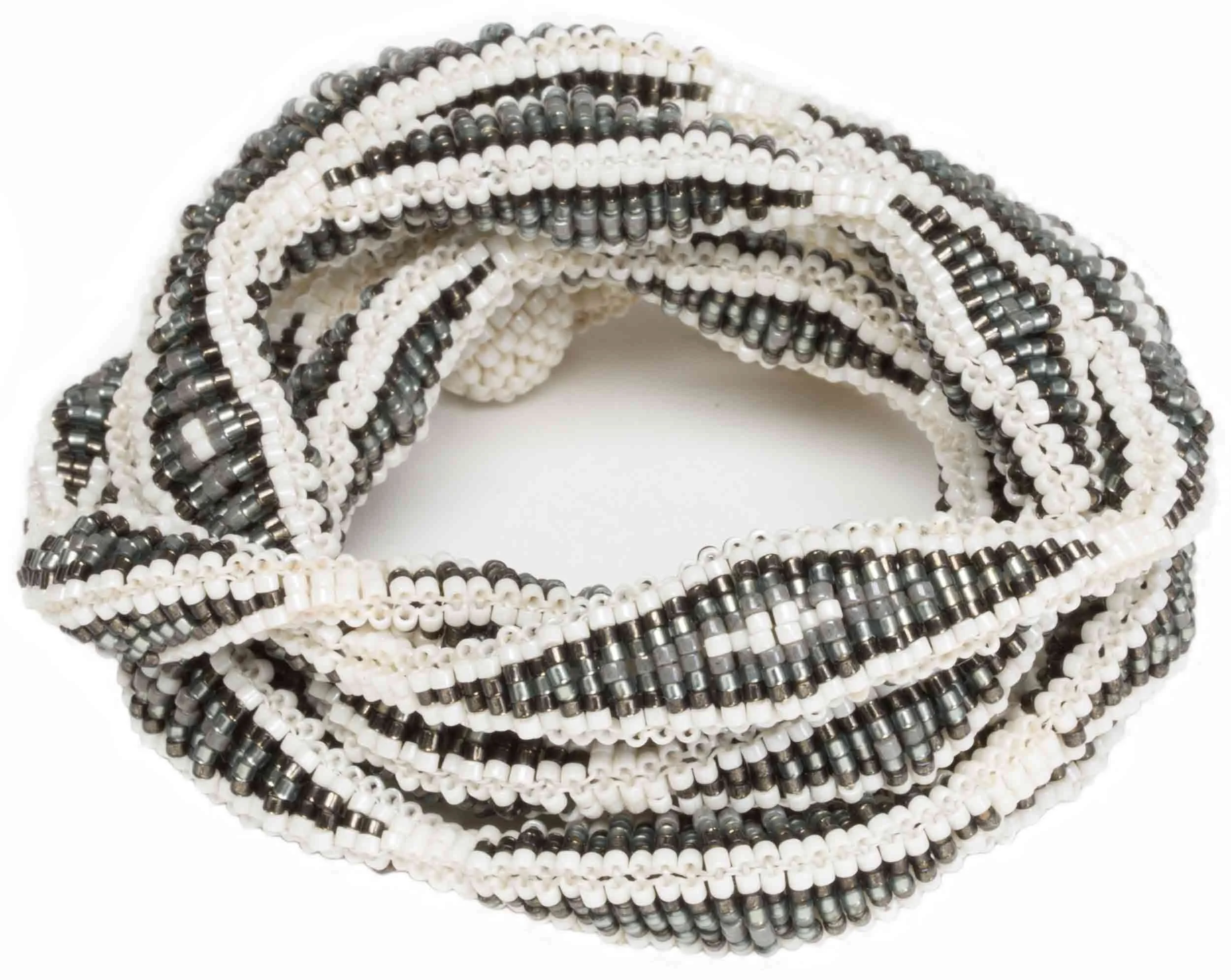
Pearl gray ultrasuede box lined in black silk charmeuse with a removable upper layer of stacked black and gray fabric swatches. The lower layer contains a hand-loomed glass bead tape necklace in black, gray, white, and silver, featuring square and rectangular geometric patterns precisely woven on the loom. The necklace is designed to be worn long, doubled, or twisted, as shown in the image. Tac-a-poufs made of bound ultrasuede slices—offcuts from the box-making process—sit within the sublayer, echoing the tactile and cyclical nature of the work’s material reuse. -
Box 5: Beaded Ball Necklace
Medium: Archival board, ultrasuede, fiber, thread; glass beads, thread
Dimensions:
Box (closed): 7 3/4 × 7 3/4 × 3 1/4 in.
Box (open): 7 3/4 × 7 3/4 × 4 in.
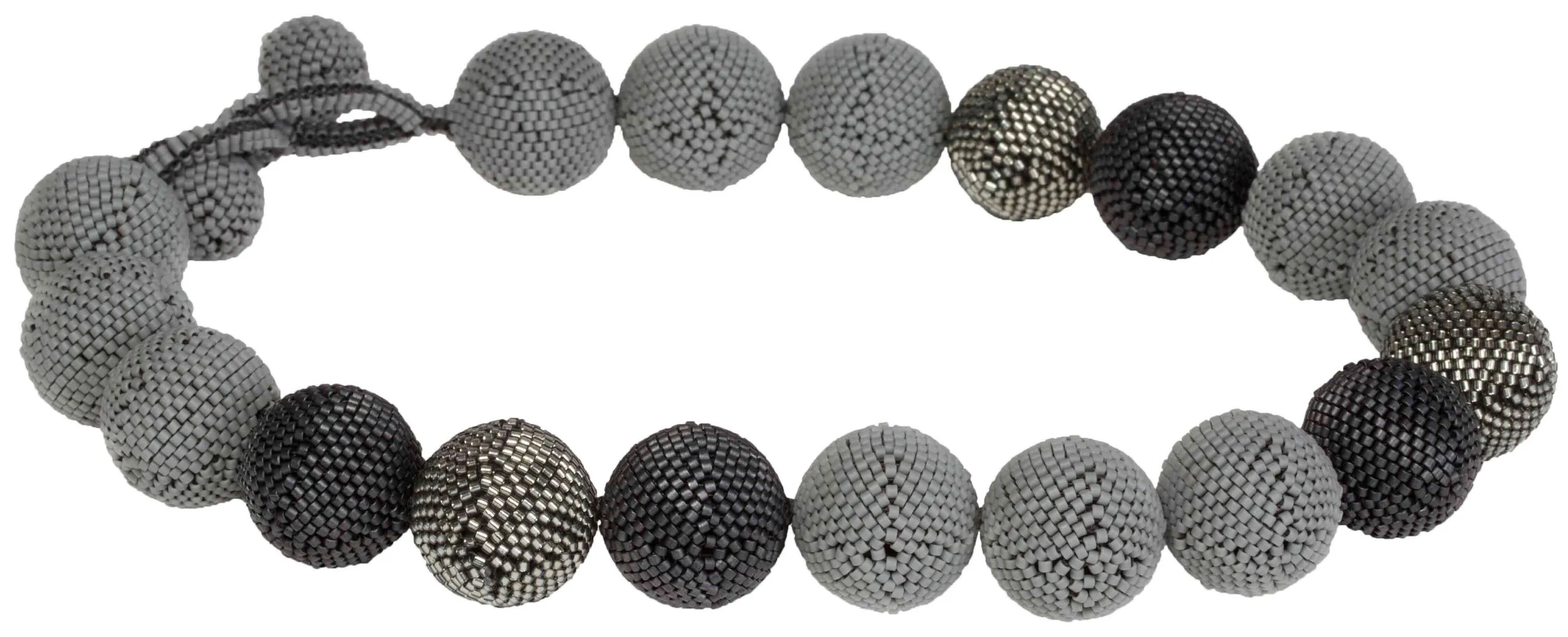
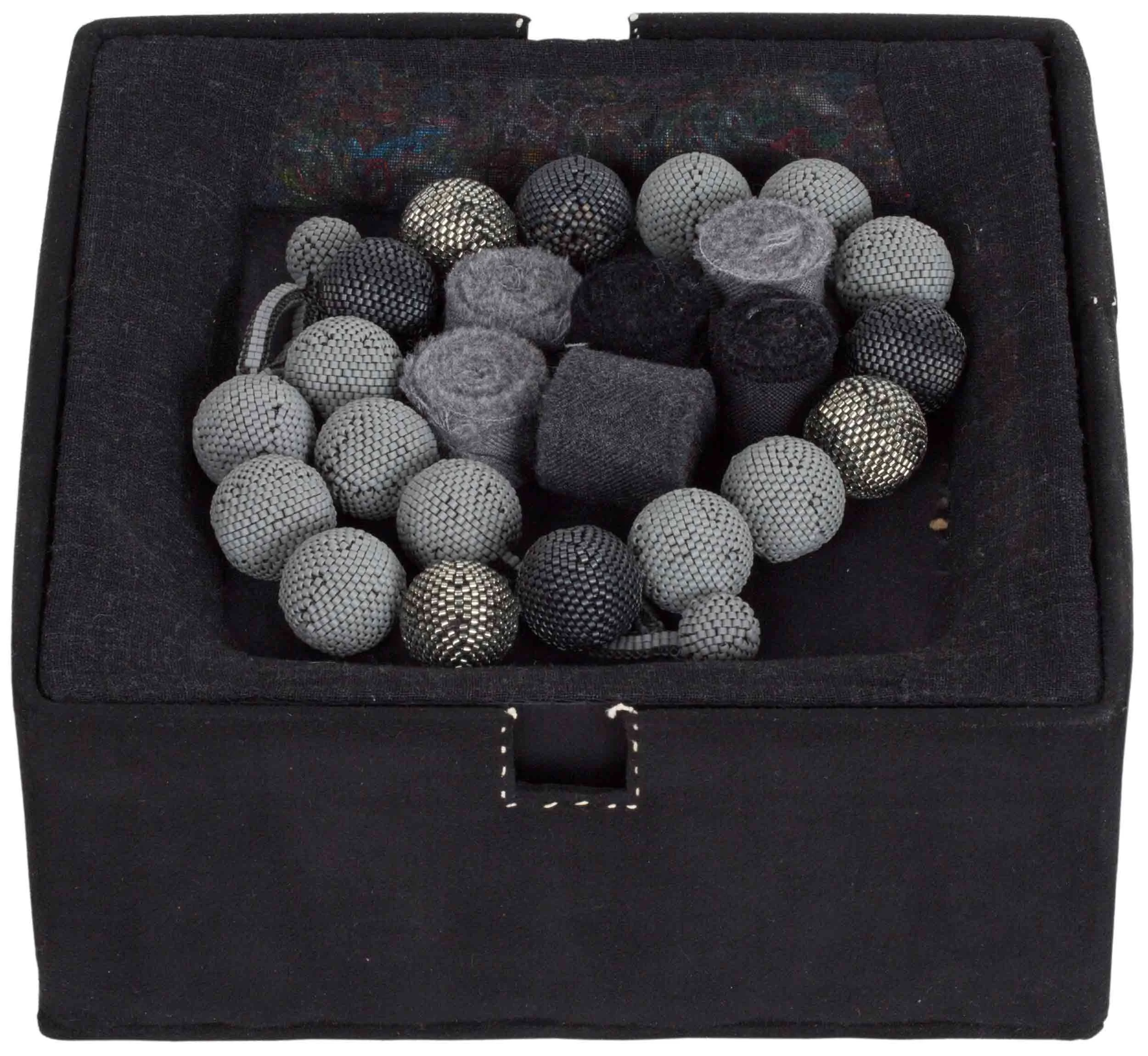
Necklace: 20 × 5/8 × 5/8 in.Artists’ Registration Number: 2007.001.006
Notes:
Black ultrasuede box lined in black silk charmeuse with a removable upper layer of black and dark gray fabric stacks. The sublayer features a beaded ball necklace composed of glass seed beads, each orb meticulously hand-sewn around small wooden or plastic cores, all of similar scale and rendered in tones of silver, gray, and dark gray. The necklace closes with what we call the DBBC—the double beaded ball closure—a signature element in our early jewelry works. Soft gray and black scrolls, made from fabrics left over from Steven’s clothing, rest in the bottom of the box, echoing the personal and cyclical nature of the materials throughout Library Tower. -
Medium: Archival board, ultrasuede, fiber, thread; Moab Entrada Rag Natural 190 gsm, glass beads, ink
Dimensions:
Box (closed): 7 1/2 × 7 1/2 × 3 1/2 in.
Box (open): 7 1/2 × 7 1/2 × 5 1/4 in.
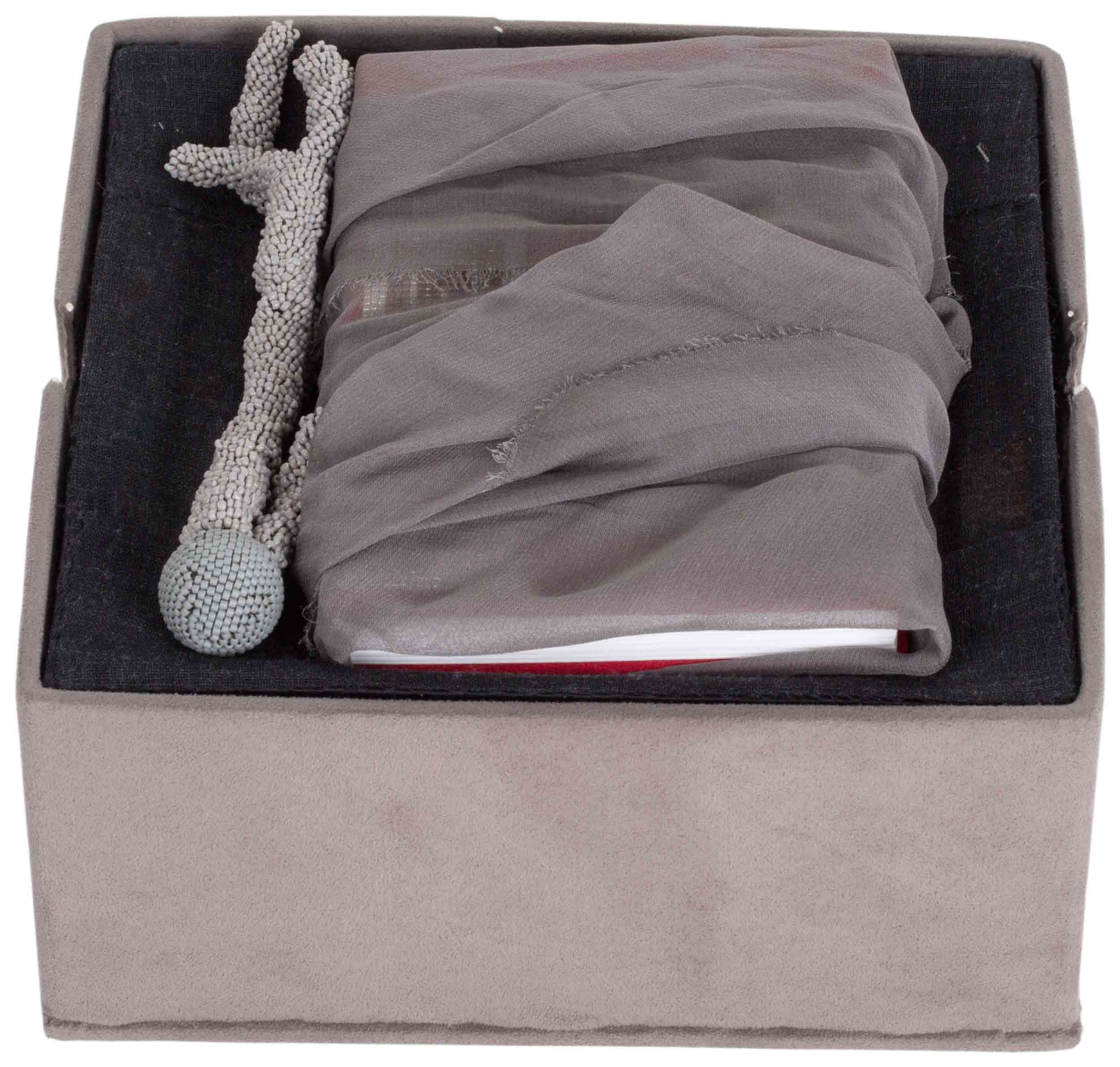
Book: 6 × 4 × 1 in.
Tree: 6 3/4 × 2 × 1 in.Artists’ Registration Number: 2007.001.007
Notes:
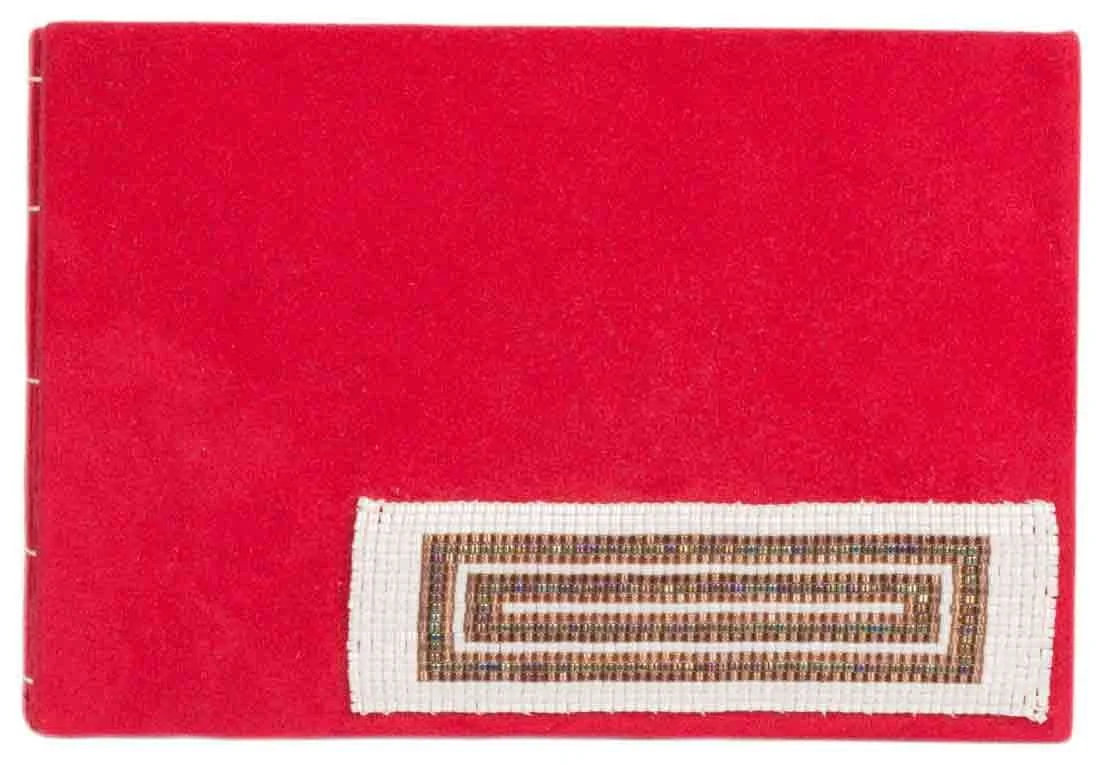
Dark gray ultrasuede box lined in black silk charmeuse with a removable upper layer of black and dark gray fabric stacks. The sublayer features a Volcano Book—a handbound artist’s book with a red ultrasuede cover and a hand-loomed glass bead appliqué on the front. The book is wrapped in sheer dark gray silk chiffon, creating a veil-like atmosphere that conceals and reveals its contents. Resting beside it is a gray glass bead tree, a sculptural counterpart to the book’s introspection.Inside the Volcano Book are photographs, drawings, and diagrams documenting the creation of the Volcano series—the very work that first caught Shelley and Philip Aarons’ attention and inspired the commission for Library Tower. The pages include images of beaded accessories and jewelry, the patterns and construction of the volcanic forms, and photographic portraits by Andrew Zuckerman capturing a pivotal moment of physical, personal, and professional transformation for us.
The book functions as both archive and artifact—a meditation on process, growth, and reinvention. The pairing of the book and the tree within the same box mirrors the duality of reflection and emergence that runs throughout Library Tower.
-
Medium: Archival board, ultrasuede, fiber, thread; glass beads, thread
Dimensions:
Box (closed): 7 3/4 × 7 3/4 × 3 3/4 in.
Box (open): 7 3/4 × 7 3/4 × 4 3/4 in.
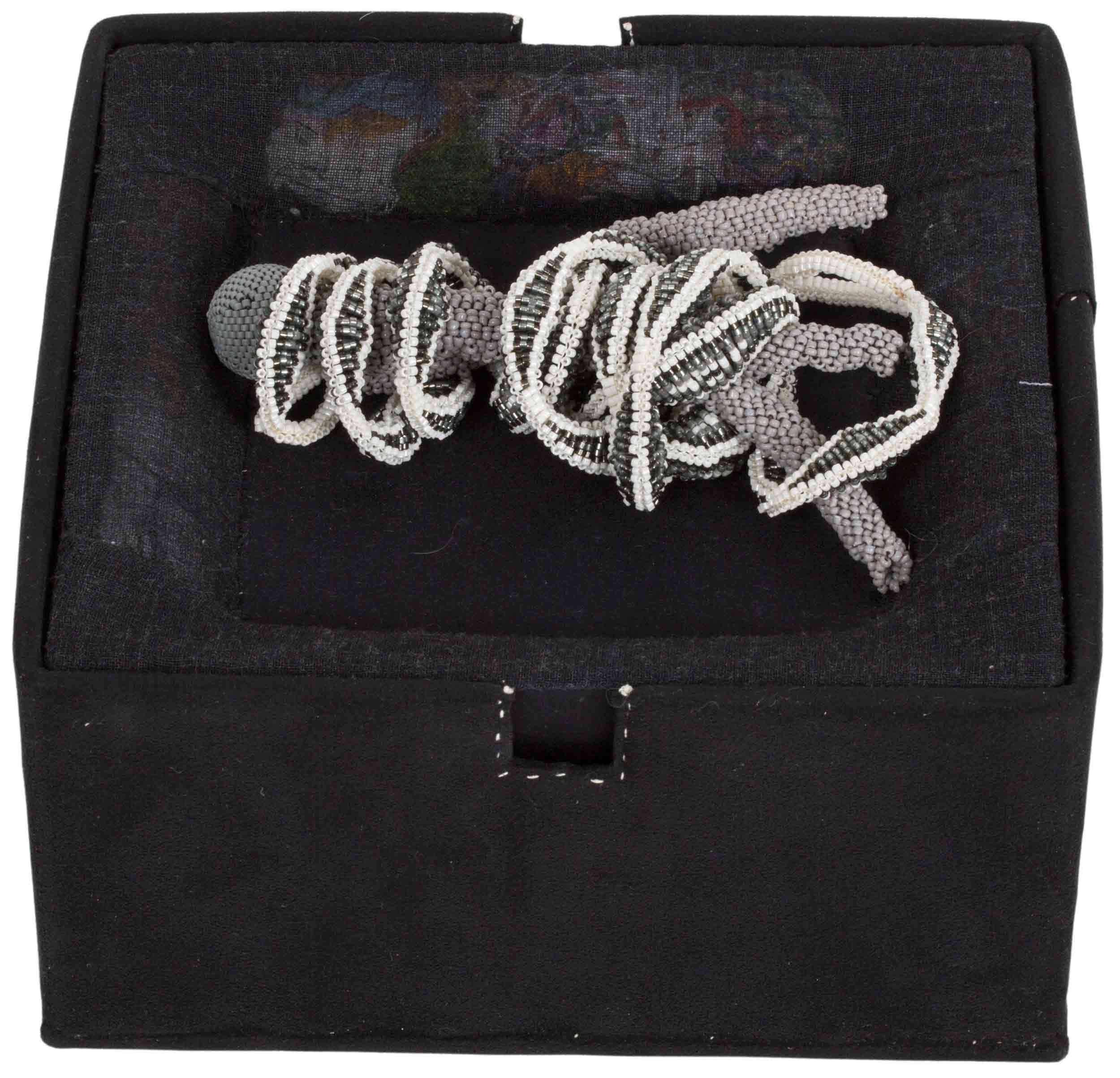
Necklace: 42 1/2 × 1/2 × 1/2 in.
Tree: 6 × 1 1/2 × 1/2 in.Artists’ Registration Number: 2007.001.008
Notes:
Black ultrasuede box lined in black silk charmeuse, with a removable upper layer of gray and black stacked fabrics and thread-trapped shreds. The sublayer reveals a Volcano Necklace—a cascading beaded form in white, silver, and gray glass beads—coiled around a small gray glass bead tree.The necklace belongs to the Volcano series, reflecting the intricate geometric language William developed during this period. Its surface is composed of meticulously hand-loomed diamond and concentric motifs that evoke the natural stratification of volcanic rock. When worn, the necklace drapes and twists dynamically, echoing molten flow and cooling ridges of lava—translating geological formation into movement and ornament.
The pairing of the Volcano Necklace and the beaded tree continues the dialogue between nature and structure found throughout Library Tower. Here, eruption and growth coexist—the explosive energy of transformation anchored by the quiet resilience of rooted form.
-
Medium: Archival board, ultrasuede, fiber, glass beads, thread
Dimensions:
Box (closed): 7 1/2 × 7 1/2 × 4 in.
Box (open): 7 1/2 × 7 1/2 × 6 in.
Tree: 6 × 5 × 1 1/2 in.Artists’ Registration Number: 2007.001.009
Notes:
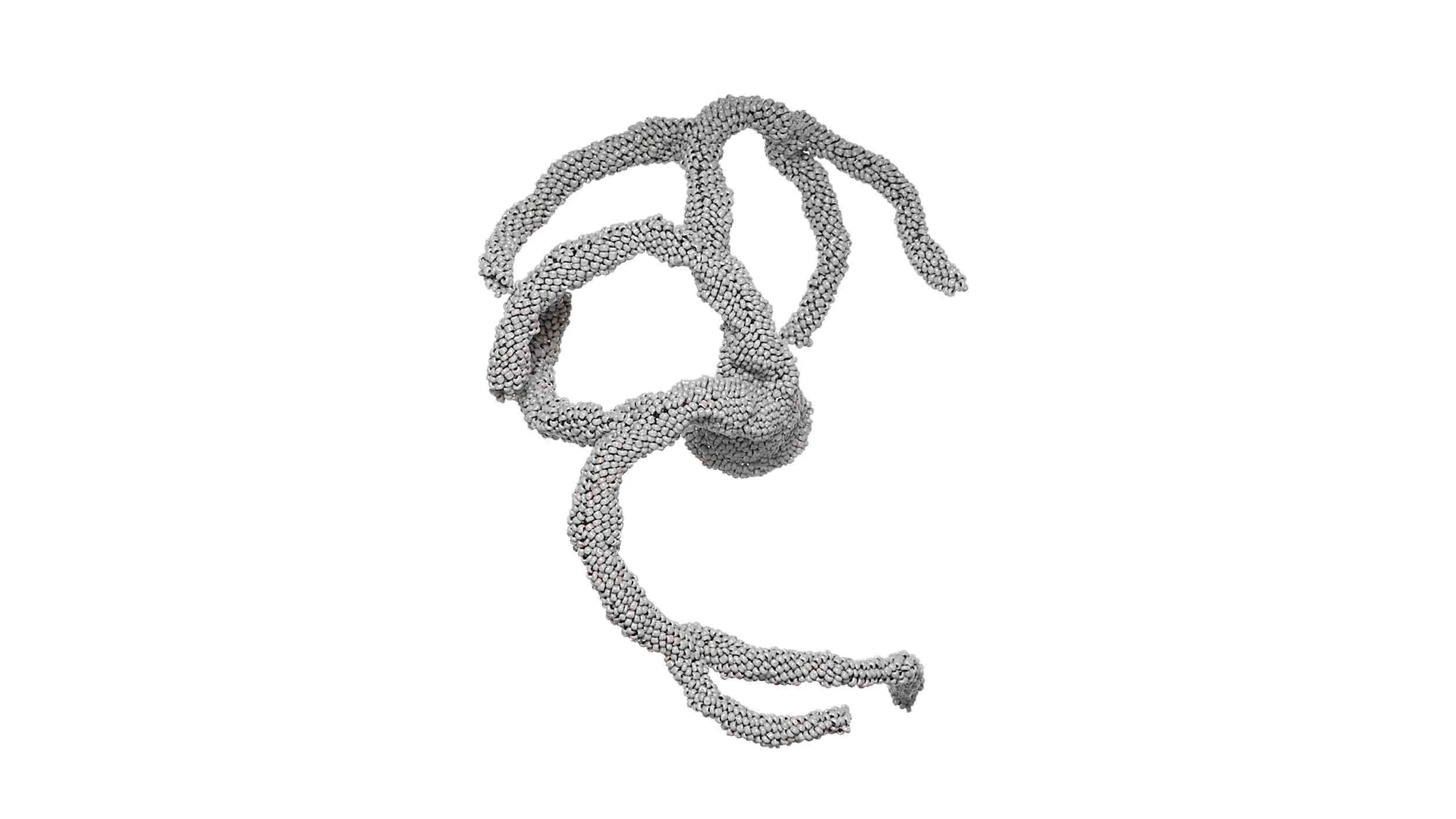
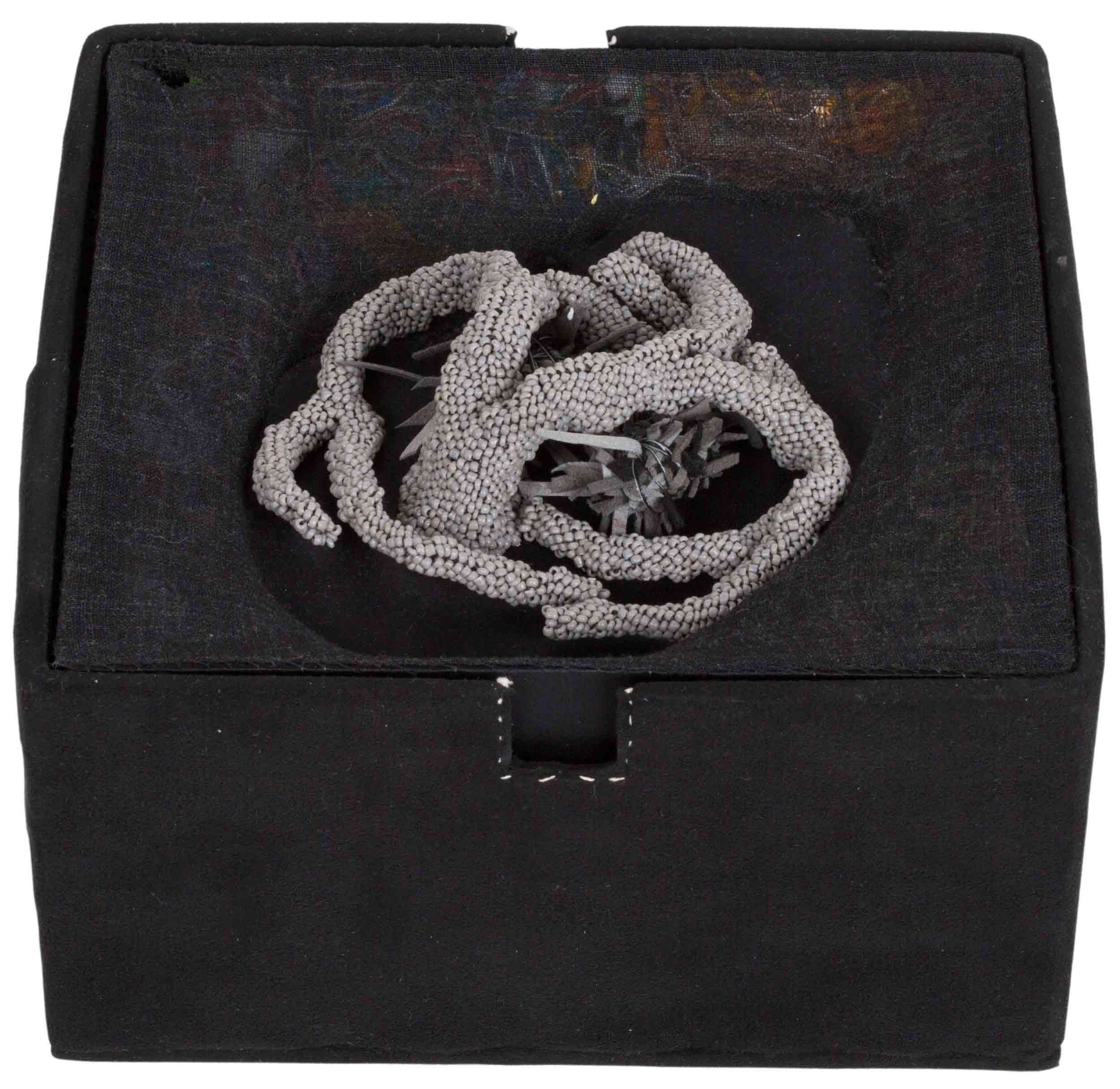
Black ultrasuede box lined in black silk charmeuse, with a removable upper layer of dark gray and black stacked fabrics and mounted scrolls sewn across the surface. The sublayer reveals a gray glass-beaded tree surrounded by shredding pressed beneath a layer of black wool chiffon, allowing a faint vibration of color to emerge through the dark textile field.The Anger Tree emerged as a symbolic form within our practice—a vessel for emotion and restraint. Each branch is constructed bead by bead through a process of free-form peyote stitch. The structure features two limbs extending outward from the trunk, wrapping and enveloping themselves—an almost protective gesture, at once hiding and embracing. There are no beaded roots; the form instead hovers in a moment of introspection, held within its own tension.
In the context of Library Tower, this final box represents catharsis. After the intimacy of the Volcano Book and the elegance of the Volcano Necklace, Anger Tree becomes the emotional culmination—a confrontation with control, frustration, and the beauty of rebuilding. Beneath its composed surface lies a network of labor and emotion held in tension, embodying the quiet persistence that underpins our collaborative practice.